How Hiding the TV in the Living Room Saved My Marriage (Sort Of)
After years of arguing over screen time, one couple decided to hide the TV behind a cabinet door. The living room went from a battleground to a place they actually wanted to be.
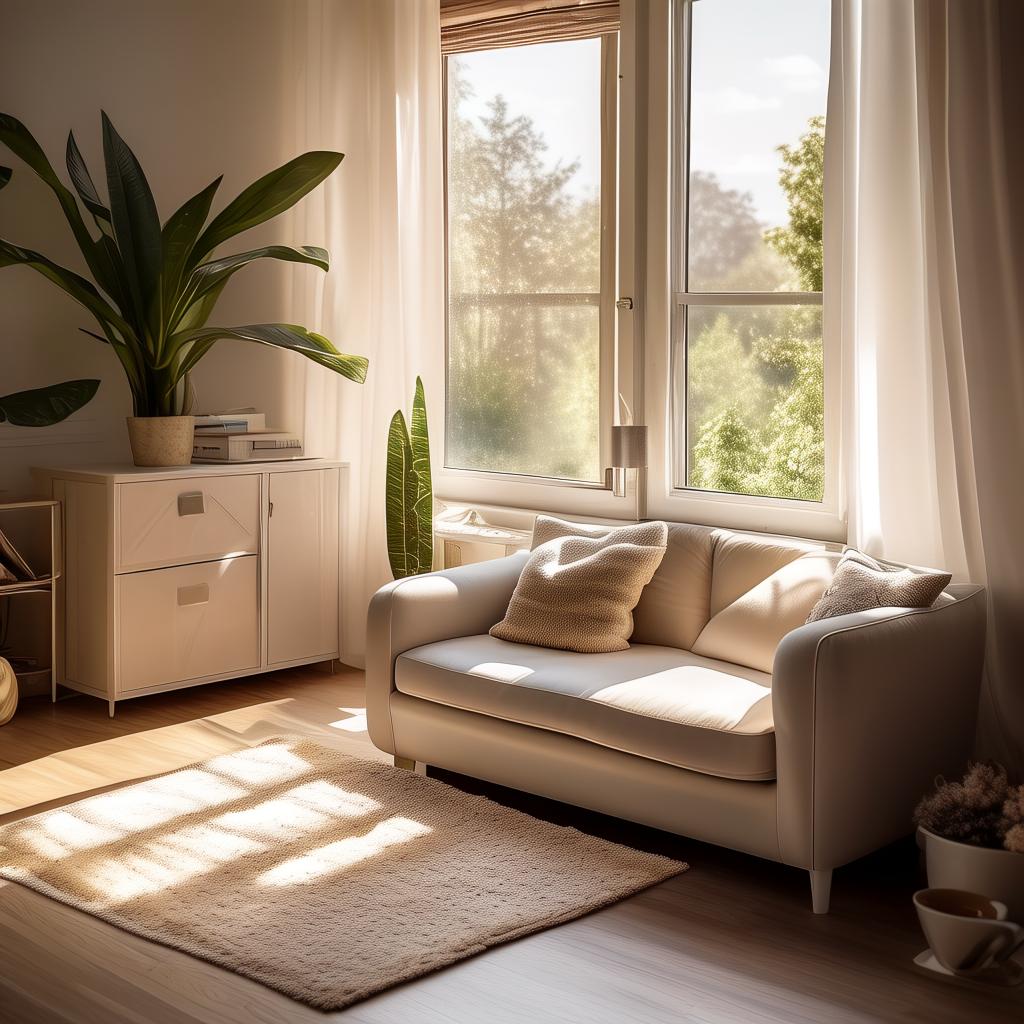
Location
Portland, Oregon, United States
Property Type
Apartment
Room
Living Room
Direction
West
The Problem
My husband and I fought constantly about the TV. He'd come home from work and immediately turn it on — news, sports, whatever. I'd want to talk about my day, but he'd be half-watching and half-listening. The living room had a huge 65-inch TV as the focal point. Every conversation felt like I was competing with a screen. We'd tried 'no TV during dinner' rules, but they never stuck. The room itself felt... aggressive. Bright, loud, cluttered with remotes and cables. I dreaded coming home.
What They Tried
We didn't get rid of the TV — that was non-negotiable for him. Instead, I bought a cheap cabinet from IKEA with sliding doors. We mounted the TV inside, so when the doors are closed, it's completely hidden. It took about an hour to set up. I also put the cable box and game console in a drawer below. Now the room has a bookshelf, a couple of plants, and a lamp that actually gives warm light. The TV is still there, but it's not screaming for attention.
What Happened
The first week, my husband kept opening the cabinet to check the news. By week two, he stopped. Now we sit on the couch and actually talk. Sometimes we read. Last night he said, 'This room feels calmer.' I almost cried. We still watch movies on weekends — we just open the doors. But the default state of the room is quiet. The arguments have dropped by about 80%. It's not a miracle, but it's pretty close.
Spatial Orientation
| Bagua Sector | 兑 ☱ · Dui |
|---|---|
| Direction | West |
| Element | metal |
What works best here
Dui (7) · Metal. West should be lower and more open than East for left-right equilibrium.
Place: low cabinets, metal decor (brass, copper, steel), round shapes, white and grey tones.
Recommended crystal
Clear Quartz or Selenite — placed on a low console or side table in the west
Round shapes and metallic finishes feel especially at home on this side of the room
Source Analysis
1. The Original Principle
Original Text
Para la mayoría de las personas es sorprendente hasta qué punto la atmósfera de una habitación se transforma, se llena de tranquilidad y serenidad, simplemente cubriendo la televisión o guardando el aparato estereofónico en una vitrina.
English Translation
A modern Western guide on home atmosphere observes that simply covering a television or storing a stereo in a cabinet can transform a room's mood, bringing calm and serenity. The principle suggests that visible electronics, especially screens, create a sense of alertness that competes with relaxation.
2. About the Source
Feng shui para Occidente by Terah Kathryn Collins · United States · 1995
Feng Shui for the West is a practical guide that adapts classical Chinese spatial principles for modern Western homes and lifestyles. Written by one of the first American authors to bring Feng Shui to a mainstream English-speaking audience, the book translates ancient Bagua concepts into actionable room-by-room advice using familiar Western design language and contemporary case examples.
3. How This Principle Applies to This Case
This case illustrates a psychological principle called attentional competition. A large screen, even when turned off, acts as a visual cue that primes the brain for alertness and distraction. By hiding the TV behind cabinet doors, the couple reduced the visual noise in the room, allowing the brain to shift into a more relaxed state. This aligns with research on how visual clutter increases cortisol levels. The simple act of concealing the screen changed the room's default 'mode' from entertainment to connection, which directly reduced conflict over screen time.
Bring the Purest Energy Into Your Home
Sourced from altitudes above 4,000 meters in the Himalayan range — the highest place on Earth and the closest to the sun. These crystals formed over millions of years in some of the planet's most pristine conditions, untouched by industrial pollution. Each piece carries the raw, unfiltered energy of the mountains. Whether placed on a nightstand, a desk, or a meditation corner, they serve as a quiet anchor — a daily reminder to pause, breathe, and reconnect.
Explore the HIMA ALAÏA collection →Related Elements
Case source
Anjie Cho Architect & Holistic Spaces
NYC-based architect and BTB Feng Shui master. Co-founder of Mindful Design Feng Shui School. Blends modern interior design with classical BTB Feng Shui. Author of multiple Feng Shui books.