I Angled My Couch 45 Degrees Away From The Wall And My Friends Finally Started Staying For Dinner
A practical experiment in rearranging the living room layout to make the space feel more open and welcoming, based on the idea that furniture placement can invite connection.
Location
Austin, United States
Property Type
Apartment
Room
Living Room
Direction
Southeast
The Problem
Every time I had people over, they'd leave early. Not in a rude way—they'd just sort of hover near the door after one drink. I couldn't figure it out. The room felt fine to me. But I started noticing that even I didn't want to sit in there alone. The couch was pushed flat against the long wall, facing the TV. The only way to sit and talk to someone was to sit side by side, staring at the screen. It was a room built for watching, not for being together.
What They Tried
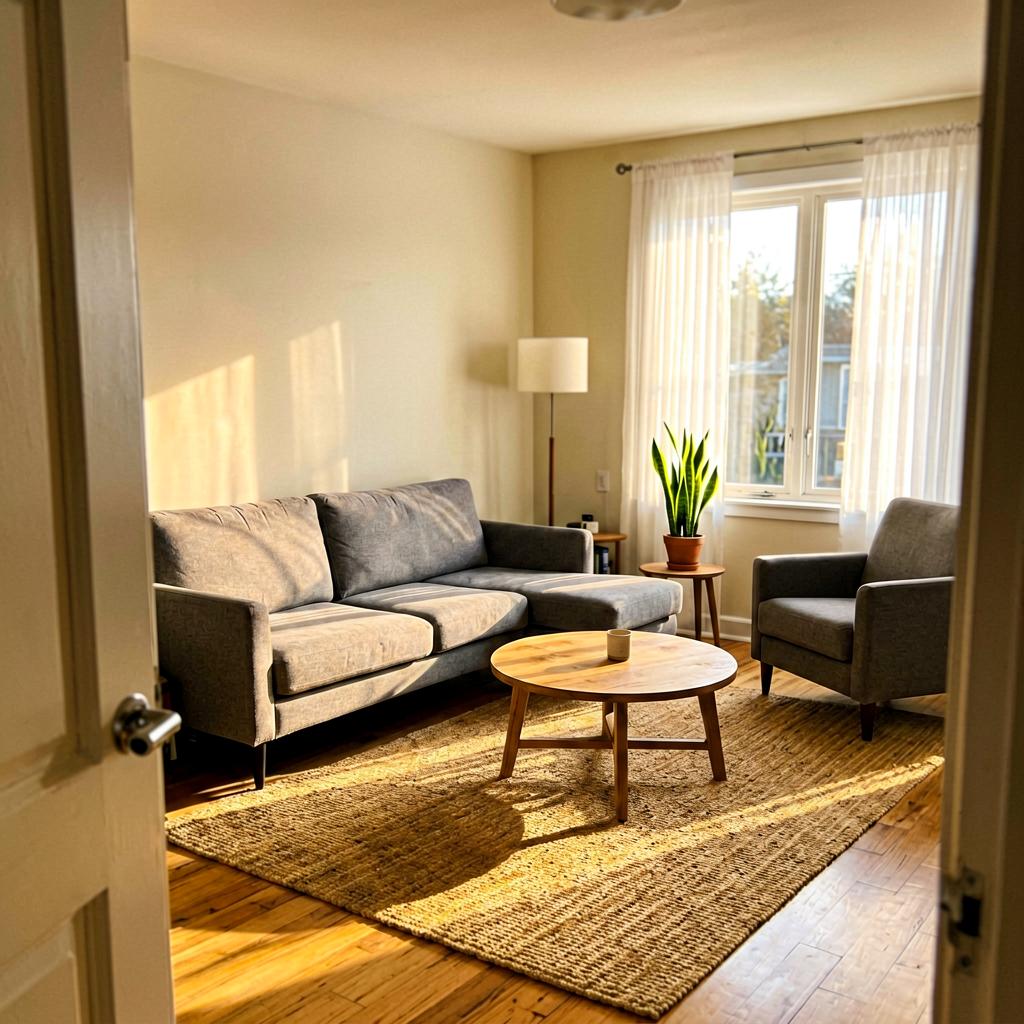
I pulled the couch away from the wall and angled it about 45 degrees, so it faces the middle of the room instead of the TV. I moved the coffee table closer to the couch and put a small reading chair where the couch used to be, creating a loose L-shape. I also moved the floor lamp from behind the couch to the corner near the window, so the light wasn't glaring in anyone's face. The TV stayed, but it's no longer the anchor. The whole thing took maybe twenty minutes.
What Happened
The first time I had friends over after the change, nobody left early. We sat in that L-shape and talked for three hours. It sounds ridiculous, but the room actually feels different—more open, less like a waiting area. I've started using the living room in the mornings too, just to read. It's not magic. The room didn't fix my social life. But it stopped working against me.
Spatial Orientation
| Bagua Sector | 巽 ☴ · Xun |
|---|---|
| Direction | Southeast |
| Element | wood |
What works best here
Xun (4) · Wood. Southeast loves moderate height with an airy, open feel.
Place: tall leafy plants, natural fiber rugs, light wood tones, cream and soft green.
Recommended crystal
Citrine or Green Jade — placed on a wooden side table in the southeast corner
Perfect for a creative workspace or journaling spot; natural light is your friend here
Source Analysis
1. The Original Principle
Original Text
La forma precisa en que decidamos colocar los objetos que nos rodean en nuestro entorno, puede resultar invitadora para el chi vital y para nuestros conocidos o bien provocar el efecto contrario, alejando de nuestra compañía tanto el chi como a las personas.
English Translation
A traditional spatial principle holds that the precise arrangement of furniture in a room can either invite vitality and company or repel them. An open, welcoming layout—where seating encourages face-to-face interaction and pathways are clear—is said to draw people in, while sharp angles and blocked routes create distance.
2. About the Source
Feng shui para Occidente by Terah Kathryn Collins · United States · 1995
Feng Shui for the West is a practical guide that adapts classical Chinese spatial principles for modern Western homes and lifestyles. Written by one of the first American authors to bring Feng Shui to a mainstream English-speaking audience, the book translates ancient Bagua concepts into actionable room-by-room advice using familiar Western design language and contemporary case examples.
3. How This Principle Applies to This Case
This case illustrates the principle of invitation through furniture placement. The original layout forced side-by-side viewing, which discourages conversation and subtly signals that the room's purpose is passive consumption, not social connection. By angling the couch and creating an L-shaped conversation zone, the narrator removed a physical barrier to interaction. Modern environmental psychology supports this: seating arrangements that allow eye contact increase engagement and prolong social visits. The change wasn't mystical—it was about removing friction and making the space feel intentionally welcoming.
Bring the Purest Energy Into Your Home
Sourced from altitudes above 4,000 meters in the Himalayan range — the highest place on Earth and the closest to the sun. These crystals formed over millions of years in some of the planet's most pristine conditions, untouched by industrial pollution. Each piece carries the raw, unfiltered energy of the mountains. Whether placed on a nightstand, a desk, or a meditation corner, they serve as a quiet anchor — a daily reminder to pause, breathe, and reconnect.
Explore the HIMA ALAÏA collection →Case source
Zen Den Reiki & Feng Shui
Midwest energy wellness space. Combines Japanese Reiki healing with Chinese Feng Shui. Specializes in creating decompression spaces for spas, therapy clinics, yoga studios, and private homes.