I Finally Threw Out My Dying Fiddle Leaf Fig — And My Home Office Became Usable Again
A struggling plant in the corner of a home office was quietly making the whole room feel like a lost cause. Removing it changed everything.
Location
Portland, United States
Property Type
House
Room
Home Office
Direction
Southeast
The Problem
For about eight months, my home office had a corner I simply stopped looking at. A fiddle leaf fig I'd bought with high hopes had been slowly declining — dropping leaves, developing brown patches, attracting a persistent cloud of tiny flies. I kept telling myself I could save it. I repotted it, adjusted the watering schedule, moved it closer to the window, moved it back. Nothing worked. Meanwhile, the entire room felt heavy and unfinished, like a project I'd abandoned. I found myself avoiding the desk, taking calls from the kitchen instead, and generally treating the office as storage space with a chair.
What They Tried
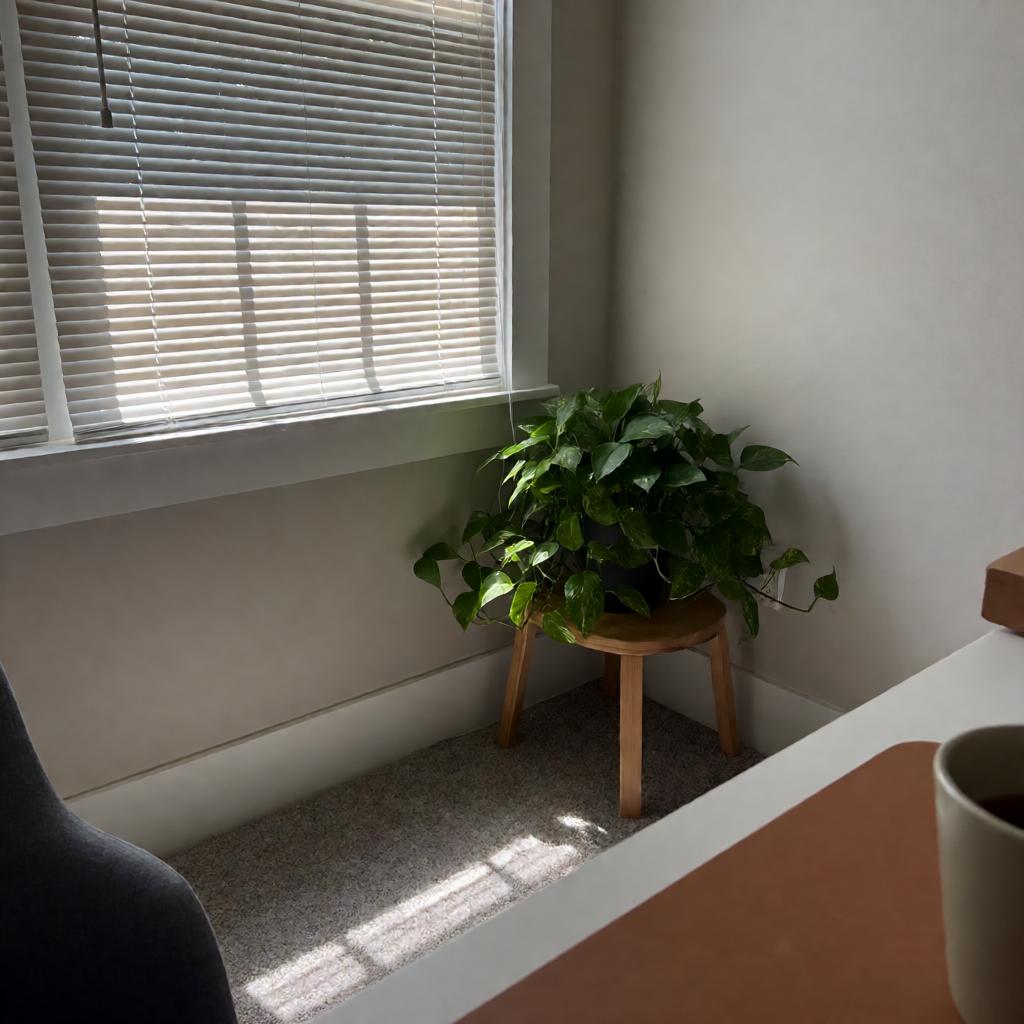
One Saturday I admitted defeat. I carried the fig out to the bin, vacuumed the corner, wiped down the baseboards, and — this is the important part — did not immediately replace it with another plant. I left the corner empty for two weeks. Then I moved a small, healthy pothos from the living room onto a low stool in that spot. That's it. One plant swap and a sincere cleaning.
What Happened
The change was almost embarrassingly immediate. The room felt lighter. I started using the desk again within a few days, mostly because the corner no longer pulled my eye toward something failing. I'm not going to claim the pothos doubled my income. But I did stop dreading the room, and I got through a backlog of work I'd been avoiding for weeks.
Spatial Orientation
| Bagua Sector | 巽 ☴ · Xun |
|---|---|
| Direction | Southeast |
| Element | wood |
What works best here
Xun (4) · Wood. Southeast loves moderate height with an airy, open feel.
Place: tall leafy plants, natural fiber rugs, light wood tones, cream and soft green.
Recommended crystal
Citrine or Green Jade — placed on a wooden side table in the southeast corner
Perfect for a creative workspace or journaling spot; natural light is your friend here
Source Analysis
1. The Original Principle
Original Text
Tanto si se trata de plantas vivas como artificiales, lo realmente importante es que su aspecto sea saludable y lozano. Las de aspecto marchito y descuidado sólo hacen que merme el chi allí donde estén. Asegúrese de mantener sus plantas bagua alegres y saludables. Corte las flores en cuanto empiecen a marchitarse, y retire las plantas de las macetas cuando estén enfermizas, desmochadas o infestadas de insectos. NO se recomienda en absoluto utilizar ninguna zona bagua a modo de «hospital para plantas».
English Translation
A classical principle holds that plants — real or artificial — must look healthy and thriving. Wilted, neglected specimens diminish the quality of the space they occupy. Remove sick or infested plants promptly, and never use a significant area of the home as a plant hospital.
2. About the Source
Feng shui para Occidente by Terah Kathryn Collins · United States · 1995
Feng Shui for the West is a practical guide that adapts classical Chinese spatial principles for modern Western homes and lifestyles. Written by one of the first American authors to bring Feng Shui to a mainstream English-speaking audience, the book translates ancient Bagua concepts into actionable room-by-room advice using familiar Western design language and contemporary case examples.
3. How This Principle Applies to This Case
This case illustrates a simple spatial principle: the eye reads a struggling plant as a signal of neglect, and that signal colors the entire room. Modern environmental psychology supports this — visual disorder and perceived decay increase cognitive load and reduce willingness to spend time in a space. The classical text's advice to remove unhealthy plants and avoid using important areas as recovery wards is essentially a rule about not letting one problem object contaminate a whole zone. The fix isn't mystical; it's about removing a persistent visual stressor and replacing it with something thriving.
Bring the Purest Energy Into Your Home
Sourced from altitudes above 4,000 meters in the Himalayan range — the highest place on Earth and the closest to the sun. These crystals formed over millions of years in some of the planet's most pristine conditions, untouched by industrial pollution. Each piece carries the raw, unfiltered energy of the mountains. Whether placed on a nightstand, a desk, or a meditation corner, they serve as a quiet anchor — a daily reminder to pause, breathe, and reconnect.
Explore the HIMA ALAÏA collection →Case source
Feng Shui Style
Featured on HGTV. Specializes in Classical Liqi Pai (San Yuan Xuan Kong Fei Xing, Ba Zhai Ming Jing) and historic home restoration with deep Feng Shui integration.