I Hung a Wind Chime in Our Dead-Quiet Living Room and We Actually Started Talking Again
After months of silence and screen time in their living room, a couple hung a wind chime near the window and noticed a subtle shift in how they used the space.
Location
Portland, Oregon, United States
Property Type
Apartment
Room
Living Room
Direction
West
The Problem
My partner and I both work from home. Our living room is the biggest room in the apartment, but we basically stopped using it. Every evening we'd end up in the kitchen or the bedroom, scrolling on our phones. The living room felt... dead. Not angry, not sad — just empty. We'd sit there for five minutes, feel uneasy, and leave. It was like the room had no reason to exist.
What They Tried
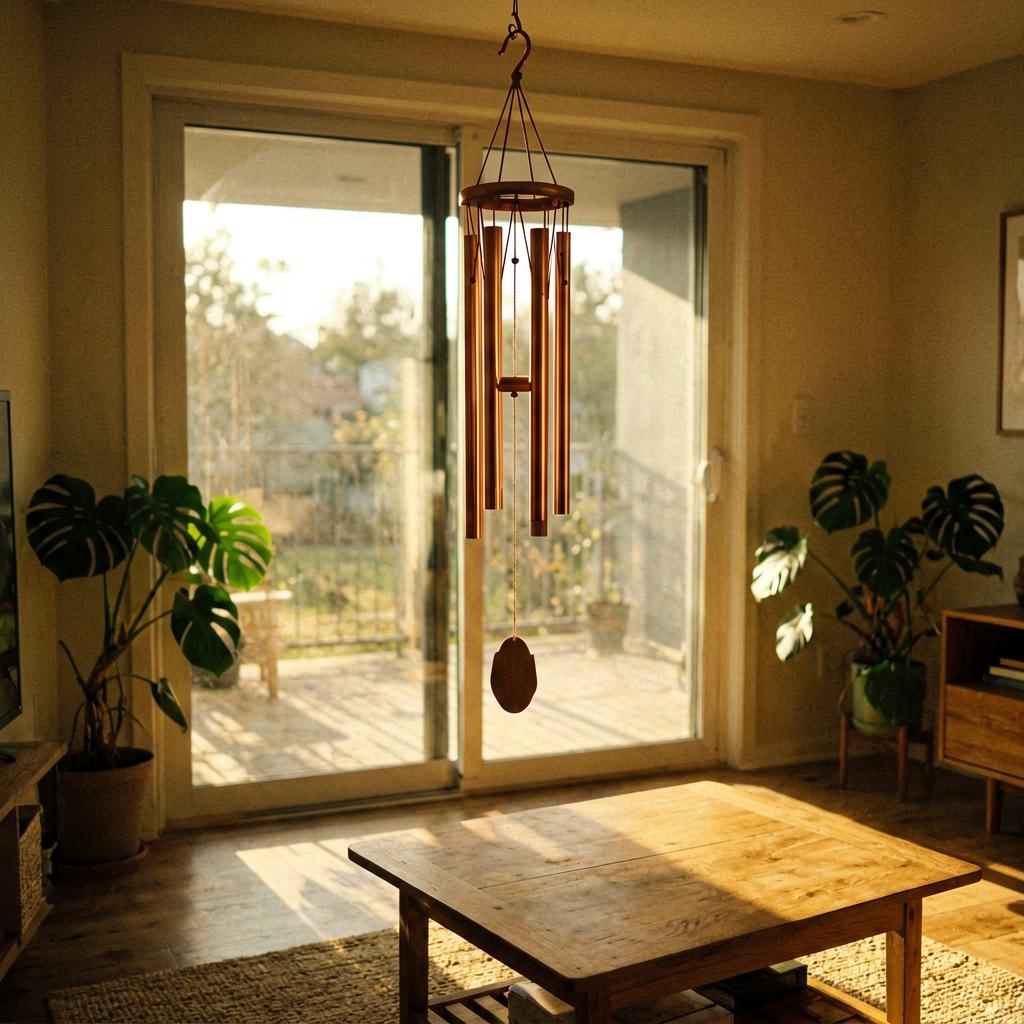
A friend who's a sound designer came over and said, 'This room is too quiet. It's like a library in here.' She suggested hanging something that makes a gentle, random sound near the window — something that would catch a draft. I found a small metal wind chime at a craft fair, five tubes, copper finish. I hung it from a hook above the sliding door to the balcony. It only chimes when the wind comes from the west, which is maybe twice an hour.
What Happened
At first I thought it was placebo. But after a week, I noticed we were both sitting in the living room more. Not every night, but three or four times a week. The chime would go off and we'd both look up from our phones, maybe make a comment. 'Wind's picking up.' 'Sounds nice.' That tiny shared moment broke the silence. We started leaving the TV off, just reading or talking. The room felt less heavy. It's not a miracle — we still have quiet nights — but the space actually feels lived in now.
Spatial Orientation
| Bagua Sector | 兑 ☱ · Dui |
|---|---|
| Direction | West |
| Element | metal |
What works best here
Dui (7) · Metal. West should be lower and more open than East for left-right equilibrium.
Place: low cabinets, metal decor (brass, copper, steel), round shapes, white and grey tones.
Recommended crystal
Clear Quartz or Selenite — placed on a low console or side table in the west
Round shapes and metallic finishes feel especially at home on this side of the room
Source Analysis
1. The Original Principle
Original Text
5) Fuentes de sonido 206
English Translation
Sound sources like wind chimes or bells activate and move the air in a room, creating a sense of gentle dynamism. They break up stillness and draw attention to the present moment, which can make a space feel more alive and connected.
2. About the Source
Feng shui para Occidente by Terah Kathryn Collins · United States · 1995
Feng Shui for the West is a practical guide that adapts classical Chinese spatial principles for modern Western homes and lifestyles. Written by one of the first American authors to bring Feng Shui to a mainstream English-speaking audience, the book translates ancient Bagua concepts into actionable room-by-room advice using familiar Western design language and contemporary case examples.
3. How This Principle Applies to This Case
The principle here is about using sound to counterbalance stagnant or overly quiet spaces. In this case, the living room's extreme silence created an uncomfortable vacuum — a kind of sensory void that made the space feel uninviting. The wind chime introduced an unpredictable, gentle auditory event that served as a natural 'attention anchor.' Psychologically, this works because random, non-threatening sounds lower cortisol and can trigger shared attention between people, which fosters micro-interactions. The couple didn't just 'fix' the room — they changed the room's acoustic signature, which in turn changed their behavior. The classical idea of 'activating chi' is really just a metaphor for what any sound designer or environmental psychologist would recognize: spaces need sensory texture to feel alive.
Bring the Purest Energy Into Your Home
Sourced from altitudes above 4,000 meters in the Himalayan range — the highest place on Earth and the closest to the sun. These crystals formed over millions of years in some of the planet's most pristine conditions, untouched by industrial pollution. Each piece carries the raw, unfiltered energy of the mountains. Whether placed on a nightstand, a desk, or a meditation corner, they serve as a quiet anchor — a daily reminder to pause, breathe, and reconnect.
Explore the HIMA ALAÏA collection →Related Elements
Case source
RD Chin, Feng Shui Architect
NYC licensed architect, Feng Shui master, and published author. Worked under legendary architect Paul Rudolph. Specializes in complex residential and commercial blueprint Feng Shui assessment and spatial flow micro-adjustments. Conducts Feng Shui public courses across the US.