I Moved My Bed Away From the South Wall and My Insomnia Finally Broke
A real estate agent notices how a simple bed repositioning transformed a client's sleep and the room's entire feel.
Location
Austin, United States
Property Type
House
Room
Bedroom
Direction
South
The Problem
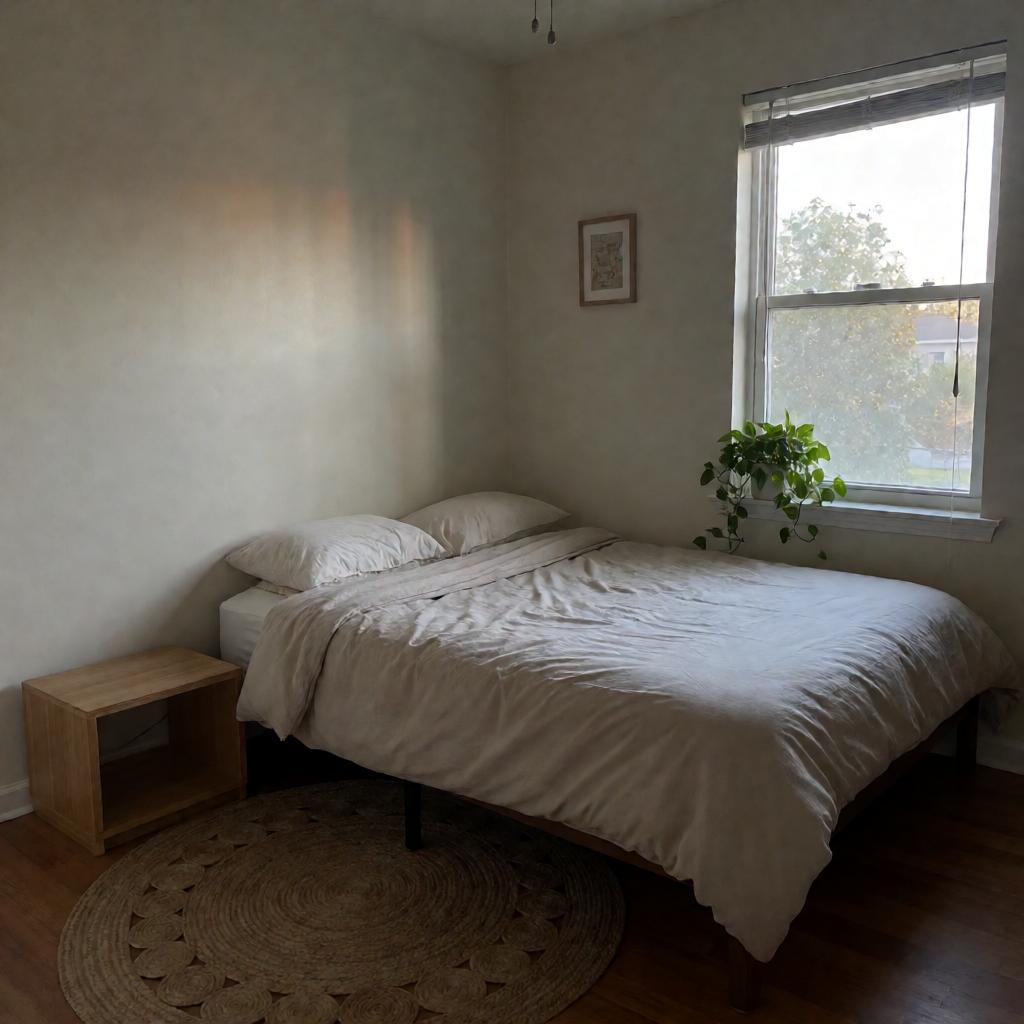
The bedroom was small—maybe ten by twelve—with a single window facing east. The bed was pushed flush against the south wall, directly under a heavy wooden shelf. The owner, a graphic designer in her late thirties, hadn't slept through the night in months. She blamed stress, but the room itself felt oppressive. The south wall loomed, casting a shadow over the bed even at noon.
What They Tried
I suggested moving the bed to the west wall, leaving a narrow gap from the south wall. We also removed the heavy shelf and replaced it with a low, open nightstand. The triangular corner formed by the shelf and wall was softened with a round rug and a small trailing plant.
What Happened
Within two weeks, she reported sleeping six to seven hours straight. The room felt lighter. She started using it for reading again. The change wasn't magic—just better proportion and less visual weight overhead.
Spatial Orientation
| Bagua Sector | 离 ☲ · Li |
|---|---|
| Direction | South |
| Element | fire |
What works best here
Li (9) · Fire. South should feel more open and lower than North for visual balance.
Place: low-profile furniture, mirrors, glass surfaces, warm lighting.
Recommended crystal
Clear Quartz or Sunstone — placed where it catches natural light, like a windowsill or console table
Mirrors work exceptionally well here — they reflect light and make the room feel larger
Source Analysis
1. The Original Principle
Original Chinese
午沙出穷郎,亦主非命亡,形若三角起,双月一齐伤,心痛为小事,野娘伴似娘,子水再相见,吐血面皮黄。
English Translation
An 18th-century text notes that a raised or angular feature in the south can correspond to financial strain and poor health, including restless sleep. It advises lowering the height and avoiding triangular shapes.
2. About the Source
金锁玉关 by Anonymous (private manuscript) · China · Pre-Song Dynasty (before 960 CE)
The Golden Lock and Jade Pass is an esoteric classical text on residential site analysis, passed down through private manuscripts. It provides a systematic method for evaluating how the surrounding landforms — heights, depressions, and water features in each compass direction — shape the experience of a living space. Its sand-and-water framework remains one of the most practical tools in the landscape assessment tradition.
3. How This Principle Applies to This Case
The classical principle warns against elevated or angular forms in the south, associating them with poverty and misfortune. In this case, the heavy shelf and bed placement created a visual and spatial imbalance. Modern environmental psychology confirms that overhead structures can trigger subconscious alertness, disrupting sleep. By reducing height and softening angles, the room shifted from threatening to restful. The outcome aligns with the text's advice: lower the south, avoid triangles, and introduce a calming element.
Bring the Purest Energy Into Your Home
Sourced from altitudes above 4,000 meters in the Himalayan range — the highest place on Earth and the closest to the sun. These crystals formed over millions of years in some of the planet's most pristine conditions, untouched by industrial pollution. Each piece carries the raw, unfiltered energy of the mountains. Whether placed on a nightstand, a desk, or a meditation corner, they serve as a quiet anchor — a daily reminder to pause, breathe, and reconnect.
Explore the HIMA ALAÏA collection →Case source
Domicile Design
30+ years of high-end interior design in Minneapolis. Certified Feng Shui master and Diamond Dowser, specializing in geopathic stress detection and spatial environmental science.