I Moved My Dad’s Armchair Out of the Corner and He Stopped Yelling at Everyone
After moving her father's favorite armchair from the north-northwest corner of the living room to a more central spot, the author noticed a dramatic shift in his mood and the family's dynamic.
Location
Portland, Oregon, United States
Property Type
House
Room
Living Room
Direction
North-Northwest
The Problem
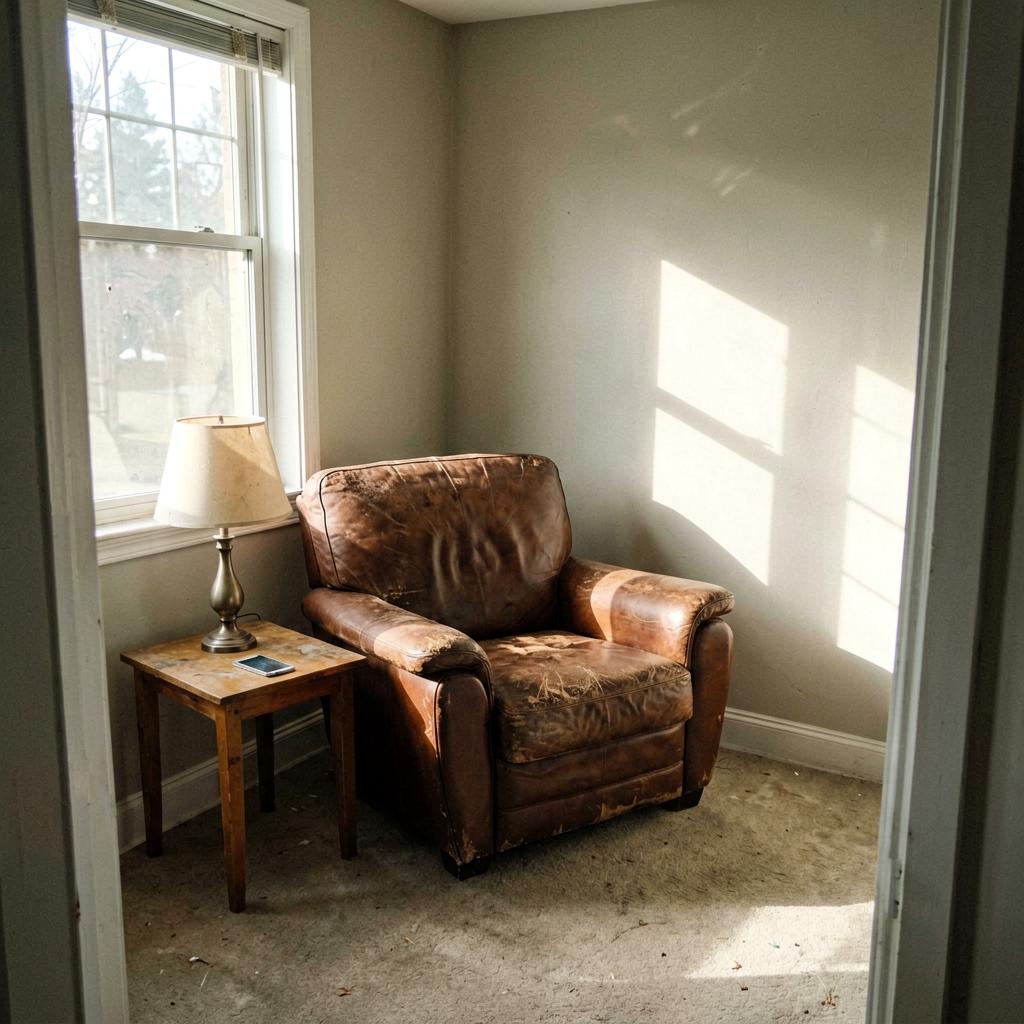
My dad is a good guy, but for the past year or so, he’s been impossible. Snapping at my mom, yelling at me for leaving a mug in the sink, pacing around like he’s trapped. The worst part? He’d sit in his old brown armchair in the corner of the living room—the one that’s kind of shoved into the north-northwest angle—and just brood. We’d all tiptoe around him. My mom tried everything: making his favorite dinners, booking a weekend away. Nothing worked. He just seemed angry all the time.
What They Tried
I was visiting a friend who’s a space consultant—she works with room layouts, nothing mystical. I mentioned my dad’s mood. She asked where his chair was. I described the corner. She said, 'That spot is really isolated. It’s like he’s facing two walls at once. Try moving the chair so it faces the room, maybe near the window.' I was skeptical, but desperate. So one Saturday, while my dad was out, I shifted his armchair about four feet away from that corner, angled it toward the center of the living room, and put a small table with a lamp next to it. That was it. No new furniture, no paint.
What Happened
My dad came home, walked into the living room, stopped. He looked at the chair, then at me. 'What did you do?' he said. Not angry—just curious. He sat down. An hour later, he was reading the paper. No yelling at dinner. A week later, my mom whispered to me, 'He’s been talking to me again. Like, real conversations.' It’s been two months. He’s still in that chair. But now he laughs. He invites us to sit nearby. I don’t know why it worked—maybe it’s the light, maybe he just felt less boxed in. But the change is real.
Spatial Orientation
| Bagua Sector | North-Northwest |
|---|---|
| Direction | North-Northwest |
Source Analysis
1. The Original Principle
Original Chinese
亥为朱雀、龙头、父命座,犯之害命坐人。
English Translation
The Book of Dwellings (Zhai Jing) notes that the Hai direction (north-northwest) is the seat of the Vermilion Bird and the father's life position. Sitting here in a confined way is said to disturb the occupant's well-being.
2. About the Source
宅经 by Attributed to the Yellow Emperor · China · Tang Dynasty (618–907 CE), based on earlier traditions
The Classic of Dwellings is one of the earliest surviving Chinese texts dedicated entirely to residential architecture. It presents a holistic view of the home as a living organism — comparing the house to a body with its own anatomy of walls, doors, rooms, and courtyards. Its core teaching is that a well-arranged home supports the health and fortune of its inhabitants as naturally as good soil supports healthy plants.
3. How This Principle Applies to This Case
This case illustrates a principle from the Zhai Jing about the north-northwest (Hai) position being linked to the father's role and vitality. In modern terms, the corner placement created a visual and psychological dead end—facing two walls with no sightline to the room or other people. This can increase feelings of isolation and irritability, particularly for someone who may already feel marginalized. By moving the chair to face the room, the father gained a sense of inclusion and visual connection, which likely reduced his stress and improved his mood. The change wasn't supernatural—it was about spatial psychology and the human need for engagement.
Bring the Purest Energy Into Your Home
Sourced from altitudes above 4,000 meters in the Himalayan range — the highest place on Earth and the closest to the sun. These crystals formed over millions of years in some of the planet's most pristine conditions, untouched by industrial pollution. Each piece carries the raw, unfiltered energy of the mountains. Whether placed on a nightstand, a desk, or a meditation corner, they serve as a quiet anchor — a daily reminder to pause, breathe, and reconnect.
Explore the HIMA ALAÏA collection →Case source
Marie Diamond
World-renowned Feng Shui master featured in The Secret. Advises celebrities and global leaders on spatial energy.