I Moved My Desk 3 Feet From The Wall And My Anxiety Spiked Less
A freelance designer rearranges her home office to face the door and finds her afternoon anxiety attacks ease up.
Location
Portland, Oregon, United States
Property Type
Apartment
Room
Home Office
Direction
Southeast
The Problem
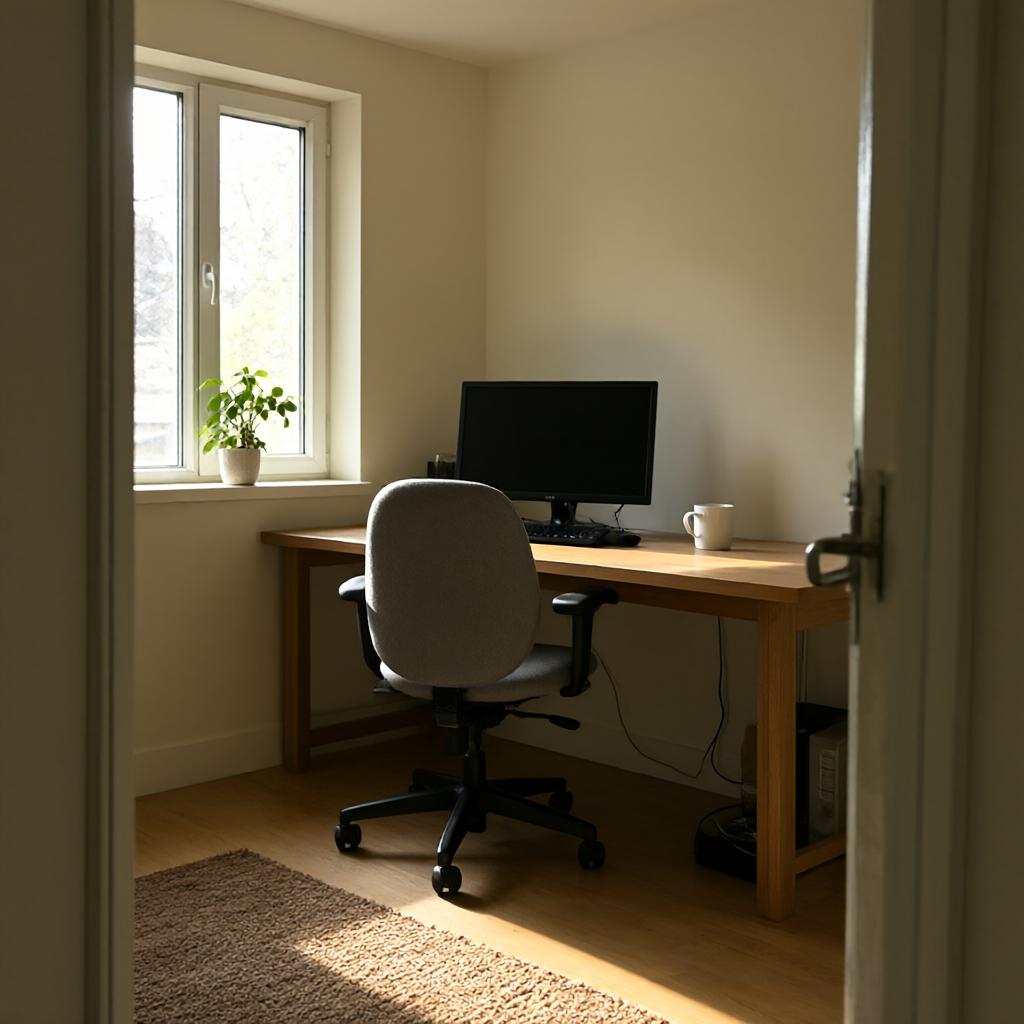
My home office was a narrow slice of a room—maybe 8 feet wide—with my desk pushed flush against the back wall. Every afternoon around 3 p.m., I'd get this tight, jittery feeling in my chest. I'd spin around in my chair, convinced someone was behind me. I snapped at my partner over nothing. I thought it was just work stress.
What They Tried
My friend, a spatial designer, came over for coffee and said, 'You're sitting with your back to the door. You can't see who's coming.' She suggested I pull the desk away from the wall and turn it so I faced the door, with a clear path behind me. I was skeptical—it's a tiny room. But I moved the desk 3 feet forward, shifted my monitor, and suddenly the space felt less like a coffin.
What Happened
The first week, I kept noticing the door in my peripheral vision. But by day four, that 3 p.m. panic didn't show up. I wasn't craning my neck to check over my shoulder. I stopped snapping at my partner. It's not magic—work is still stressful—but I don't feel trapped in my own office anymore.
Spatial Orientation
| Bagua Sector | 巽 ☴ · Xun |
|---|---|
| Direction | Southeast |
| Element | wood |
What works best here
Xun (4) · Wood. Southeast loves moderate height with an airy, open feel.
Place: tall leafy plants, natural fiber rugs, light wood tones, cream and soft green.
Recommended crystal
Citrine or Green Jade — placed on a wooden side table in the southeast corner
Perfect for a creative workspace or journaling spot; natural light is your friend here
Source Analysis
1. The Original Principle
Original Chinese
若言阳宅何异阴宫,最要地势宽平,不宜堂局逼窄。
English Translation
For a dwelling, the most important thing is that the land be broad and level; it should not be cramped or narrow.
2. About the Source
雪心赋 论阳宅 by Bu Yingtian · China · Tang Dynasty (618–907 CE)
The Snow Heart Rhapsody is a poetic yet rigorously analytical classical text on landscape assessment. Written in rhymed prose, it covers mountain forms, water patterns, terrain energy, and site selection with remarkable literary elegance. Its observations about how land contours create sheltered, comfortable settings for human habitation remain relevant to modern site planning and environmental psychology.
3. How This Principle Applies to This Case
The classical principle emphasizes spacious, level ground for a dwelling, avoiding cramped or narrow sites. Here, the narrow room and the desk's position against the wall created a sense of being boxed in, with no view of the entrance. Modern environmental psychology explains this through 'prospect and refuge'—we feel safer when we can see our surroundings while having our back protected. By turning the desk to face the door and creating a clear path, the occupant restored a sense of control and reduced ambient anxiety, aligning with the principle's emphasis on openness and avoiding constriction.
Bring the Purest Energy Into Your Home
Sourced from altitudes above 4,000 meters in the Himalayan range — the highest place on Earth and the closest to the sun. These crystals formed over millions of years in some of the planet's most pristine conditions, untouched by industrial pollution. Each piece carries the raw, unfiltered energy of the mountains. Whether placed on a nightstand, a desk, or a meditation corner, they serve as a quiet anchor — a daily reminder to pause, breathe, and reconnect.
Explore the HIMA ALAÏA collection →Case source
Feng Shui for Real Life
Nationally renowned Feng Shui consultant and bestselling author. Longtime advisor to Fortune 500 companies, real estate developers, and Hollywood celebrities. Transforms traditional Feng Shui into practical modern business tools.