I Moved My Desk 90 Degrees to Face the Door — Here's What Happened to My Focus
A designer rearranges a home office to improve sightlines and reduce distraction, with unexpected results.
Location
Portland, United States
Property Type
House
Room
Home Office
Direction
East
The Problem
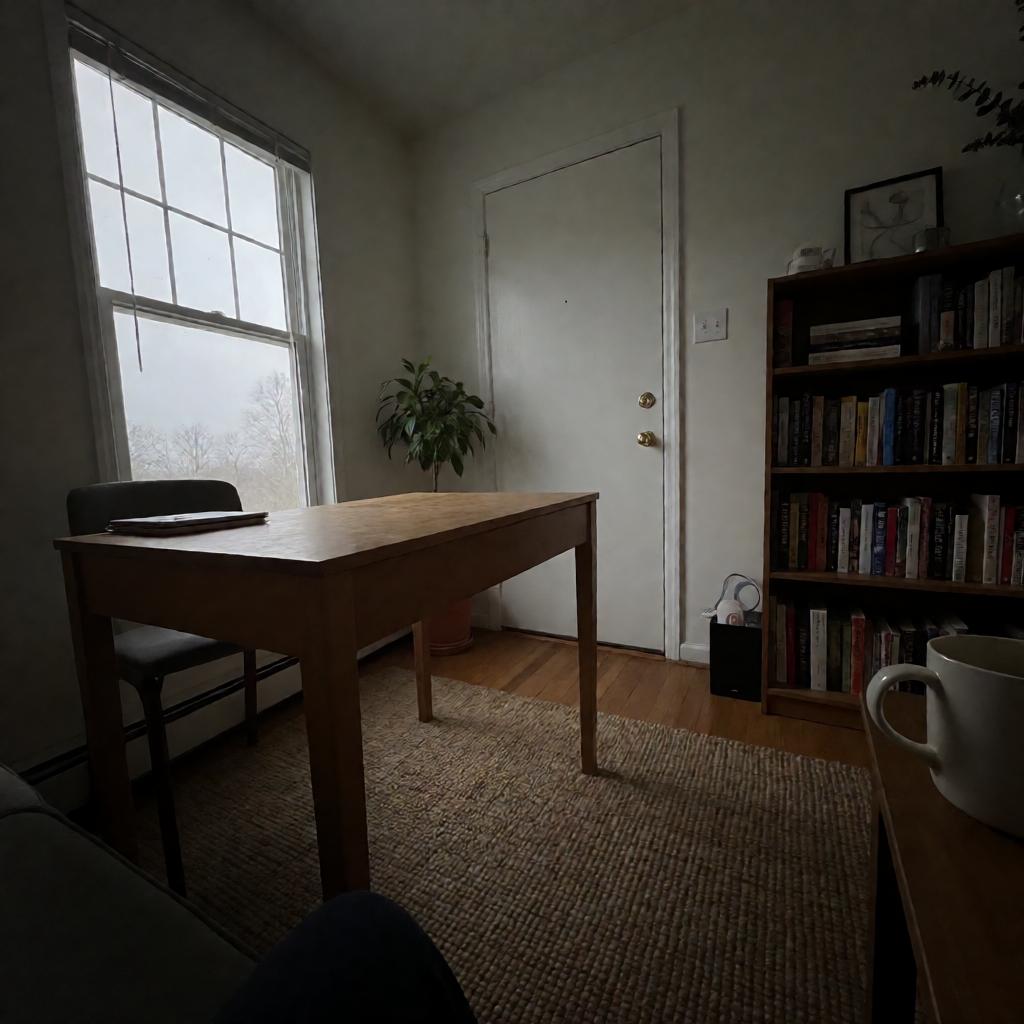
My client, a freelance writer, couldn't focus in her home office. She'd sit at her desk for hours, but her attention kept drifting to the window, the bookshelf, the hallway noise. She felt scattered and unproductive, and it was affecting her work and mood.
What They Tried
I suggested moving her desk so it faced the door, rather than having her back to it. This simple shift changed her sightline and gave her a sense of control over the space. I also added a small rug to define the workspace and a plant to soften the corner.
What Happened
Within a week, she reported feeling more settled and able to concentrate for longer stretches. She wasn't suddenly a productivity machine, but the constant urge to check her phone or stare out the window diminished. The room felt calmer and more purposeful.
Spatial Orientation
| Bagua Sector | 震 ☳ · Zhen |
|---|---|
| Direction | East |
| Element | wood |
What works best here
Zhen (3) · Wood. East should be the tallest area of the room when possible.
Place: tall plants (especially bamboo or fiddle-leaf fig), wooden furniture, green accents.
Recommended crystal
Green Aventurine or Moss Agate — placed near a window or on a plant shelf in the east
This is the growth sector — plants thrive here and vertical elements feel natural
Source Analysis
1. The Original Principle
Original Chinese
山贵踊跃奔腾,起伏转折,若不动如死蛇灰袋,便是无气;水贵停聚储蓄,不见来去,若急流如奔马射箭,则为煞气。
English Translation
A classical text on dwelling places observes that mountains should be lively and undulating, while water should be still and gathering. If a mountain is as lifeless as a dead snake, it lacks vitality; if water rushes like a galloping horse, it brings trouble. The ideal is a balance of movement and stillness.
2. About the Source
雪心赋 地理之宗 by Bu Yingtian · China · Tang Dynasty (618–907 CE)
The Snow Heart Rhapsody is a poetic yet rigorously analytical classical text on landscape assessment. Written in rhymed prose, it covers mountain forms, water patterns, terrain energy, and site selection with remarkable literary elegance. Its observations about how land contours create sheltered, comfortable settings for human habitation remain relevant to modern site planning and environmental psychology.
3. How This Principle Applies to This Case
The classical principle of dynamic mountains and still water translates to modern spaces as a need for both stimulation and calm. In this case, the desk's original position had the client facing a wall, creating a sense of stagnation (stillness without stimulation), while the window and hallway provided distracting movement (stimulation without stillness). By reorienting the desk to face the door, we introduced a balanced sightline: the door represents a point of active engagement (mountain), while the wall behind her provides stable support (water). Modern environmental psychology supports this: humans feel more secure when they can see entrances, reducing vigilance and freeing cognitive resources for focus.
Bring the Purest Energy Into Your Home
Sourced from altitudes above 4,000 meters in the Himalayan range — the highest place on Earth and the closest to the sun. These crystals formed over millions of years in some of the planet's most pristine conditions, untouched by industrial pollution. Each piece carries the raw, unfiltered energy of the mountains. Whether placed on a nightstand, a desk, or a meditation corner, they serve as a quiet anchor — a daily reminder to pause, breathe, and reconnect.
Explore the HIMA ALAÏA collection →Case source
Feng Shui Joan's Way
Connecticut-based Feng Shui consultant. Specializes in Western Bagua system for small and medium business Feng Shui layouts to enhance wealth and team cohesion.