I Moved My Desk Away From the Window and Finally Stopped Procrastinating
A Reddit user shares how shifting their home office desk from a distracting window view to a solid wall improved focus and productivity.
Location
Austin, United States
Property Type
Apartment
Room
Home Office
Direction
North
The Problem
I've been working from home for two years, and my desk was right in front of a big window overlooking a busy street. I thought the natural light and view would inspire me, but I found myself constantly looking outside, watching people and cars, and getting nothing done. My mind felt scattered, and I'd end the day with a long to-do list still untouched. It was frustrating because I genuinely wanted to focus, but something about that spot made it impossible.
What They Tried
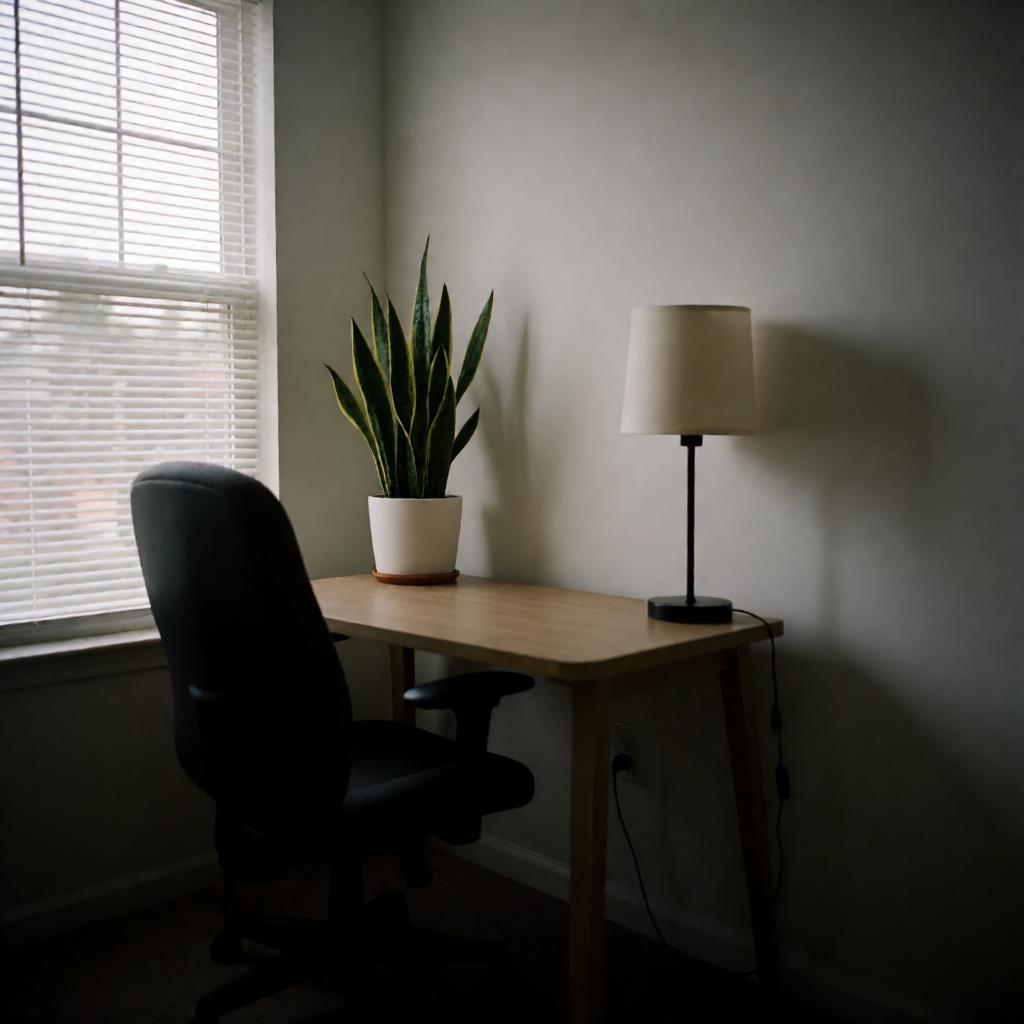
After reading about how our environment affects concentration, I decided to try moving my desk. I shifted it from the window to the solid wall opposite, so my back was to the window and I faced a blank wall. I also cleared off the clutter that had accumulated—old papers, empty cups, random gadgets. I added a small plant and a lamp for warmth. The change took maybe an hour, but it felt like a completely different room.
What Happened
Honestly, I was skeptical at first. But within a few days, I noticed I wasn't constantly glancing outside. My focus improved, and I started finishing tasks before lunch. I still get distracted sometimes, but it's way better. I don't feel that nagging urge to check the street every five minutes. It's not magic, but it's a real difference.
Spatial Orientation
| Bagua Sector | 坎 ☵ · Kan |
|---|---|
| Direction | North |
| Element | water |
What works best here
Kan (1) · Water. North side can be slightly taller than South for a grounded feel.
Place: dark-colored ceramics, stone objects, heavy bookshelves.
Recommended crystal
Black Obsidian or Smoky Quartz — placed on a low table or shelf in the north corner
A solid, weighty presence here helps the room feel anchored and secure
Source Analysis
1. The Original Principle
Original Chinese
若见文笔孤单,砚池污浊。枉凿匡衡之壁,徒关孙敬之门。
English Translation
An old text notes that if a solitary peak stands alone and a pond is murky, even the most diligent scholar will struggle to succeed. It suggests that a cluttered, unbalanced environment can hinder progress, no matter how hard one tries.
2. About the Source
雪心赋 论水口 by Bu Yingtian · China · Tang Dynasty (618–907 CE)
The Snow Heart Rhapsody is a poetic yet rigorously analytical classical text on landscape assessment. Written in rhymed prose, it covers mountain forms, water patterns, terrain energy, and site selection with remarkable literary elegance. Its observations about how land contours create sheltered, comfortable settings for human habitation remain relevant to modern site planning and environmental psychology.
3. How This Principle Applies to This Case
This case illustrates how environmental factors can undermine even strong motivation. The classical principle describes a scenario where imbalanced surroundings—a lone peak and dirty pond—frustrate scholarly efforts. In modern terms, a distracting workspace (like a window with a busy view) can fragment attention, while a clean, enclosed space supports focus. The user's simple desk reposition eliminated visual noise, aligning with research on attention restoration and cognitive load. The fix wasn't about adding effort but removing obstacles, echoing the text's implication that sometimes the solution lies in adjusting the setting, not the person.
Bring the Purest Energy Into Your Home
Sourced from altitudes above 4,000 meters in the Himalayan range — the highest place on Earth and the closest to the sun. These crystals formed over millions of years in some of the planet's most pristine conditions, untouched by industrial pollution. Each piece carries the raw, unfiltered energy of the mountains. Whether placed on a nightstand, a desk, or a meditation corner, they serve as a quiet anchor — a daily reminder to pause, breathe, and reconnect.
Explore the HIMA ALAÏA collection →Case source
Metro Interiors
Minnesota-based full-service interior design firm. President Julie Ann Segal is a Red Ribbon certified Feng Shui consultant (IFSG), merging modern luxury with classical Feng Shui.