I Moved My Desk Into The Sunbeam And Started Finishing Things Before Noon
A designer helps a burnout-prone writer reclaim focus by repositioning her desk into a natural light pocket — no feng shui, just sightlines and sunlight.
Location
Portland, United States
Property Type
Apartment
Room
Home Office
Direction
East
The Problem
She couldn't focus. Every afternoon her brain went static around 2pm. She'd switch tabs, scroll her phone, then hate herself. Her home office was a dim corner of the living room — desk against an interior wall, back to the only window. She said it felt like working in a closet.
What They Tried
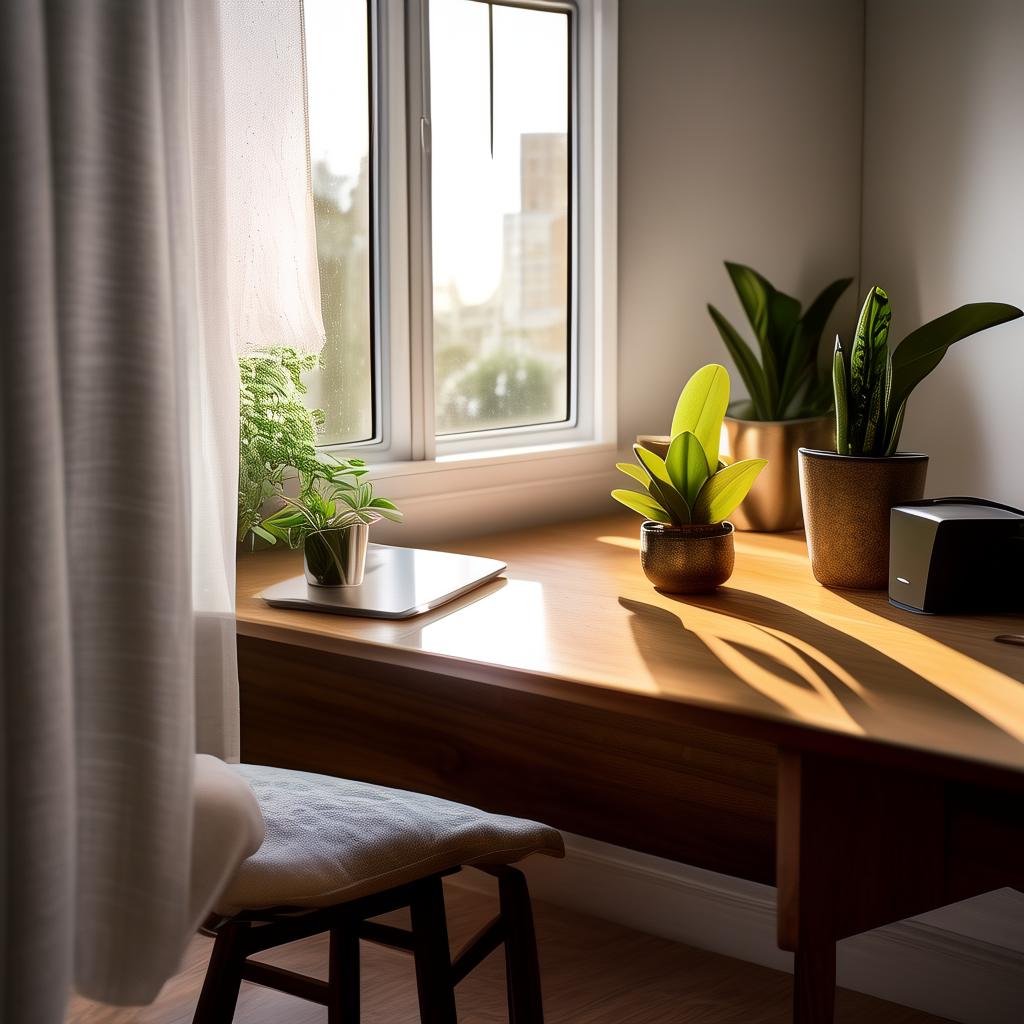
I asked her to move the desk so it faced the window, with the long side parallel to the glass — not directly in front of it, but angled so she could look up and see sky. Then I had her clear everything off the top except her laptop and one small plant. No piles. No sticky notes blocking the light.
What Happened
Within a week she said the morning felt different — she actually wanted to sit down. She'd finish her deep work before lunch and spend afternoons on admin without the crash. The room still looked the same to me, but she swore the air felt lighter. I think it was just the light on her face.
Spatial Orientation
| Bagua Sector | 震 ☳ · Zhen |
|---|---|
| Direction | East |
| Element | wood |
What works best here
Zhen (3) · Wood. East should be the tallest area of the room when possible.
Place: tall plants (especially bamboo or fiddle-leaf fig), wooden furniture, green accents.
Recommended crystal
Green Aventurine or Moss Agate — placed near a window or on a plant shelf in the east
This is the growth sector — plants thrive here and vertical elements feel natural
Source Analysis
1. The Original Principle
Original Text
tenemos en nuestras manos una inagotable reserva de poderosos y eficaces métodos para intensificar y mejorar el chi — la energía vital — y hacer que nuestro entorno sea armonioso.
English Translation
A modern Western book on space harmony explains that the vital energy of a room can be intensified by simple adjustments: opening sightlines, allowing natural light to fall on work surfaces, and removing visual clutter. The goal is a space that feels supportive rather than draining.
2. About the Source
Feng shui para Occidente by Terah Kathryn Collins · United States · 1995
Feng Shui for the West is a practical guide that adapts classical Chinese spatial principles for modern Western homes and lifestyles. Written by one of the first American authors to bring Feng Shui to a mainstream English-speaking audience, the book translates ancient Bagua concepts into actionable room-by-room advice using familiar Western design language and contemporary case examples.
3. How This Principle Applies to This Case
The classical principle here is about 'intensifying chi' through spatial adjustments — but this case hinges on two well-documented mechanisms: circadian lighting and visual field reduction. Positioning the desk to receive morning light directly on the face resets the body's cortisol rhythm, improving alertness and mood. Clearing the desk reduced cognitive load — the brain no longer has to process visual noise before focusing on the task. The result isn't mystical, it's ergonomic.
Bring the Purest Energy Into Your Home
Sourced from altitudes above 4,000 meters in the Himalayan range — the highest place on Earth and the closest to the sun. These crystals formed over millions of years in some of the planet's most pristine conditions, untouched by industrial pollution. Each piece carries the raw, unfiltered energy of the mountains. Whether placed on a nightstand, a desk, or a meditation corner, they serve as a quiet anchor — a daily reminder to pause, breathe, and reconnect.
Explore the HIMA ALAÏA collection →Related Elements
Case source
Laura Cerrano
Second-generation Feng Shui master. Integrates classical Feng Shui with quantum physics and geomancy for NYC clients.