I Moved My Desk So It Faces the Door — My Work Anxiety Actually Dropped
A simple desk repositioning based on a gut feeling transformed my home office focus and stress levels.
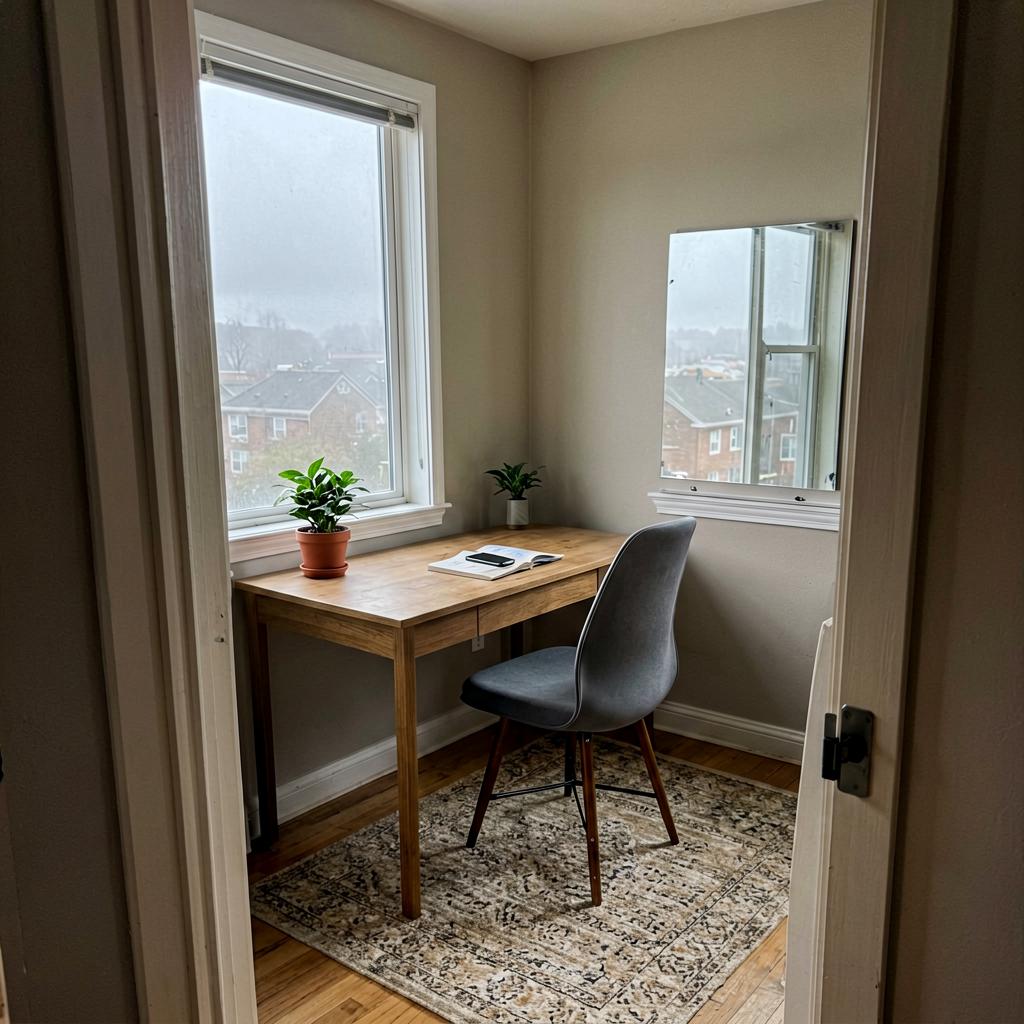
Location
Austin, TX, United States
Property Type
Apartment
Room
Home Office
Direction
North
The Problem
I'd been working from home for months, but my home office felt off. I was distracted, anxious, and my productivity tanked. I tried everything — noise-canceling headphones, different playlists, even a standing desk — but nothing helped.
What They Tried
One day, I shifted my desk so it faced the door. It was a small change, but it made a huge difference. Now I can see who's coming and going, and I feel more in control of my space.
What Happened
Within a week, I noticed a real change. I was less jumpy, more focused, and my stress levels dropped. I didn't need all the gadgets anymore — just a simple rearrangement.
Spatial Orientation
| Bagua Sector | 坎 ☵ · Kan |
|---|---|
| Direction | North |
| Element | water |
What works best here
Kan (1) · Water. North side can be slightly taller than South for a grounded feel.
Place: dark-colored ceramics, stone objects, heavy bookshelves.
Recommended crystal
Black Obsidian or Smoky Quartz — placed on a low table or shelf in the north corner
A solid, weighty presence here helps the room feel anchored and secure
Source Analysis
1. The Original Principle
Original Chinese
注:以下的翻卦掌诀好好研究,可以在手掌上马上找出各方的。翻卦掌诀:离巽坤兑,乾艮坎震。乾兑立起,震离互起,坤艮立起,坎巽互起,边起边止,中起中止,上起下止,下起上落。口诀:生、五、延、六、祸、天、绝、伏。
English Translation
This classical text describes a palm-mapping method for arranging rooms. Certain directions pair together, and moving furniture to face a door or key point can create a sense of safety and order.
2. About the Source
八宅明镜上卷 by Yang Yunsong (attributed) · China · Qing Dynasty (1644–1912 CE)
The Eight Mansions Bright Mirror is one of the most influential classical Chinese texts on residential architecture. For over three centuries, it has served as a foundational reference for understanding how the layout and orientation of living spaces affect the wellbeing of their inhabitants, focusing on how living spaces can be arranged to support health, relationships, and prosperity.
3. How This Principle Applies to This Case
The principle of facing a door or entrance taps into a basic human need for security. When your back is to a door, your brain stays on high alert — a leftover survival instinct. Facing the door reduces that subconscious vigilance, letting you focus better. It's not magic; it's just good spatial psychology. The classical palm method simply formalizes what many people feel instinctively: position matters for peace of mind.
Bring the Purest Energy Into Your Home
Sourced from altitudes above 4,000 meters in the Himalayan range — the highest place on Earth and the closest to the sun. These crystals formed over millions of years in some of the planet's most pristine conditions, untouched by industrial pollution. Each piece carries the raw, unfiltered energy of the mountains. Whether placed on a nightstand, a desk, or a meditation corner, they serve as a quiet anchor — a daily reminder to pause, breathe, and reconnect.
Explore the HIMA ALAÏA collection →Case source
Anjie Cho Architect & Holistic Spaces
NYC-based architect and BTB Feng Shui master. Co-founder of Mindful Design Feng Shui School. Blends modern interior design with classical BTB Feng Shui. Author of multiple Feng Shui books.