I Moved My Desk to Face the Door and My 'Afternoon Slump' Disappeared in 3 Days
A Reddit user shares how a simple desk repositioning in their home office eliminated their daily 3 PM energy crash—and the unexpected reason it worked.
Location
Austin, United States
Property Type
Apartment
Room
Home Office
Direction
East
The Problem
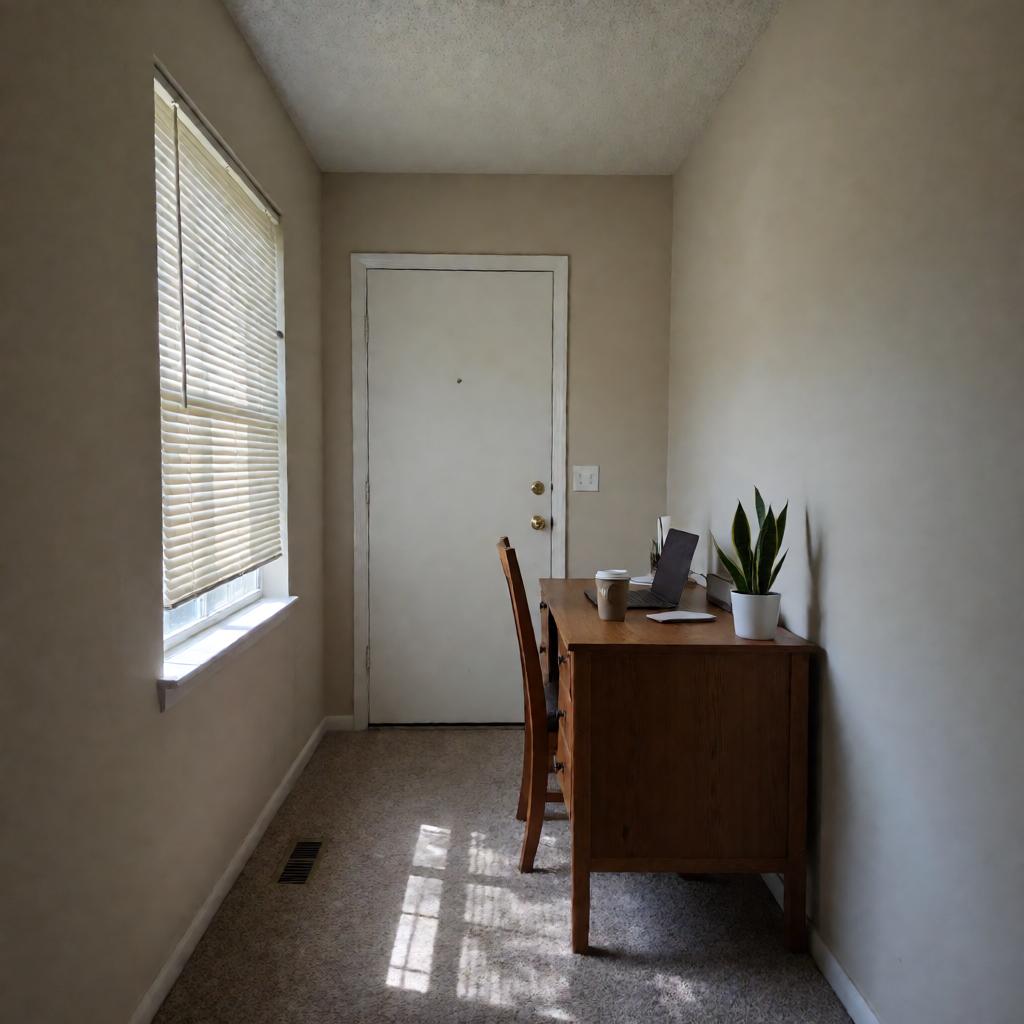
I'd been working from my apartment's second bedroom for about eight months. The setup was basic: desk pushed against the wall, facing a blank corner. Every afternoon around 3 PM, I'd hit a wall. Not just tired—foggy, irritable, unable to focus. I blamed coffee, then carbs, then my sleep schedule. Nothing helped. I started dreading the room. It felt like the walls were closing in, and I'd catch myself checking my phone every five minutes just to look away from that corner.
What They Tried
One night, while procrastinating on YouTube, I watched a video about office layouts. The guy said something simple: 'Never sit with your back to the door if you can avoid it.' I looked at my desk—sure enough, my back was to the door. I spent 20 minutes dragging the desk to the opposite wall. Now I face the door. I also moved a small snake plant from the windowsill to the corner where my old desk was. That's it. No new furniture, no paint.
What Happened
The first day, I didn't notice much. By day three, the 3 PM slump was gone. I'm not saying I'm a productivity machine now—I still get distracted—but that heavy, trapped feeling is gone. I can work until 5 or 6 without feeling like I need to escape. My girlfriend even commented that I seem less grumpy after work. Placebo? Maybe. But I'll take it.
Spatial Orientation
| Bagua Sector | 震 ☳ · Zhen |
|---|---|
| Direction | East |
| Element | wood |
What works best here
Zhen (3) · Wood. East should be the tallest area of the room when possible.
Place: tall plants (especially bamboo or fiddle-leaf fig), wooden furniture, green accents.
Recommended crystal
Green Aventurine or Moss Agate — placed near a window or on a plant shelf in the east
This is the growth sector — plants thrive here and vertical elements feel natural
Source Analysis
1. The Original Principle
Original Chinese
详观砂水定品秩。
English Translation
A classical survey text observes that the quality and rank of a dwelling can be determined by carefully examining the surrounding forms and their orientations. It advises detailed analysis of shapes and directions to assess a site's potential.
2. About the Source
催官篇卷之一 评龙章 by Lai Buyi · China · Song Dynasty (960–1279 CE)
The Promotion Classic is a Song Dynasty text focused on how the spatial arrangement of landforms and water features around a dwelling can influence the career advancement and social recognition of its occupants. It combines Form School landscape analysis with the Bagua directional framework, offering practical guidance on site evaluation that has been consulted by scholars and officials for centuries.
3. How This Principle Applies to This Case
The text's principle—that careful observation of a space's forms and orientations reveals its quality—maps directly onto this case. Facing a blank corner with your back to the door creates a subtle vigilance: the brain keeps a background monitor on the room's entry point, draining focus. Turning the desk to face the door removes that low-grade alert, restoring cognitive resources. Modern environmental psychology calls this 'prospect and refuge'—we focus best when we can see our surroundings. The narrator's simple repositioning wasn't superstition; it was applied spatial awareness.
Bring the Purest Energy Into Your Home
Sourced from altitudes above 4,000 meters in the Himalayan range — the highest place on Earth and the closest to the sun. These crystals formed over millions of years in some of the planet's most pristine conditions, untouched by industrial pollution. Each piece carries the raw, unfiltered energy of the mountains. Whether placed on a nightstand, a desk, or a meditation corner, they serve as a quiet anchor — a daily reminder to pause, breathe, and reconnect.
Explore the HIMA ALAÏA collection →Case source
Wind & Water School of Feng Shui
Minnesota Feng Shui pioneer. Founded a professional Feng Shui school and has consulted for major hospitals, banks, and corporate headquarters across the US.