I Moved My Desk to Face the Door and My Focus Doubled
After months of procrastination and low productivity, a simple desk repositioning transformed my home office.
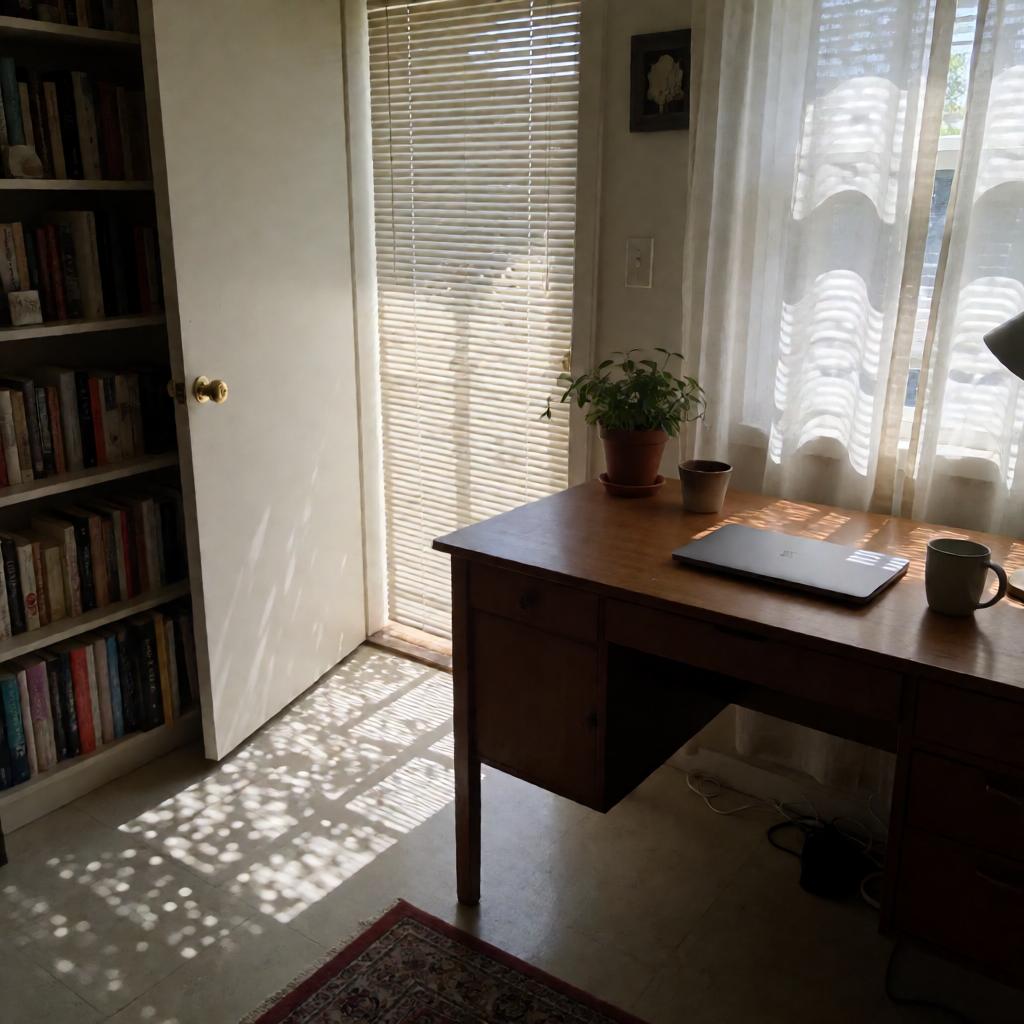
Location
Austin, United States
Property Type
House
Room
Home Office
Direction
Northeast
The Problem
I’d been working from home for a year, and my productivity was in the gutter. I’d sit at my desk, stare at the wall, and suddenly find myself deep in a Wikipedia rabbit hole about medieval farming techniques. I’d get maybe two hours of real work done in an eight-hour day. My to-do list was a graveyard of unfinished tasks. I blamed the internet, my phone, my lack of discipline. But deep down, I knew something about my workspace felt off. The desk was jammed into a corner, facing a blank wall. Every time I sat down, I felt like I was in a timeout. My back was to the door, and I’d constantly twist around at the slightest noise, my heart racing like I was expecting a bear to walk in. It was exhausting.
What They Tried
One weekend, I decided to rearrange my home office. I’d read somewhere that facing the door can help you feel more in control, so I dragged my desk away from the wall and positioned it so I could see the doorway. I also moved a small bookshelf to create a sort of nook, and I hung a curtain to soften the light from the window. It took maybe an hour, and I didn’t think much of it. I just wanted to stop feeling so jumpy.
What Happened
The change was immediate. The first day, I sat down and knocked out three hours of focused work without even checking my phone. I wasn’t constantly swiveling to see who was coming. I felt calmer, more in charge. Over the next few weeks, my productivity steadily improved. I started finishing tasks before lunch, and I even had energy left for personal projects in the evening. It wasn’t magic—I still have days where I procrastinate—but the baseline is so much higher. I actually enjoy sitting at my desk now.
Spatial Orientation
| Bagua Sector | 艮 ☶ · Gen |
|---|---|
| Direction | Northeast |
| Element | earth |
What works best here
Gen (8) · Earth. Northeast benefits from moderate height and warm, earthy materials.
Place: ceramic pots, clay sculptures, tall wooden shelves, earthen tones.
Recommended crystal
Citrine or Tiger's Eye — placed at eye level on a bookshelf in the northeast
An ideal spot for a study nook or reading corner — keep it well-lit and grounded
Source Analysis
1. The Original Principle
Original Chinese
山脉远来则为顺,要于顺中求逆,故曰"山不回头不看山"、"逆水一勺能救贫";水脉远来则为逆,要于逆中求顺,故曰"洋洋欲去,顾我欲留"、"九曲水朝堂,当朝宰相"。
English Translation
When mountains come from afar, that is 'forward'; one must seek the 'reverse' within the forward—thus a mountain that does not turn its head is not worth looking at. When water flows from afar, that is 'reverse'; one must seek the 'forward' within the reverse—thus a vast expanse that wishes to leave yet looks back longs to stay. In dwelling placement, one should find the embracing reverse within the forward flow, and the lingering forward within the reverse flow.
2. About the Source
雪心赋 地理之宗 by Bu Yingtian · China · Tang Dynasty (618–907 CE)
The Snow Heart Rhapsody is a poetic yet rigorously analytical classical text on landscape assessment. Written in rhymed prose, it covers mountain forms, water patterns, terrain energy, and site selection with remarkable literary elegance. Its observations about how land contours create sheltered, comfortable settings for human habitation remain relevant to modern site planning and environmental psychology.
3. How This Principle Applies to This Case
The classical principle of 'seeking the reverse within the forward, and the forward within the reverse' describes how natural features that appear to move away can actually embrace a site. In this case, the narrator's desk originally faced a wall, with the door behind—a 'forward' flow that felt exposed and restless. By repositioning the desk to face the door, she created a 'reverse' embrace: the room now supports her, rather than leaving her vulnerable. Modern psychology confirms that environmental control reduces stress and improves focus; facing the entryway satisfies a primal need for safety, freeing cognitive resources for deep work.
Bring the Purest Energy Into Your Home
Sourced from altitudes above 4,000 meters in the Himalayan range — the highest place on Earth and the closest to the sun. These crystals formed over millions of years in some of the planet's most pristine conditions, untouched by industrial pollution. Each piece carries the raw, unfiltered energy of the mountains. Whether placed on a nightstand, a desk, or a meditation corner, they serve as a quiet anchor — a daily reminder to pause, breathe, and reconnect.
Explore the HIMA ALAÏA collection →Case source
Amanda Gibby Peters
Founder of Simple Shui. De-mystifies Feng Shui for the modern American lifestyle with warmth and humor.