I Moved My Front Door Plant 2 Meters From The Wall — And My Whole Family Stopped Arguing
A designer moves a potted plant to a specific distance from the entryway wall, and the family's daily tension quietly dissolves. Not magic — just space.
Location
Portland, Oregon, United States
Property Type
House
Room
Entryway
Direction
East
The Problem
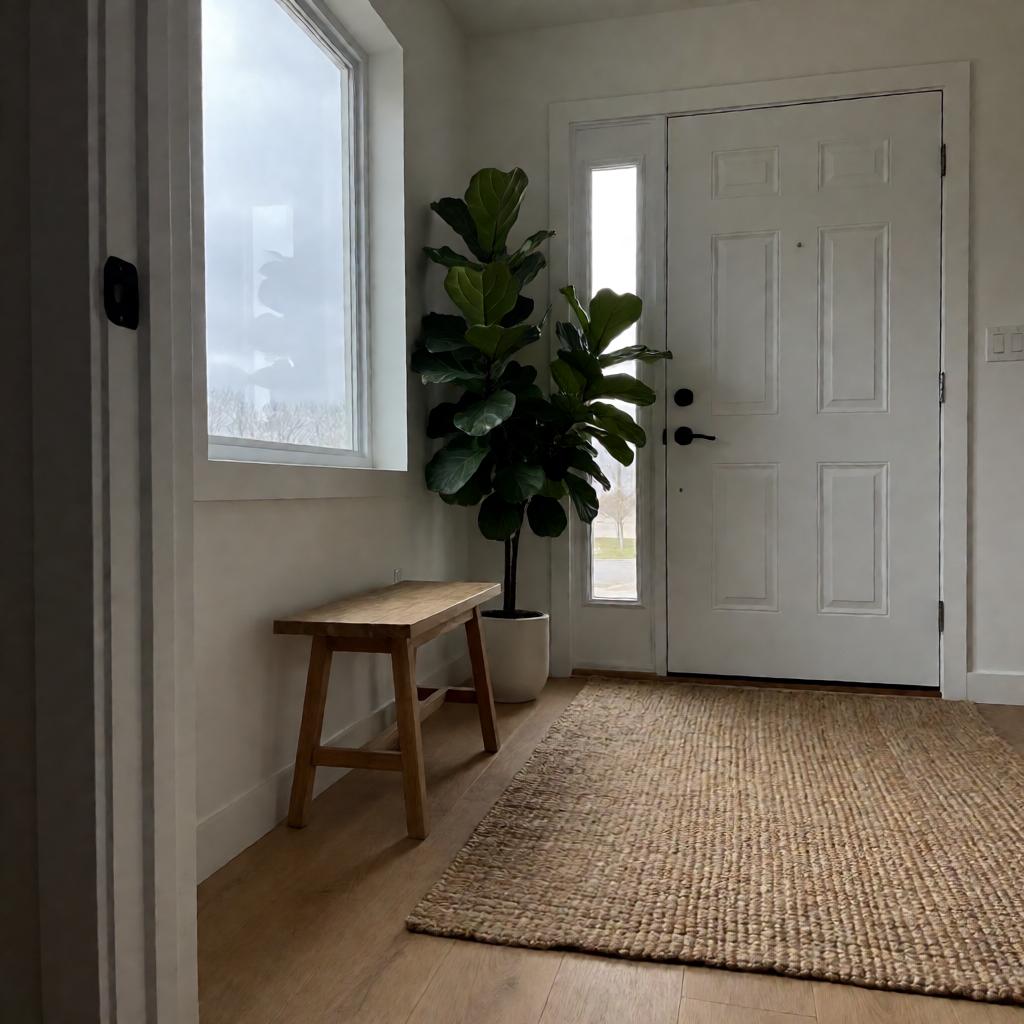
My clients, a family of four, had been living with a low-grade hum of irritation for years. Nothing dramatic — just snapped replies, doors closed a little too hard, a general feeling that the entryway was a place to escape rather than arrive. They'd tried everything: chore charts, family meetings, even a therapist. The mom told me, 'It's like the house itself is tense.' I didn't buy that. But I did notice something when I walked in.
What They Tried
The entryway had a large potted fiddle-leaf fig pushed right up against the wall, about 30 centimeters from the door. It blocked the natural sightline and forced everyone to physically turn their bodies as they entered. I moved it out to about 2 meters from the wall — roughly 2.5 meters from the door itself. This created a clear, open path. I also repositioned a small bench to face the entry, not the wall. The change took ten minutes.
What Happened
Within two weeks, the mom emailed me. The arguing hadn't stopped completely — they're a family, not robots — but the intensity dropped. 'We actually say hello now when we come in,' she wrote. 'It sounds stupid, but the house feels like it's breathing.' I checked in a month later. The plant was still there. No one had moved it back.
Spatial Orientation
| Bagua Sector | 震 ☳ · Zhen |
|---|---|
| Direction | East |
| Element | wood |
What works best here
Zhen (3) · Wood. East should be the tallest area of the room when possible.
Place: tall plants (especially bamboo or fiddle-leaf fig), wooden furniture, green accents.
Recommended crystal
Green Aventurine or Moss Agate — placed near a window or on a plant shelf in the east
This is the growth sector — plants thrive here and vertical elements feel natural
Source Analysis
1. The Original Principle
Original Text
En primer lugar, sitúese a una distancia entre uno y dos metros y medio aproximadamente de la parte del edificio asociada a la salud y la familia. Coloqúese de cara a él y dedique unos instantes a reflexionar...
English Translation
When making a blessing outside a building, stand about one to two and a half meters from the part of the building associated with health and family. Face it, and take a few moments to reflect.
2. About the Source
Feng shui para Occidente by Terah Kathryn Collins · United States · 1995
Feng Shui for the West is a practical guide that adapts classical Chinese spatial principles for modern Western homes and lifestyles. Written by one of the first American authors to bring Feng Shui to a mainstream English-speaking audience, the book translates ancient Bagua concepts into actionable room-by-room advice using familiar Western design language and contemporary case examples.
3. How This Principle Applies to This Case
This classical instruction emphasizes physical distance and orientation toward a building as a way to engage with a space intentionally. In this case, moving a plant to roughly two meters from the wall restored a clear sightline and reduced physical friction in the entryway. Modern environmental psychology supports this: entryways that require awkward navigation trigger low-grade stress responses, while open, direct paths promote a sense of arrival and ease. The ritual of facing the space — even in a secular sense — mirrors the principle of pausing to acknowledge the home as a whole, which can shift family dynamics from reactive to intentional.
Bring the Purest Energy Into Your Home
Sourced from altitudes above 4,000 meters in the Himalayan range — the highest place on Earth and the closest to the sun. These crystals formed over millions of years in some of the planet's most pristine conditions, untouched by industrial pollution. Each piece carries the raw, unfiltered energy of the mountains. Whether placed on a nightstand, a desk, or a meditation corner, they serve as a quiet anchor — a daily reminder to pause, breathe, and reconnect.
Explore the HIMA ALAÏA collection →Case source
RD Chin, Feng Shui Architect
NYC licensed architect, Feng Shui master, and published author. Worked under legendary architect Paul Rudolph. Specializes in complex residential and commercial blueprint Feng Shui assessment and spatial flow micro-adjustments. Conducts Feng Shui public courses across the US.