I Rearranged My Living Room After Watching How Water Flowed in My Yard—Now We Actually Use the Space
After months of feeling like our living room was a dead zone nobody wanted to hang out in, I noticed how water pooled in our backyard and moved the sofa to match that curve. The room went from awkward to inviting.
Location
Portland, United States
Property Type
House
Room
Living Room
Direction
Southeast
The Problem
Our living room was the room nobody used. We'd walk in, grab a drink, and end up in the kitchen or bedroom. The space felt... wrong. Like it was pushing us out. The sofa faced the fireplace but no one sat there. We'd stand, lean against walls, then leave. I thought it was the paint color or the rug, but nothing helped.
What They Tried
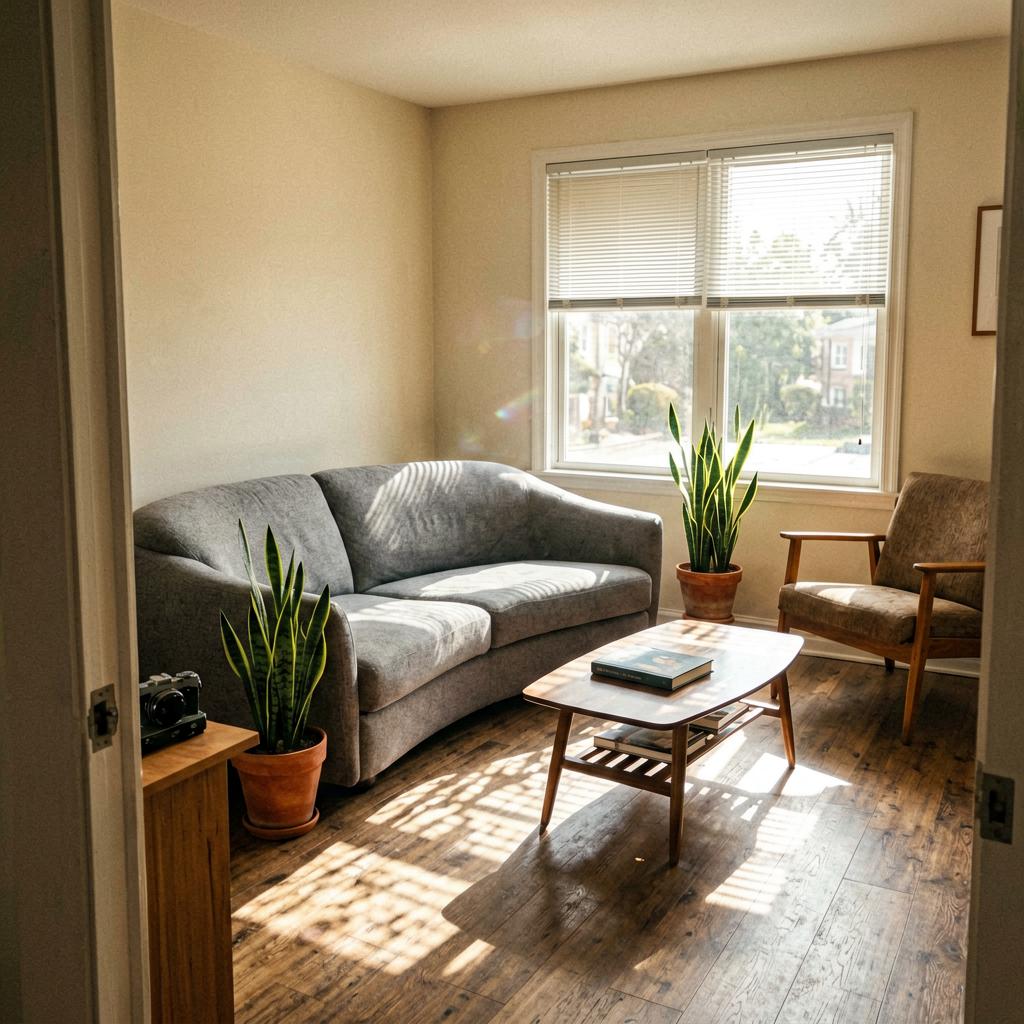
One rainy afternoon, I was staring out the back window watching water pool in the yard. It curved around a low spot near the fence—a gentle arc. Something clicked. I went inside and measured the living room. The door was on the south wall, the window on the east. I moved the sofa so it followed a similar curve to that water pattern, slightly angled toward the window instead of dead-on to the fireplace. I also shifted the armchair to the opposite side, creating a soft U-shape. It took maybe 20 minutes.
What Happened
The same night, my husband came home, dropped his bag, and sat down on the sofa without saying a word. He stayed there for an hour reading. I walked in and didn't feel the urge to leave. We've been using the room every evening since. It's not magical—it's just comfortable now. The space feels like it wraps around you instead of pushing you away.
Spatial Orientation
| Bagua Sector | 巽 ☴ · Xun |
|---|---|
| Direction | Southeast |
| Element | wood |
What works best here
Xun (4) · Wood. Southeast loves moderate height with an airy, open feel.
Place: tall leafy plants, natural fiber rugs, light wood tones, cream and soft green.
Recommended crystal
Citrine or Green Jade — placed on a wooden side table in the southeast corner
Perfect for a creative workspace or journaling spot; natural light is your friend here
Source Analysis
1. The Original Principle
Original Chinese
水缠便是山缠样,缠得真龙如仰掌。窠心掌里或乳头,端然有穴明天象。水绕山缠在平坡,远有冈陵近有河。只爱山来抱身体,不爱水返去从他。水抱应知山来抱,水不抱兮山不到。
English Translation
A dwelling site is best when water winds around a hill, like a dragon coiling in an open palm. The center of that curve—where the land gently rises—is the ideal spot. Water and hill should embrace each other; the hill cradles the site, and water does not rush away.
2. About the Source
撼龙经 by Yang Yunsong · China · Tang Dynasty (618–907 CE)
The Dragon-Shaking Classic is a foundational text of the Form School of Chinese geomancy, compiled during the Tang Dynasty. It systematically describes how mountain formations, water flows, and land contours create spatial environments that influence human settlements. Its principles about terrain shapes and landscape energy continue to inform modern site analysis and spatial planning.
3. How This Principle Applies to This Case
This homeowner intuitively applied an ancient spatial principle: the importance of enclosure and gentle curves. The original living room had a straight, confrontational layout (sofa directly facing fireplace), which created a sense of opposition rather than invitation. By curving the seating arrangement to mirror the natural water flow outside, she introduced a sense of containment and ease. Modern environmental psychology supports this: curved lines and enclosed seating arrangements signal safety and social comfort, while straight, exposed layouts can trigger a subtle 'fight or flight' response. The room didn't change in size or decor—only the spatial relationship between furniture and the room's boundaries shifted, creating a 'palm-like' embrace that felt instinctively right.
Bring the Purest Energy Into Your Home
Sourced from altitudes above 4,000 meters in the Himalayan range — the highest place on Earth and the closest to the sun. These crystals formed over millions of years in some of the planet's most pristine conditions, untouched by industrial pollution. Each piece carries the raw, unfiltered energy of the mountains. Whether placed on a nightstand, a desk, or a meditation corner, they serve as a quiet anchor — a daily reminder to pause, breathe, and reconnect.
Explore the HIMA ALAÏA collection →Related Elements
Case source
Tisha Morris
Bestselling author and Feng Shui expert. Specializes in space clearing and energy healing for homes.