I Sat in the Corner for 10 Minutes Before Moving My Desk — Here's What Changed
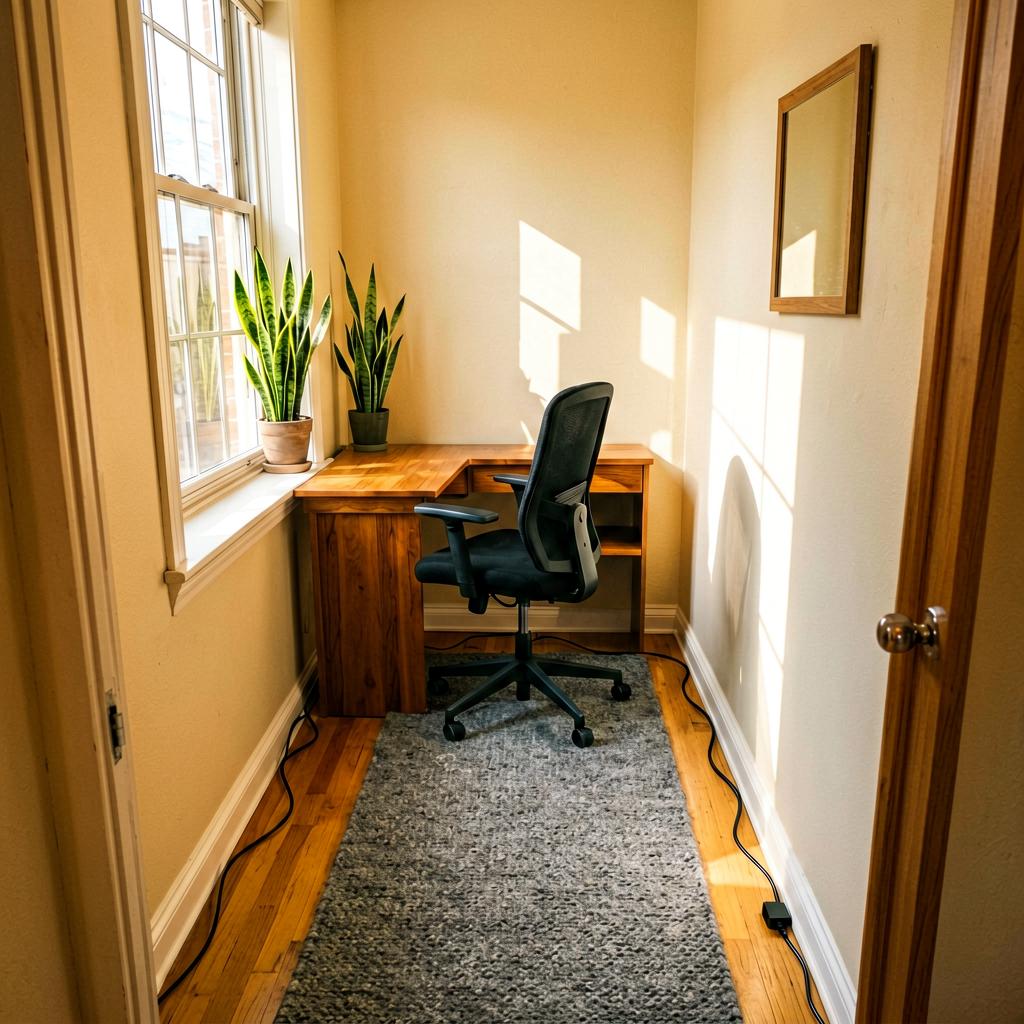
I tested three spots with just a chair before committing to a desk move. The one with the longest sightline to the door won, and my afternoon focus improved within a week.
Location
Portland, Oregon, United States
Property Type
House
Room
Home Office
Direction
Southeast
The Problem
The home office was a narrow spare bedroom with one window and a closet door that never stayed shut. My desk faced the wall because that's where the outlet was. I'd sit down after lunch, and within twenty minutes I'd be checking my phone or staring at the paint. Not tired exactly. Just flattened. I tried a standing desk converter, a white noise machine, and two different desk lamps. Nothing changed.
What They Tried
A client of mine — I sell real estate, so I see a lot of weird furniture choices — told me about this trick. Before moving the desk, she said, just put the chair in each possible spot and sit there for a few minutes. Don't do anything. Just sit. I had three options: the wall-facing spot I already had, a side wall near the window, and the corner opposite the door. I sat in each for ten minutes on a Tuesday morning. The wall spot felt cramped. The window spot made me squint. The corner spot — I could see the whole room, the door, the hallway beyond. My shoulders dropped about an inch. I moved the desk there that afternoon. Took twenty minutes. The only real cost was a longer extension cord.
What Happened
I won't pretend it fixed everything. I still check my phone. But the afternoons feel less like wading through mud. I finished a project three days early last week. My partner noticed I stopped sighing at 3pm. The room even looks bigger on video calls, which — as a realtor — I appreciate more than I'd like to admit.
Spatial Orientation
| Bagua Sector | 巽 ☴ · Xun |
|---|---|
| Direction | Southeast |
| Element | wood |
What works best here
Xun (4) · Wood. Southeast loves moderate height with an airy, open feel.
Place: tall leafy plants, natural fiber rugs, light wood tones, cream and soft green.
Recommended crystal
Citrine or Green Jade — placed on a wooden side table in the southeast corner
Perfect for a creative workspace or journaling spot; natural light is your friend here
Source Analysis
1. The Original Principle
Original Text
Cuando quiera cambiar de posición su escritorio y disponga de dos o más lugares en la estancia desde los que pueda ver la puerta, coloque primero su silla de trabajo en cada uno de esos lugares... siéntese tranquilamente unos instantes, y déjese invadir por la sensación... ese será su lugar de poder.
English Translation
A classic manual on interiors for Western homes describes a simple test: when you have more than one possible spot for a desk, place the chair in each candidate position, sit quietly, and notice which one feels most settled. That spot becomes your 'power position.' It's not magic — it's just paying attention before you commit.
2. About the Source
Feng shui para Occidente by Terah Kathryn Collins · United States · 1995
Feng Shui for the West is a practical guide that adapts classical Chinese spatial principles for modern Western homes and lifestyles. Written by one of the first American authors to bring Feng Shui to a mainstream English-speaking audience, the book translates ancient Bagua concepts into actionable room-by-room advice using familiar Western design language and contemporary case examples.
3. How This Principle Applies to This Case
The classical principle here is straightforward: test before you commit. When multiple desk positions are available, sit in each one briefly and let your body tell you which feels right. Modern environmental psychology backs this up. Sightlines to a door reduce vigilance — your brain doesn't need to monitor an unseen entry. In a narrow room, facing a wall with your back to the door keeps your nervous system slightly on edge. The corner position gave a clear view of both the door and the window, which lowered that low-grade alertness. The story doesn't mention the source, but the method is the same: a ten-minute test replaces a blind furniture move.
Bring the Purest Energy Into Your Home
Sourced from altitudes above 4,000 meters in the Himalayan range — the highest place on Earth and the closest to the sun. These crystals formed over millions of years in some of the planet's most pristine conditions, untouched by industrial pollution. Each piece carries the raw, unfiltered energy of the mountains. Whether placed on a nightstand, a desk, or a meditation corner, they serve as a quiet anchor — a daily reminder to pause, breathe, and reconnect.
Explore the HIMA ALAÏA collection →Case source
Anjie Cho Architect & Holistic Spaces
NYC-based architect and BTB Feng Shui master. Co-founder of Mindful Design Feng Shui School. Blends modern interior design with classical BTB Feng Shui. Author of multiple Feng Shui books.