I Sold This Tiny House in 9 Days After the Owner Added Vertical Planters — Here's What Buyers Saw
A real estate agent explains how a small, pathless backyard went from a dealbreaker to a selling point with one simple change.
Location
Austin, Texas, United States
Property Type
House
Room
Backyard
Direction
South
The Problem
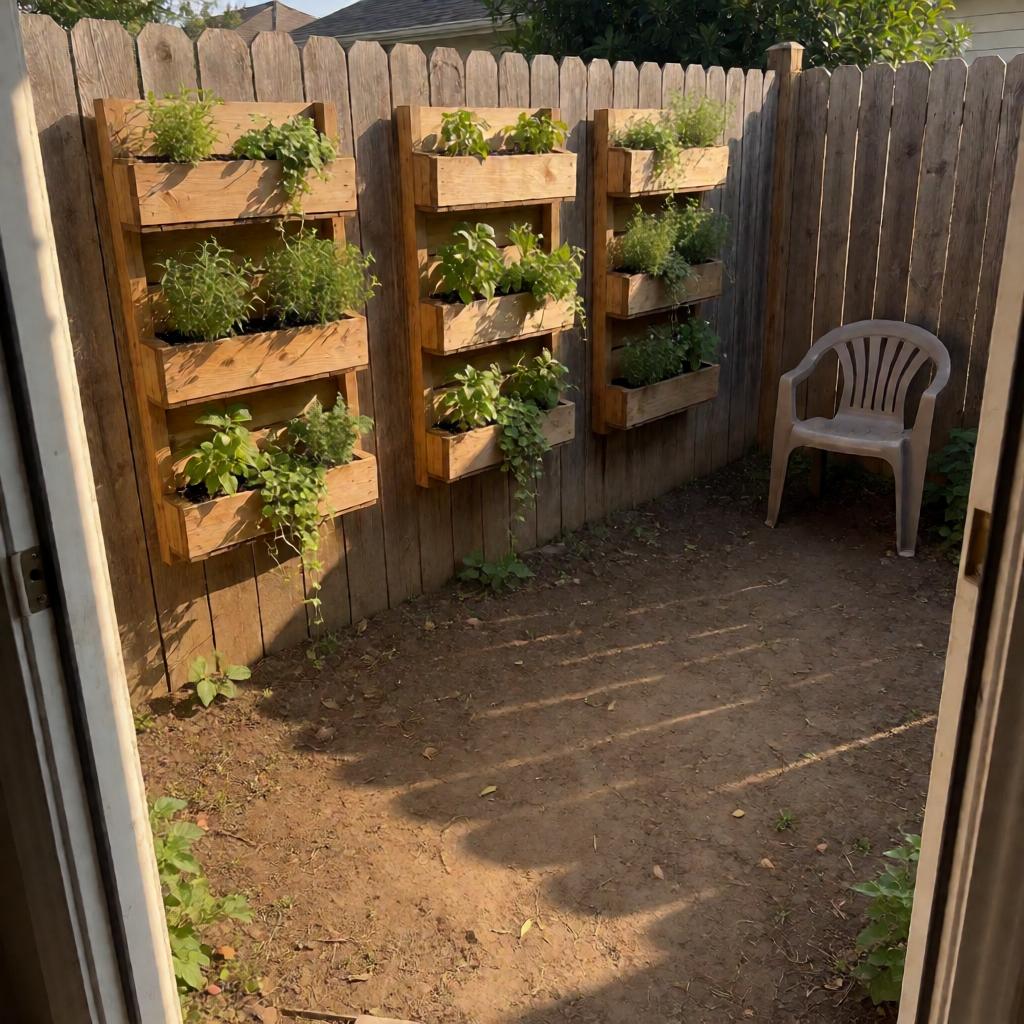
The backyard was maybe 15 by 20 feet. No paths. Just a patch of dirt and a fence. Every buyer who walked out there said the same thing: 'There's nowhere to go.' It felt cramped and unfinished. The house sat on the market for two months with no offers.
What They Tried
The owner installed three vertical planter panels on the back fence. They were simple wooden frames with pockets for herbs and trailing plants. No digging, no paths. Just green going up. Cost was under $300.
What Happened
The next open house had double the traffic. Buyers commented on how 'private' and 'lush' the yard felt. One couple stood out there for ten minutes. We had two offers that week and closed nine days later, $8,000 over asking.
Spatial Orientation
| Bagua Sector | 离 ☲ · Li |
|---|---|
| Direction | South |
| Element | fire |
What works best here
Li (9) · Fire. South should feel more open and lower than North for visual balance.
Place: low-profile furniture, mirrors, glass surfaces, warm lighting.
Recommended crystal
Clear Quartz or Sunstone — placed where it catches natural light, like a windowsill or console table
Mirrors work exceptionally well here — they reflect light and make the room feel larger
Source Analysis
1. The Original Principle
Original Text
Si el jardín es pequeño y no posee caminos, se recomienda colocar jardineras verticalmente.
English Translation
When a garden is small and has no paths, vertical planters are recommended to save space and add greenery.
2. About the Source
Integración de espacios y ubicación universidad dr jose matias delgado by Universidad Dr. José Matías Delgado · El Salvador · 2010
Space Integration and Site Planning is an academic publication from Dr. José Matías Delgado University in El Salvador. It explores the relationship between spatial arrangement, architectural design, and occupant wellbeing from a Latin American perspective, combining principles of environmental psychology with practical site planning methodology.
3. How This Principle Applies to This Case
The classical principle addresses a spatial problem: small gardens without walkways feel unusable. By moving plants to the vertical plane, the ground stays open, and the eye is drawn upward, making the space feel larger. Modern environmental psychology supports this—vertical greenery reduces perceived crowding and increases perceived restoration. For buyers, the yard shifted from 'cramped' to 'cozy' without any structural change.
Bring the Purest Energy Into Your Home
Sourced from altitudes above 4,000 meters in the Himalayan range — the highest place on Earth and the closest to the sun. These crystals formed over millions of years in some of the planet's most pristine conditions, untouched by industrial pollution. Each piece carries the raw, unfiltered energy of the mountains. Whether placed on a nightstand, a desk, or a meditation corner, they serve as a quiet anchor — a daily reminder to pause, breathe, and reconnect.
Explore the HIMA ALAÏA collection →Case source
Pure Living with Lisa Morton
15 years of architectural design background, transformed into advanced space decluttering and Interior Alignment mastery. Specializes in residential energy balancing.