I Stopped Fighting the Corner in My Home Office and Finally Got Things Done
A small change to the path through my home office—removing one bend—made the space feel less stuck and more productive.
Location
Austin, United States
Property Type
House
Room
Home Office
Direction
North
The Problem
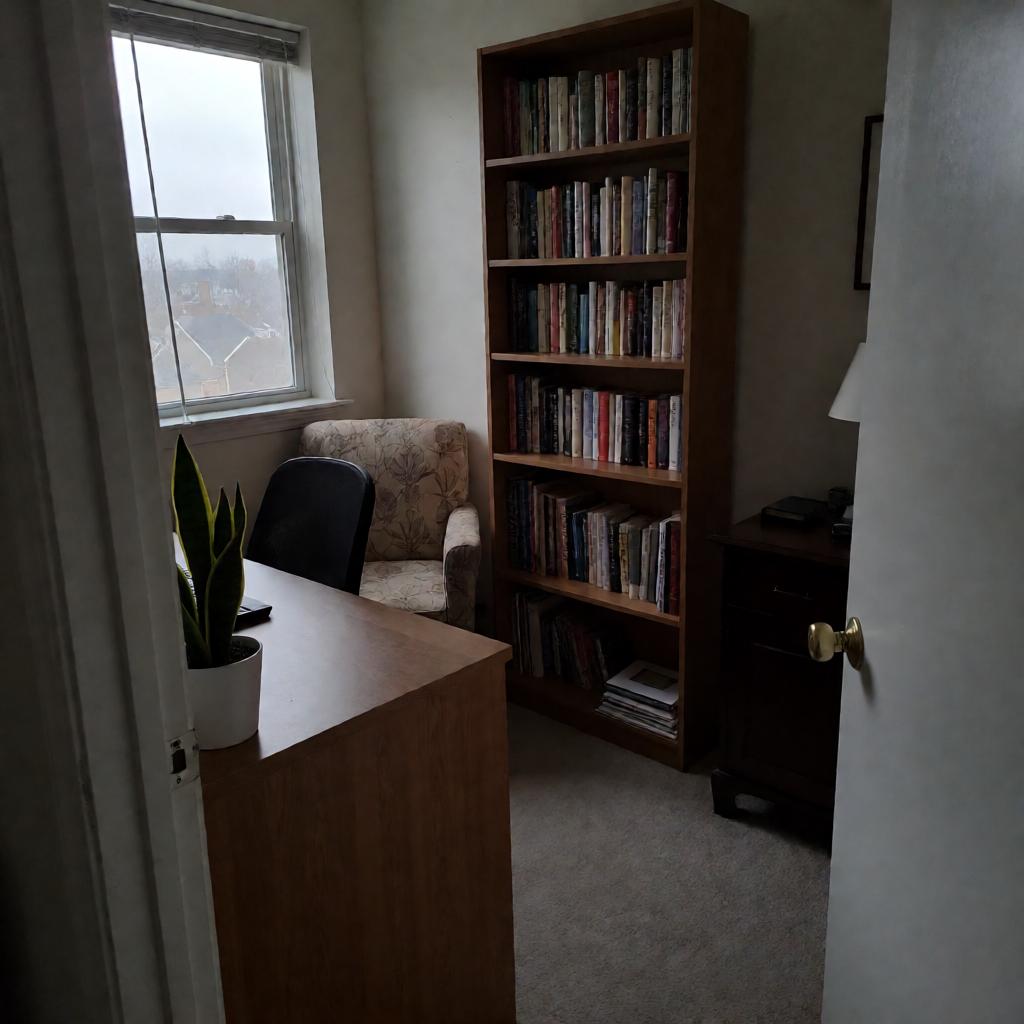
My home office is a narrow room, and the only way to reach the desk was a weird zigzag around a bookshelf and a chair. I didn't think much about it until I realized I was avoiding the room entirely. I'd carry my laptop to the kitchen table, the couch, anywhere else. Work felt scattered. I blamed myself for lack of discipline, but the room itself felt like an obstacle course.
What They Tried
One Saturday I pulled everything out. I measured the path from the door to the desk. It had two sharp turns—one around a tall bookshelf, another around an armchair I never sat in. I moved the bookshelf flat against the back wall, shifted the chair to the corner by the window, and aligned the desk so I could walk straight in and sit down. No bends. Just a clear line from doorway to workspace.
What Happened
It sounds too simple, but the room stopped feeling like a chore. I started sitting down to work within minutes of entering, instead of wandering off. My focus improved—not magically, but noticeably. I still have distracted days, but the space no longer adds friction. My partner even commented that I seem less irritable after work.
Spatial Orientation
| Bagua Sector | 坎 ☵ · Kan |
|---|---|
| Direction | North |
| Element | water |
What works best here
Kan (1) · Water. North side can be slightly taller than South for a grounded feel.
Place: dark-colored ceramics, stone objects, heavy bookshelves.
Recommended crystal
Black Obsidian or Smoky Quartz — placed on a low table or shelf in the north corner
A solid, weighty presence here helps the room feel anchored and secure
Source Analysis
1. The Original Principle
Original Chinese
天皇行龙莫曲折。
English Translation
A classical text on landforms advises that the primary dragon vein should run straight and unbroken; excessive bends scatter its beneficial influence. Applied to a home, a clear, unobstructed path supports a sense of purpose and ease.
2. About the Source
催官篇卷之一 评龙章 by Lai Buyi · China · Song Dynasty (960–1279 CE)
The Promotion Classic is a Song Dynasty text focused on how the spatial arrangement of landforms and water features around a dwelling can influence the career advancement and social recognition of its occupants. It combines Form School landscape analysis with the Bagua directional framework, offering practical guidance on site evaluation that has been consulted by scholars and officials for centuries.
3. How This Principle Applies to This Case
The classical principle warns against excessive曲折 in the main approach, as it disperses momentum. In this case, the homeowner's office had a zigzag route that subconsciously made the space feel effortful. By straightening the path, they removed a subtle environmental stressor. Modern environmental psychology supports this: clear sightlines and unobstructed movement reduce cognitive load and increase perceived control, which in turn supports sustained attention and follow-through. The change wasn't mystical—it was about aligning the physical layout with the intention of the space.
Bring the Purest Energy Into Your Home
Sourced from altitudes above 4,000 meters in the Himalayan range — the highest place on Earth and the closest to the sun. These crystals formed over millions of years in some of the planet's most pristine conditions, untouched by industrial pollution. Each piece carries the raw, unfiltered energy of the mountains. Whether placed on a nightstand, a desk, or a meditation corner, they serve as a quiet anchor — a daily reminder to pause, breathe, and reconnect.
Explore the HIMA ALAÏA collection →Case source
Feng Shui Joan's Way
Connecticut-based Feng Shui consultant. Specializes in Western Bagua system for small and medium business Feng Shui layouts to enhance wealth and team cohesion.