I Swapped My Bedroom and Home Office After a Designer Told Me My Sleep Would Improve
A designer shares how moving a client's bedroom to the back of the house transformed her sleep and focus.
Location
Portland, United States
Property Type
House
Room
Bedroom
Direction
North
The Problem
My client, Lisa, a 42-year-old marketing executive, couldn't sleep. Her master bedroom was at the front of the house, facing a busy street. She'd wake up at 3 a.m. to every passing car and never feel fully rested.
What They Tried
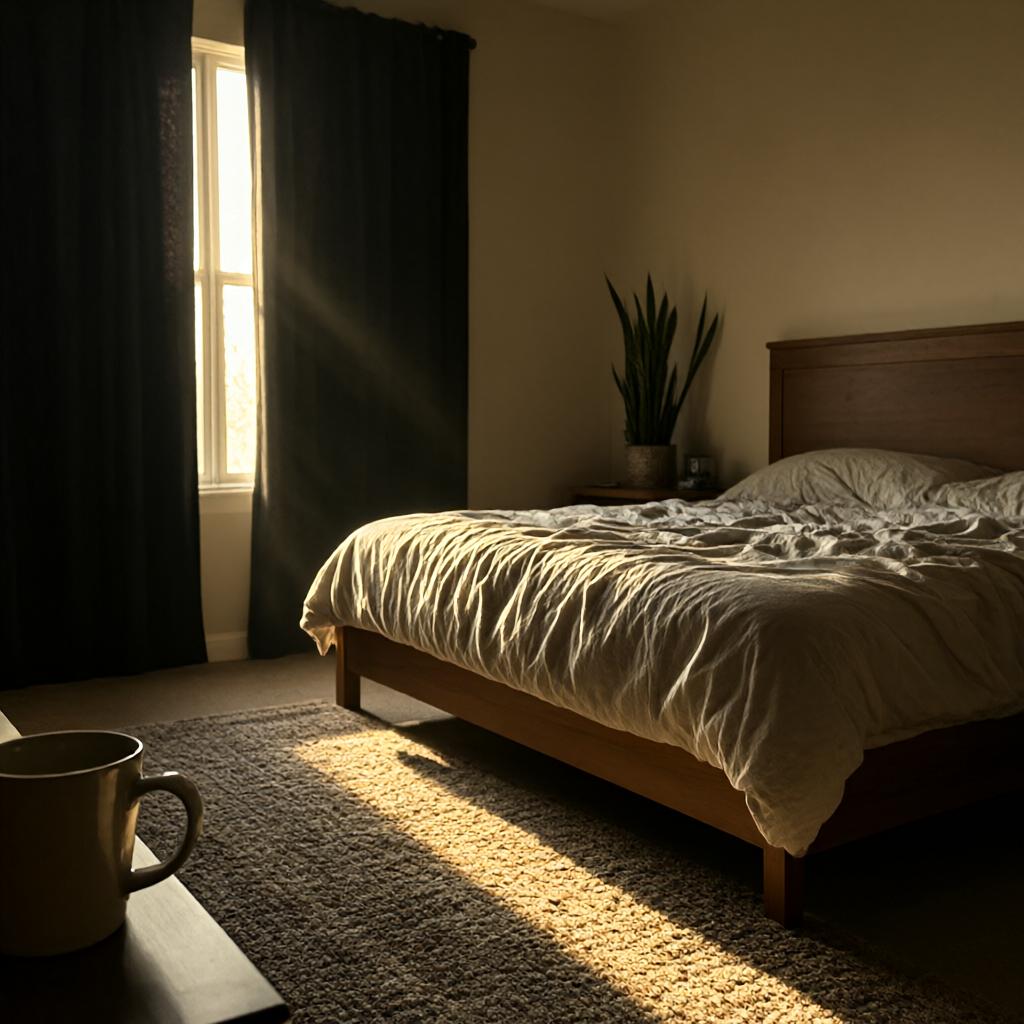
I suggested swapping her bedroom and home office. The front room became her office, and the back bedroom—overlooking the quiet garden—became her sleep sanctuary. We repositioned the bed, added blackout curtains, and kept the room minimal.
What Happened
Within two weeks, Lisa reported sleeping through the night. She said the difference was 'like night and day.' Her focus at work also improved because her office now had a clear boundary from her rest space.
Spatial Orientation
| Bagua Sector | 坎 ☵ · Kan |
|---|---|
| Direction | North |
| Element | water |
What works best here
Kan (1) · Water. North side can be slightly taller than South for a grounded feel.
Place: dark-colored ceramics, stone objects, heavy bookshelves.
Recommended crystal
Black Obsidian or Smoky Quartz — placed on a low table or shelf in the north corner
A solid, weighty presence here helps the room feel anchored and secure
Source Analysis
1. The Original Principle
Original Text
Siempre que sea posible, instale los dormitorios en la parte trasera de la casa. He trabajado en numerosos hogares en los que hemos convertido la ostentosa alcoba situada en la parte delantera de la casa en un despacho o estudio, mientras otra estancia emplazada en la parte posterior era transformada en dormitorio.
English Translation
A classical principle advises placing bedrooms at the back of the house, away from street noise and activity. This creates a quieter, more private environment conducive to rest.
2. About the Source
Feng shui para Occidente by Terah Kathryn Collins · United States · 1995
Feng Shui for the West is a practical guide that adapts classical Chinese spatial principles for modern Western homes and lifestyles. Written by one of the first American authors to bring Feng Shui to a mainstream English-speaking audience, the book translates ancient Bagua concepts into actionable room-by-room advice using familiar Western design language and contemporary case examples.
3. How This Principle Applies to This Case
The classical text observed that rear rooms are naturally more sheltered from external disturbances. Modern environmental psychology confirms that noise and visual activity near sleeping areas increase arousal and disrupt sleep cycles. By relocating the bedroom to the back, Lisa reduced sensory input, allowing her nervous system to wind down. The front office, meanwhile, benefited from the energizing street view, aligning activity with the more active part of the home.
Bring the Purest Energy Into Your Home
Sourced from altitudes above 4,000 meters in the Himalayan range — the highest place on Earth and the closest to the sun. These crystals formed over millions of years in some of the planet's most pristine conditions, untouched by industrial pollution. Each piece carries the raw, unfiltered energy of the mountains. Whether placed on a nightstand, a desk, or a meditation corner, they serve as a quiet anchor — a daily reminder to pause, breathe, and reconnect.
Explore the HIMA ALAÏA collection →Case source
The Inspired Office
One of the few US consultancies specializing exclusively in office and commercial Feng Shui design. Deep expertise in home office Feng Shui, document management, and workflow decluttering.