I Swapped My Desk and Couch Positions and the Constant Bickering Just Stopped
A couple's living room felt tense and cramped until a simple furniture swap changed the whole dynamic.
Location
Portland, Oregon, United States
Property Type
Apartment
Room
Living Room
Direction
West
The Problem
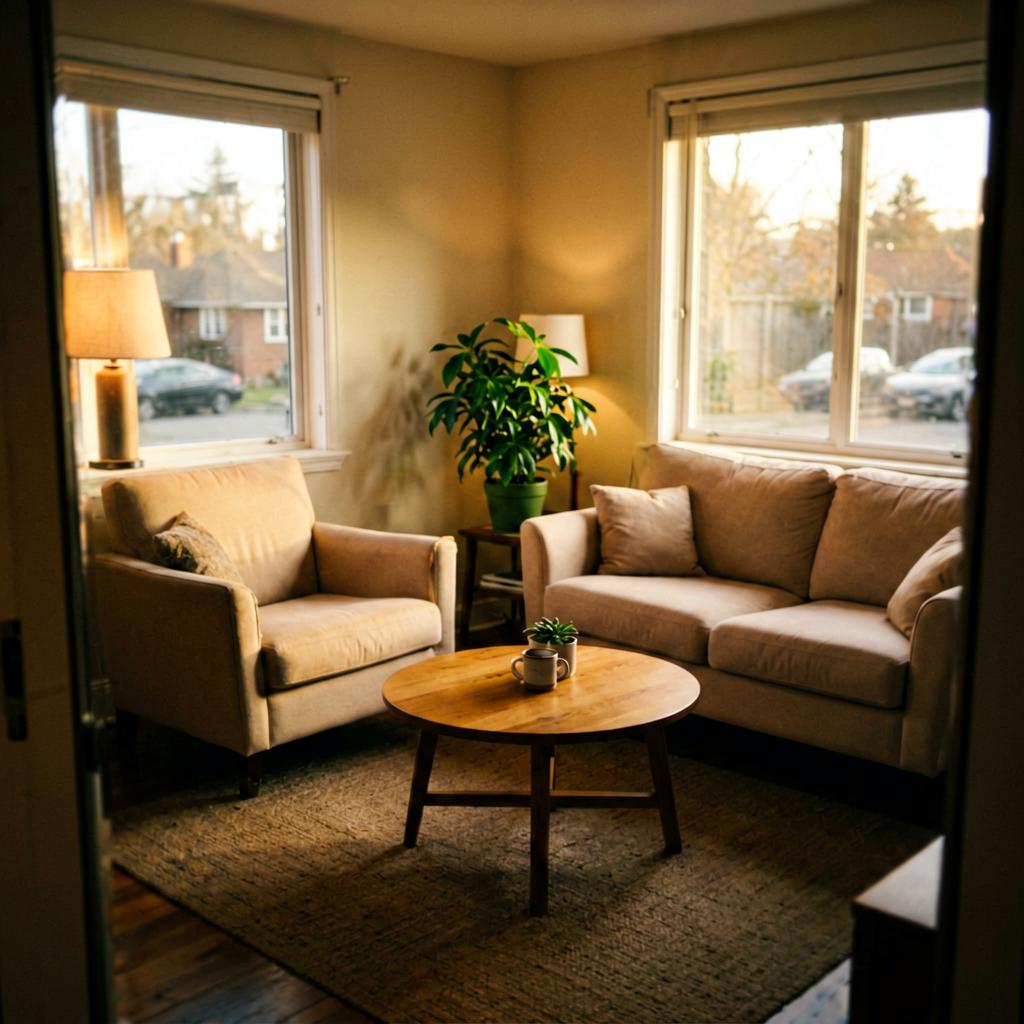
My partner and I couldn't sit in our living room without snapping at each other. The space felt off—too tight, too confrontational. Every conversation turned into an argument, and we started avoiding the room altogether.
What They Tried
Out of desperation, I moved the two armchairs so they faced slightly away from each other, curving inward like a gentle smile. I shifted the couch back a few inches and angled it toward the window, creating an open, circular flow around the coffee table.
What Happened
Within a week, the room felt calmer. We stopped sitting in a face-off position, and the arguments faded. Now we actually enjoy our evenings there, talking or reading side by side instead of locked in a stare-down.
Spatial Orientation
| Bagua Sector | 兑 ☱ · Dui |
|---|---|
| Direction | West |
| Element | metal |
What works best here
Dui (7) · Metal. West should be lower and more open than East for left-right equilibrium.
Place: low cabinets, metal decor (brass, copper, steel), round shapes, white and grey tones.
Recommended crystal
Clear Quartz or Selenite — placed on a low console or side table in the west
Round shapes and metallic finishes feel especially at home on this side of the room
Source Analysis
1. The Original Principle
Original Chinese
虎让龙,龙让虎,只要比和。
English Translation
In a settled home, the left and right sides should yield to one another, curving gently inward like arms embracing. When they compete or clash, harmony is lost. Balance and mutual concession bring peace.
2. About the Source
雪心赋 论水口 by Bu Yingtian · China · Tang Dynasty (618–907 CE)
The Snow Heart Rhapsody is a poetic yet rigorously analytical classical text on landscape assessment. Written in rhymed prose, it covers mountain forms, water patterns, terrain energy, and site selection with remarkable literary elegance. Its observations about how land contours create sheltered, comfortable settings for human habitation remain relevant to modern site planning and environmental psychology.
3. How This Principle Applies to This Case
The classical principle emphasizes that opposing elements in a space should defer to each other, creating a harmonious enclosure rather than a confrontation. In this case, the original furniture layout placed seating directly opposite, which psychologically primed the couple for conflict—mirroring the 'clashing' arrangement the text warns against. By repositioning the chairs into a gentle curve, the space encouraged cooperation and relaxation. Modern environmental psychology supports this: 'sociofugal' layouts (chairs facing away) reduce eye contact and tension, while circular arrangements foster connection. The physical change altered their interaction patterns, illustrating how spatial design can subtly shape behavior and mood.
Bring the Purest Energy Into Your Home
Sourced from altitudes above 4,000 meters in the Himalayan range — the highest place on Earth and the closest to the sun. These crystals formed over millions of years in some of the planet's most pristine conditions, untouched by industrial pollution. Each piece carries the raw, unfiltered energy of the mountains. Whether placed on a nightstand, a desk, or a meditation corner, they serve as a quiet anchor — a daily reminder to pause, breathe, and reconnect.
Explore the HIMA ALAÏA collection →Case source
Pure Living with Lisa Morton
15 years of architectural design background, transformed into advanced space decluttering and Interior Alignment mastery. Specializes in residential energy balancing.