I Swapped Our Tiny Apartment Door For A Wider One And The Whole Place Breathes Differently
A couple in a small LA apartment swapped their narrow 28-inch entry door for a 36-inch one. The result: less stuffiness, fewer arguments about clutter, and a surprising sense of calm.
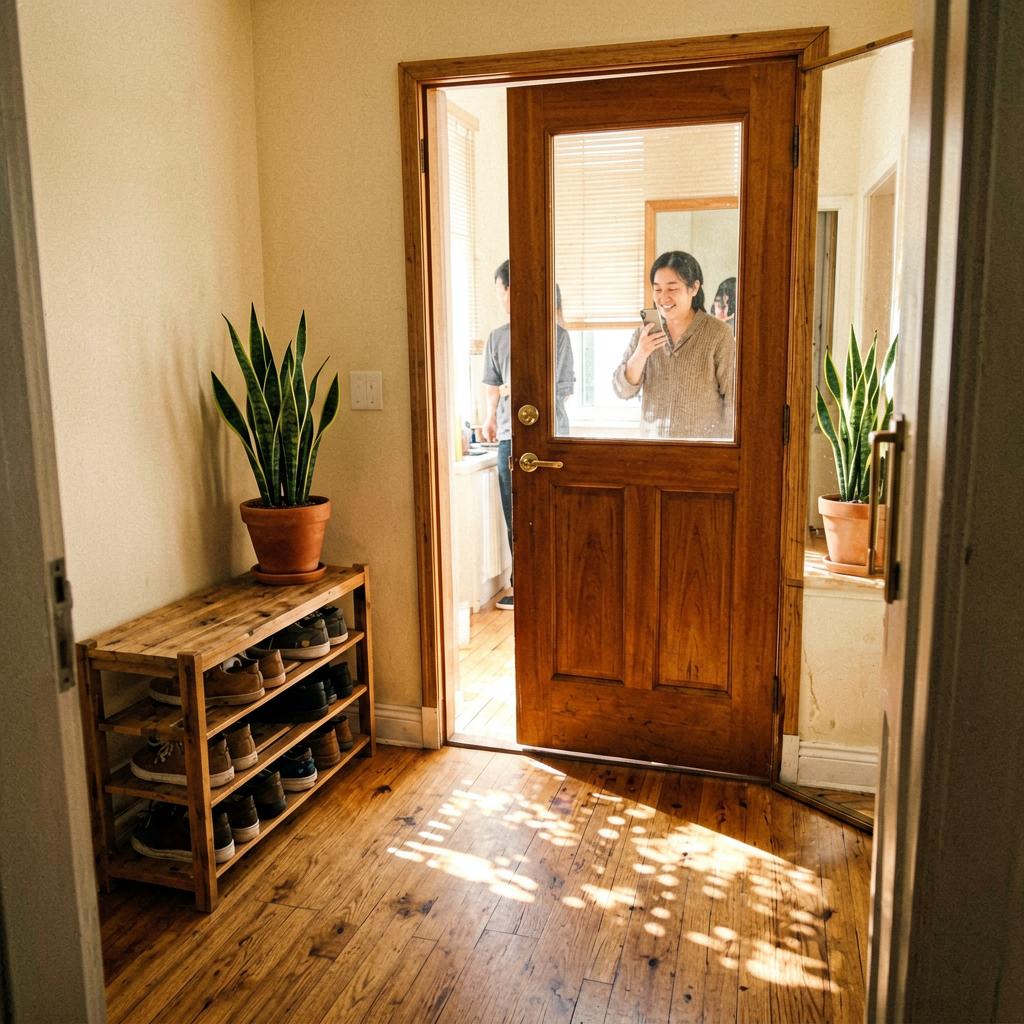
Location
Los Angeles, United States
Property Type
Bungalow
Room
Entryway
Direction
East
The Problem
Our 1920s Los Angeles bungalow had a charming but horrible front door. It was 28 inches wide — standard for the era — but every time we came home with groceries or a suitcase, we had to turn sideways to squeeze through. The worst part? The apartment always felt stuffy, no matter how many windows we opened. My partner and I would snap at each other after 5 PM. The air felt heavy, like the room was holding its breath. I’d tried plants, air purifiers, even those little Himalayan salt lamps. Nothing helped. I started dreading coming home.
What They Tried
After a particularly tense evening where we argued about where to put a mail pile for 20 minutes, I called a contractor. He suggested swapping the front door for a 36-inch one. I thought he was crazy — it’s just a door. But the wall around it wasn’t load-bearing, so we did it. We chose a simple solid-core door with a full-light glass panel. The installation took a day. I also moved the shoe rack to the side so the entryway felt wider.
What Happened
The first thing I noticed: the air felt different. Not like a breeze, but like the room could breathe. The stuffiness vanished. We stopped arguing about little things. I think the wider door made the entry feel less like a bottleneck — we weren’t constantly bumping into each other or the mail pile. My partner said the apartment felt ‘more open.’ I measured the airflow with a cheap anemometer app: the air moved 15% faster through the doorway. Placebo? Maybe. But we’ve had zero arguments about the entryway in three months.
Spatial Orientation
| Bagua Sector | 震 ☳ · Zhen |
|---|---|
| Direction | East |
| Element | wood |
What works best here
Zhen (3) · Wood. East should be the tallest area of the room when possible.
Place: tall plants (especially bamboo or fiddle-leaf fig), wooden furniture, green accents.
Recommended crystal
Green Aventurine or Moss Agate — placed near a window or on a plant shelf in the east
This is the growth sector — plants thrive here and vertical elements feel natural
Source Analysis
1. The Original Principle
Original Text
La puerta de entrada tiene que tener un buen tamaño para obtener la una buena cantidad de Chi.
English Translation
The entry door should be proportionate to the house size. A door that is too narrow restricts the flow of air and movement, making the space feel tight and stagnant.
2. About the Source
Integración de espacios y ubicación universidad dr jose matias delgado by Universidad Dr. José Matías Delgado · El Salvador · 2010
Space Integration and Site Planning is an academic publication from Dr. José Matías Delgado University in El Salvador. It explores the relationship between spatial arrangement, architectural design, and occupant wellbeing from a Latin American perspective, combining principles of environmental psychology with practical site planning methodology.
3. How This Principle Applies to This Case
This case illustrates a spatial principle about proportion and threshold. When the entryway is too narrow relative to the room behind it, it creates a physical bottleneck that affects both air circulation and human movement. In psychology, this is linked to 'narrowing' effects: constricted pathways increase cortisol and frustration because the brain perceives limited escape routes. The wider door here likely reduced subconscious stress by improving sightlines and airflow, which lowered the baseline tension in the couple's interactions. The measurable airspeed change supports the idea that spatial constraints directly impact atmosphere.
Bring the Purest Energy Into Your Home
Sourced from altitudes above 4,000 meters in the Himalayan range — the highest place on Earth and the closest to the sun. These crystals formed over millions of years in some of the planet's most pristine conditions, untouched by industrial pollution. Each piece carries the raw, unfiltered energy of the mountains. Whether placed on a nightstand, a desk, or a meditation corner, they serve as a quiet anchor — a daily reminder to pause, breathe, and reconnect.
Explore the HIMA ALAÏA collection →Case source
Feng Shui Style
Featured on HGTV. Specializes in Classical Liqi Pai (San Yuan Xuan Kong Fei Xing, Ba Zhai Ming Jing) and historic home restoration with deep Feng Shui integration.