I Turned My Desk To Face The Window And My 3PM Anxiety Disappeared
A designer recounts how rotating a home office desk 90 degrees changed a client's focus and mood.
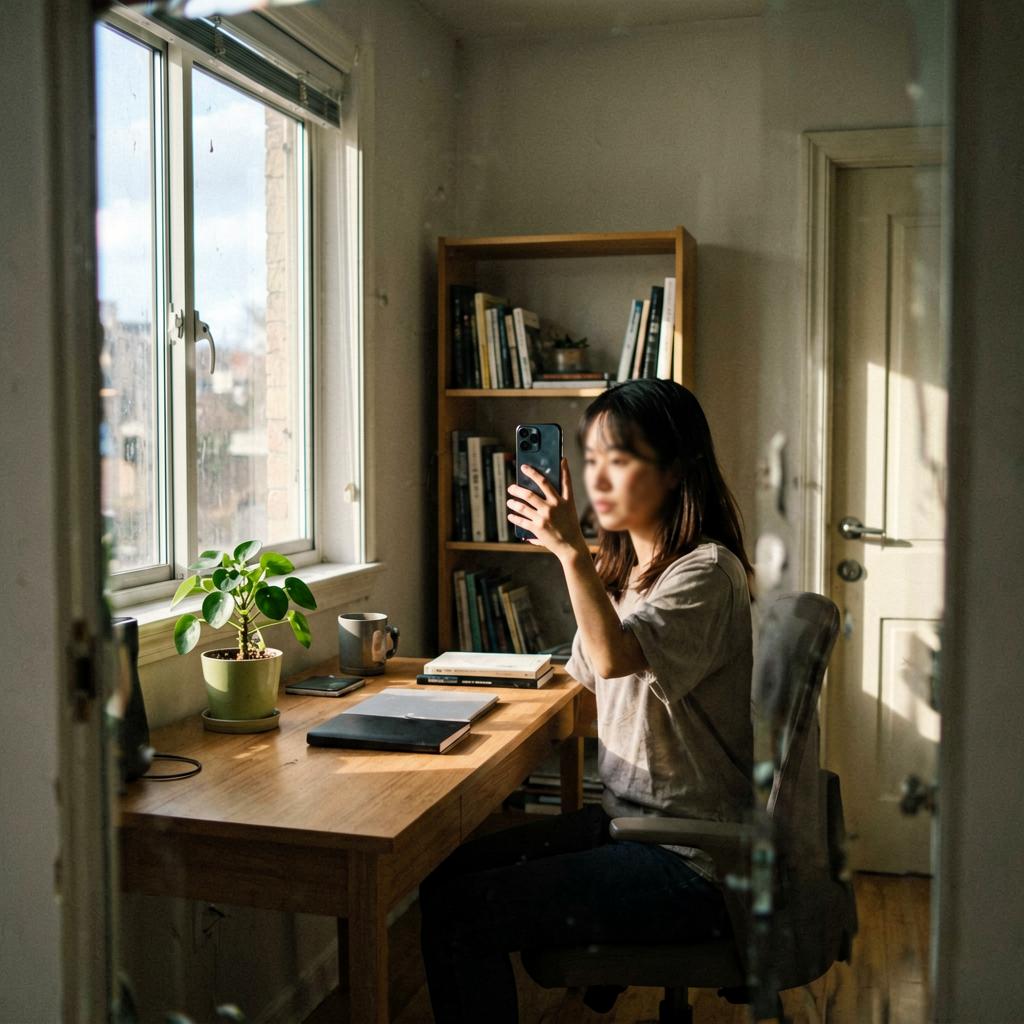
Location
Austin, United States
Property Type
House
Room
Home Office
Direction
East
The Problem
My client Maya worked from home but dreaded her office. Every afternoon, she'd hit a wall of anxiety — couldn't focus, felt restless, snapped at her kids. She thought it was burnout. I thought it was the room.
What They Tried
Her desk sat against the wall, facing a blank corner. The door was behind her, and the window was to her right. I asked her to rotate the desk 90 degrees so she faced the window, with the door visible in her peripheral view. We moved the bookshelf from beside the door to the opposite wall to open the sightline.
What Happened
Within a week, Maya said the 3PM slump was gone. She felt more grounded, less on edge. She started closing her office door less and even moved her afternoon meetings into the space. It wasn't magic — it was about not having her back to the door and having a visual anchor.
Spatial Orientation
| Bagua Sector | 震 ☳ · Zhen |
|---|---|
| Direction | East |
| Element | wood |
What works best here
Zhen (3) · Wood. East should be the tallest area of the room when possible.
Place: tall plants (especially bamboo or fiddle-leaf fig), wooden furniture, green accents.
Recommended crystal
Green Aventurine or Moss Agate — placed near a window or on a plant shelf in the east
This is the growth sector — plants thrive here and vertical elements feel natural
Source Analysis
1. The Original Principle
Original Chinese
在阳宅学里,位置和方向是二个不同考虑的因素,有时候要论宫位,但也时候却必须要论方向。例如:如果门的位置是在乾(西北)宫,但门向不一定向乾方,它可能向坎方,也可能向兑方,也有可能向坤方。因此,宫位与方向必须考虑清楚,如此,八卦配九宫才能判断得了吉凶。
English Translation
In traditional spatial analysis, the position and orientation of a room's elements matter independently. A desk's location and its facing direction must both be considered to determine whether it supports the occupant's well-being.
2. About the Source
八宅明镜上卷 by Yang Yunsong (attributed) · China · Qing Dynasty (1644–1912 CE)
The Eight Mansions Bright Mirror is one of the most influential classical Chinese texts on residential architecture. For over three centuries, it has served as a foundational reference for understanding how the layout and orientation of living spaces affect the wellbeing of their inhabitants, focusing on how living spaces can be arranged to support health, relationships, and prosperity.
3. How This Principle Applies to This Case
This case illustrates a core principle: position and orientation are separate variables. Maya's desk was in a functional spot (position), but its orientation — facing a wall with the door behind — created a subconscious sense of vulnerability. The change addressed the orientation, not the position. Modern environmental psychology supports this: people feel more at ease when they can see entrances and have a clear focal point, reducing startle responses and improving concentration.
Bring the Purest Energy Into Your Home
Sourced from altitudes above 4,000 meters in the Himalayan range — the highest place on Earth and the closest to the sun. These crystals formed over millions of years in some of the planet's most pristine conditions, untouched by industrial pollution. Each piece carries the raw, unfiltered energy of the mountains. Whether placed on a nightstand, a desk, or a meditation corner, they serve as a quiet anchor — a daily reminder to pause, breathe, and reconnect.
Explore the HIMA ALAÏA collection →Case source
Pure Living with Lisa Morton
15 years of architectural design background, transformed into advanced space decluttering and Interior Alignment mastery. Specializes in residential energy balancing.