My Client Moved Her Desk 180 Degrees And Doubled Her Study Time
A university student couldn't focus for more than 20 minutes. The fix wasn't a new chair or app — it was turning her desk to face the door.
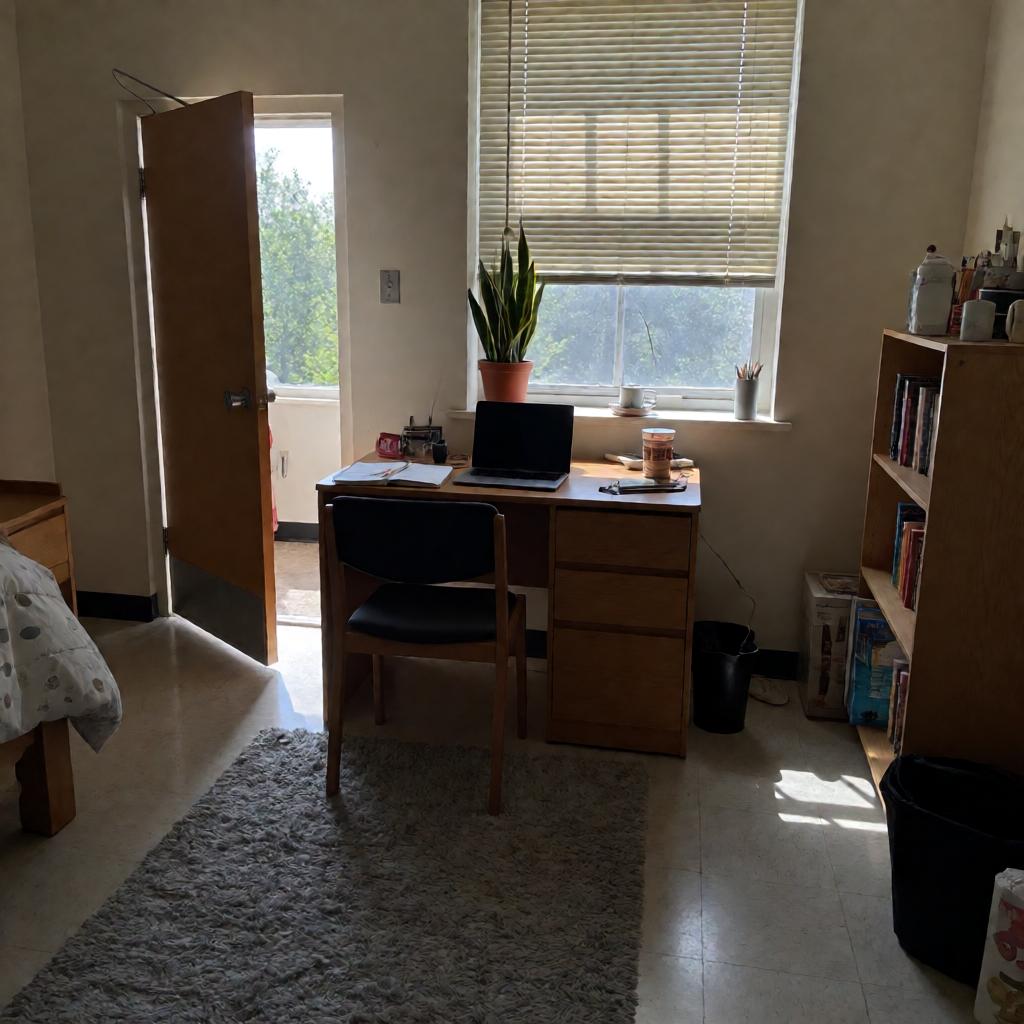
Location
Austin, United States
Property Type
Apartment
Room
Home Office
Direction
South
The Problem
Maya, a 21-year-old economics major, booked a session because she was 'losing her mind.' She'd study for 15 minutes, then check her phone. Then reorganize her pens. Then make tea. Her grades were slipping and she was starting to think she had ADHD. 'I used to be a good student,' she told me. 'Now I can't even read one chapter.'
What They Tried
Her desk was jammed into the far corner of the room, facing the wall. Her back was to the door. Every time her roommate walked by or the hallway creaked, she'd spin around. I suggested she rotate the desk 180 degrees so she sat facing the doorway, with a clear view of the room. She was skeptical — it looked weird at first, she said. But she tried it.
What Happened
Within a week, she texted me: 'I just studied for 90 minutes straight.' She wasn't cured of distraction, but the constant urge to check behind her disappeared. Her study sessions became longer and less anxious. She still uses her phone timer, but now she actually finishes the chapters.
Spatial Orientation
| Bagua Sector | 离 ☲ · Li |
|---|---|
| Direction | South |
| Element | fire |
What works best here
Li (9) · Fire. South should feel more open and lower than North for visual balance.
Place: low-profile furniture, mirrors, glass surfaces, warm lighting.
Recommended crystal
Clear Quartz or Sunstone — placed where it catches natural light, like a windowsill or console table
Mirrors work exceptionally well here — they reflect light and make the room feel larger
Source Analysis
1. The Original Principle
Original Text
Angie también había trasladado el escritorio al fondo de la habitación, situándolo de tal manera que la silla quedaba de espaldas a la puerta.
English Translation
A classical spatial guideline advises placing a desk so the seated person can see the door or an open view. This avoids the discomfort of having one's back to an entry point.
2. About the Source
Feng shui para Occidente by Terah Kathryn Collins · United States · 1995
Feng Shui for the West is a practical guide that adapts classical Chinese spatial principles for modern Western homes and lifestyles. Written by one of the first American authors to bring Feng Shui to a mainstream English-speaking audience, the book translates ancient Bagua concepts into actionable room-by-room advice using familiar Western design language and contemporary case examples.
3. How This Principle Applies to This Case
The classical principle is simple: when you can see who enters, your nervous system settles. Modern research on environmental psychology confirms that unexpected movement behind us triggers a low-grade startle response, breaking concentration. Maya's desk wasn't the problem — her seat position was. Turning it to face the door didn't change her discipline; it removed a subconscious distraction. The result was a measurable increase in focus, not through willpower, but through spatial design.
Bring the Purest Energy Into Your Home
Sourced from altitudes above 4,000 meters in the Himalayan range — the highest place on Earth and the closest to the sun. These crystals formed over millions of years in some of the planet's most pristine conditions, untouched by industrial pollution. Each piece carries the raw, unfiltered energy of the mountains. Whether placed on a nightstand, a desk, or a meditation corner, they serve as a quiet anchor — a daily reminder to pause, breathe, and reconnect.
Explore the HIMA ALAÏA collection →Case source
The Inspired Office
One of the few US consultancies specializing exclusively in office and commercial Feng Shui design. Deep expertise in home office Feng Shui, document management, and workflow decluttering.