My Client's Front Door Felt 'Wrong' — Here's What We Did
A homeowner couldn't shake the feeling that her entryway was draining her. The fix had nothing to do with clutter or paint.
Location
Portland, United States
Property Type
House
Room
Entryway
Direction
North
The Problem
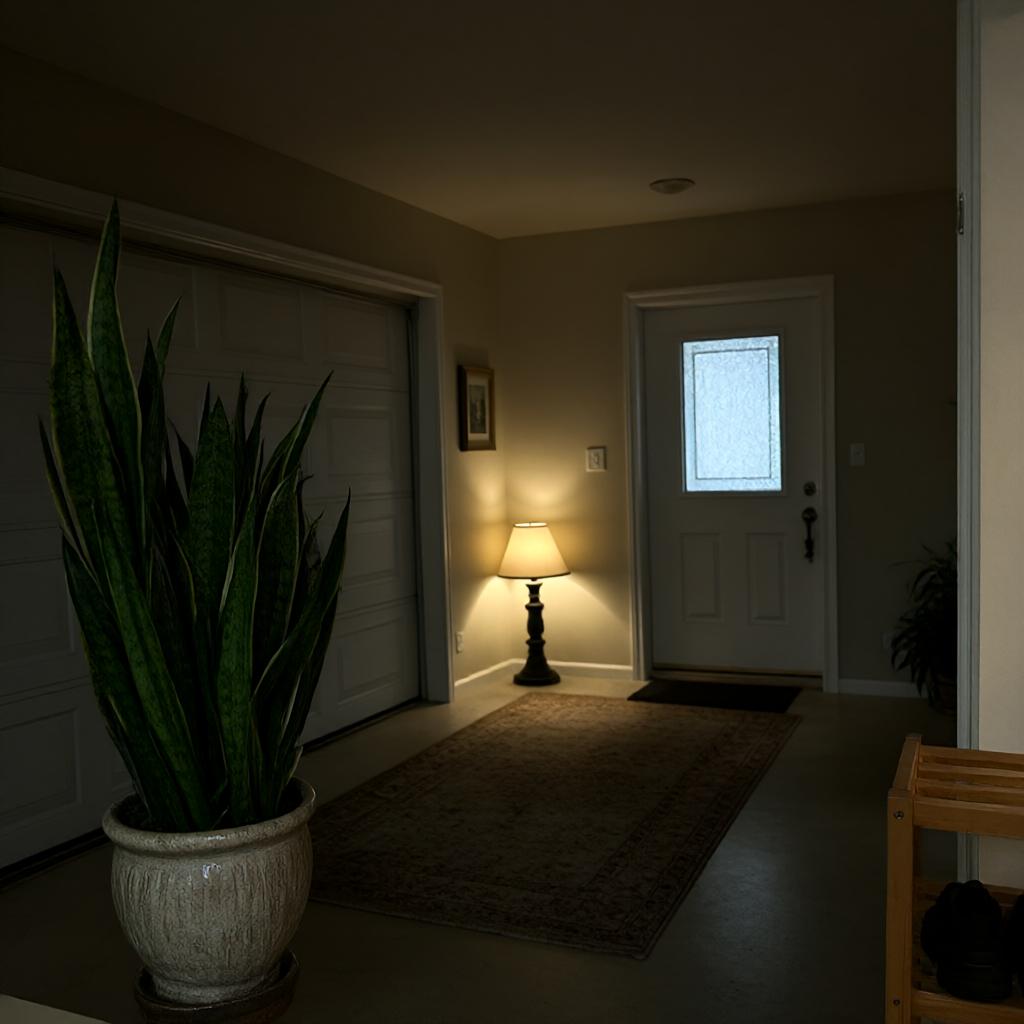
My client, Dana, called me because she felt 'off' every time she walked into her house. She couldn't explain it — just a subtle dread, like the house was sighing at her. She'd tried decluttering and even hung a mirror, but nothing worked.
What They Tried
When I visited, I noticed her attached garage door opened directly into the entryway, just a few feet from the front door. Every time she came home, she was greeted by the car's presence — the smell of tires, the concrete floor, the hulking shape. I suggested we shift the visual weight away from the garage: we installed a screen of tall plants on the garage side, added a runner rug to guide the eye toward the front door, and made sure the front door was well-lit and visible. We also started parking the car outside for a week to test the difference.
What Happened
Dana reported that within a few days, the entryway felt lighter. She didn't realize how much the garage had been dominating her first impression of home. She now keeps the car outside during the day and uses the garage for storage, and she says the house feels more welcoming.
Spatial Orientation
| Bagua Sector | 坎 ☵ · Kan |
|---|---|
| Direction | North |
| Element | water |
What works best here
Kan (1) · Water. North side can be slightly taller than South for a grounded feel.
Place: dark-colored ceramics, stone objects, heavy bookshelves.
Recommended crystal
Black Obsidian or Smoky Quartz — placed on a low table or shelf in the north corner
A solid, weighty presence here helps the room feel anchored and secure
Source Analysis
1. The Original Principle
Original Text
Tanto las cocheras privadas como los estacionamientos comunes... pueden afectar negativamente a los usuarios... el vehículo representa un elemento de energía activa que genera chi negativo.
English Translation
Private garages and shared parking areas can negatively affect users. The vehicle represents an active element that generates negative energy. Therefore, garages should be kept away from the main entrance or, if not possible, their appearance should be downplayed while the main entrance is emphasized.
2. About the Source
Integración de espacios y ubicación universidad dr jose matias delgado by Universidad Dr. José Matías Delgado · El Salvador · 2010
Space Integration and Site Planning is an academic publication from Dr. José Matías Delgado University in El Salvador. It explores the relationship between spatial arrangement, architectural design, and occupant wellbeing from a Latin American perspective, combining principles of environmental psychology with practical site planning methodology.
3. How This Principle Applies to This Case
This case illustrates the principle that garages should not be adjacent to the main entrance. The classical text observes that vehicles generate active, negative energy. Modern environmental psychology explains this through cognitive priming: the sight and smell of a car immediately triggers associations with traffic, stress, and departure, which can create a subtle sense of unease. By shifting the visual focus to the front door and softening the garage's presence, Dana's entryway became a transitional space that signaled safety and arrival rather than departure and stress.
Bring the Purest Energy Into Your Home
Sourced from altitudes above 4,000 meters in the Himalayan range — the highest place on Earth and the closest to the sun. These crystals formed over millions of years in some of the planet's most pristine conditions, untouched by industrial pollution. Each piece carries the raw, unfiltered energy of the mountains. Whether placed on a nightstand, a desk, or a meditation corner, they serve as a quiet anchor — a daily reminder to pause, breathe, and reconnect.
Explore the HIMA ALAÏA collection →Case source
Nicolette Vajtay
Feng Shui consultant helping clients transform their homes through intentional spatial design.