My Desk Was in the Wrong Spot — I Turned It Two Inches and Started Writing Again
A writer who couldn't focus for months discovers that a tiny shift in her home office setup made all the difference.
Location
Austin, TX, United States
Property Type
Apartment
Room
Home Office
Direction
West
The Problem
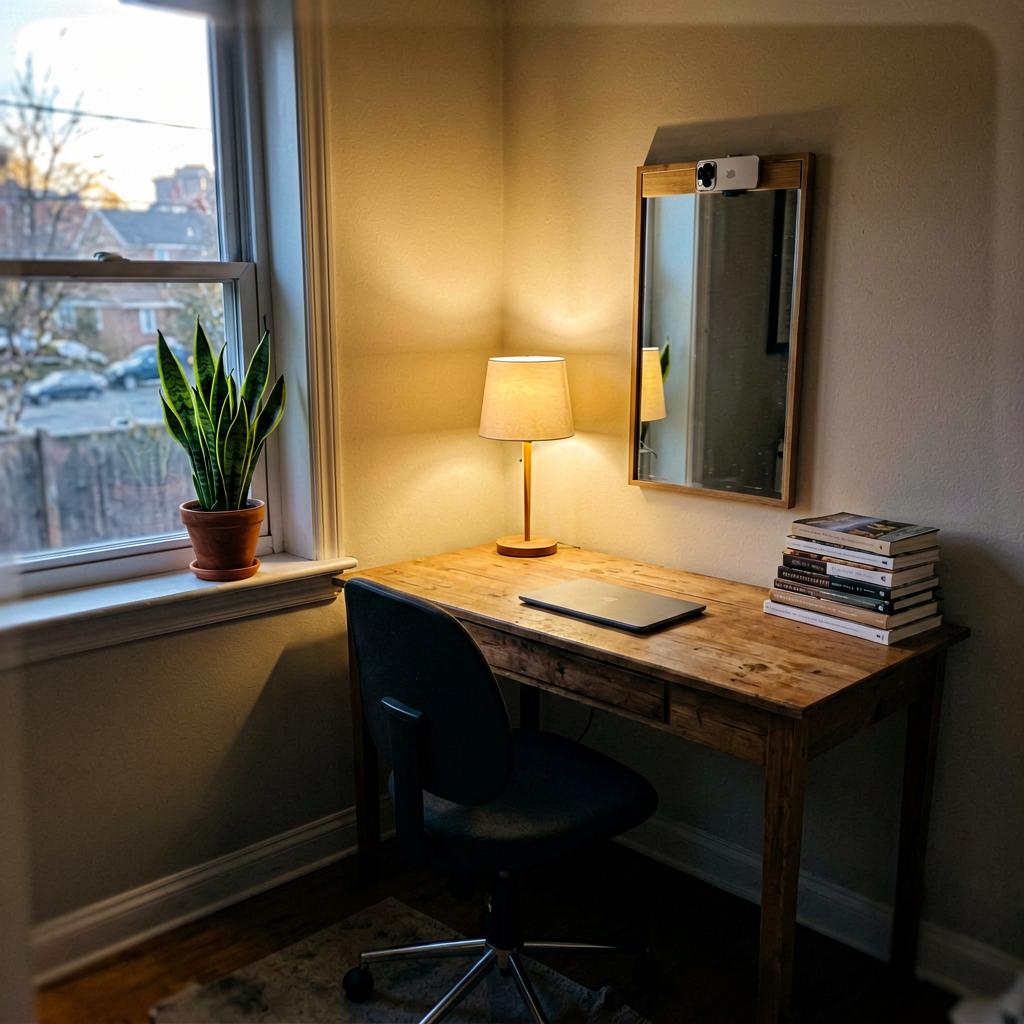
I'd been staring at the same blank page for three months. My home office felt fine — desk against the wall, chair facing the door, everything neat. But every time I sat down to write, my brain just... refused. I'd open my laptop, check my phone, make tea, reorganize my pens. Anything but write.
What They Tried
My friend Jim — not a guru, just a guy who reads a lot about space — came over one afternoon. He looked at my setup, then said, 'Your desk is facing the wrong way. Try turning it so your left side is toward the window.' I laughed. Then I moved my desk about two inches to the left and rotated it slightly. That's it. Nothing else. No new lamp, no new chair.
What Happened
The next morning I sat down, and for the first time in weeks, I wrote a whole page without checking my phone. It wasn't a miracle — I still have bad days. But something about that small change made the room feel less like a trap. I've kept it that way for two months now, and my word count is probably triple what it was.
Spatial Orientation
| Bagua Sector | 兑 ☱ · Dui |
|---|---|
| Direction | West |
| Element | metal |
What works best here
Dui (7) · Metal. West should be lower and more open than East for left-right equilibrium.
Place: low cabinets, metal decor (brass, copper, steel), round shapes, white and grey tones.
Recommended crystal
Clear Quartz or Selenite — placed on a low console or side table in the west
Round shapes and metallic finishes feel especially at home on this side of the room
Source Analysis
1. The Original Principle
Original Chinese
催官第九兑山艮,左耳气冲无多紊。略加天乙贵龙来,亦主文章典州郡。
English Translation
This passage from a classical text on spatial arrangement suggests that the placement of a person's working position relative to surrounding features can influence mental clarity. It emphasizes the value of aligning oneself with favorable conditions, such as having a supportive presence to one side.
2. About the Source
催官篇卷之二 评穴章 by Lai Buyi · China · Song Dynasty (960–1279 CE)
The Promotion Classic is a Song Dynasty text focused on how the spatial arrangement of landforms and water features around a dwelling can influence the career advancement and social recognition of its occupants. It combines Form School landscape analysis with the Bagua directional framework, offering practical guidance on site evaluation that has been consulted by scholars and officials for centuries.
3. How This Principle Applies to This Case
This case illustrates how a small environmental adjustment can have an outsized psychological impact. The classical text, focused on site selection for dwellings, notes the importance of a 'supporting' direction — here, the left side. In modern terms, this aligns with the concept of 'prospect and refuge' in environmental psychology: people feel safer and more focused when they have a clear view (the window) but also a sense of protection (the wall behind). Turning the desk so the left side faced the window likely reduced the feeling of being watched from the door, allowing the writer to relax into deep work. It's a reminder that our surroundings subtly shape our cognitive state.
Bring the Purest Energy Into Your Home
Sourced from altitudes above 4,000 meters in the Himalayan range — the highest place on Earth and the closest to the sun. These crystals formed over millions of years in some of the planet's most pristine conditions, untouched by industrial pollution. Each piece carries the raw, unfiltered energy of the mountains. Whether placed on a nightstand, a desk, or a meditation corner, they serve as a quiet anchor — a daily reminder to pause, breathe, and reconnect.
Explore the HIMA ALAÏA collection →Case source
Anjie Cho Architect & Holistic Spaces
NYC-based architect and BTB Feng Shui master. Co-founder of Mindful Design Feng Shui School. Blends modern interior design with classical BTB Feng Shui. Author of multiple Feng Shui books.