My Friend Moved Her Desk to Face the Window — Three Weeks Later She Called It the 'Study Spell'
When my friend Maya couldn't focus in her home office, she rearranged the furniture. She insists it changed everything. I'm still not sure what to think.
Location
Austin, United States
Property Type
Apartment
Room
Home Office
Direction
East
The Problem
Maya had been working from home for eight months and couldn't finish anything. She'd start a project, get distracted, wander to the kitchen, come back, stare at her screen. She told me she felt like her brain had turned to static.
What They Tried
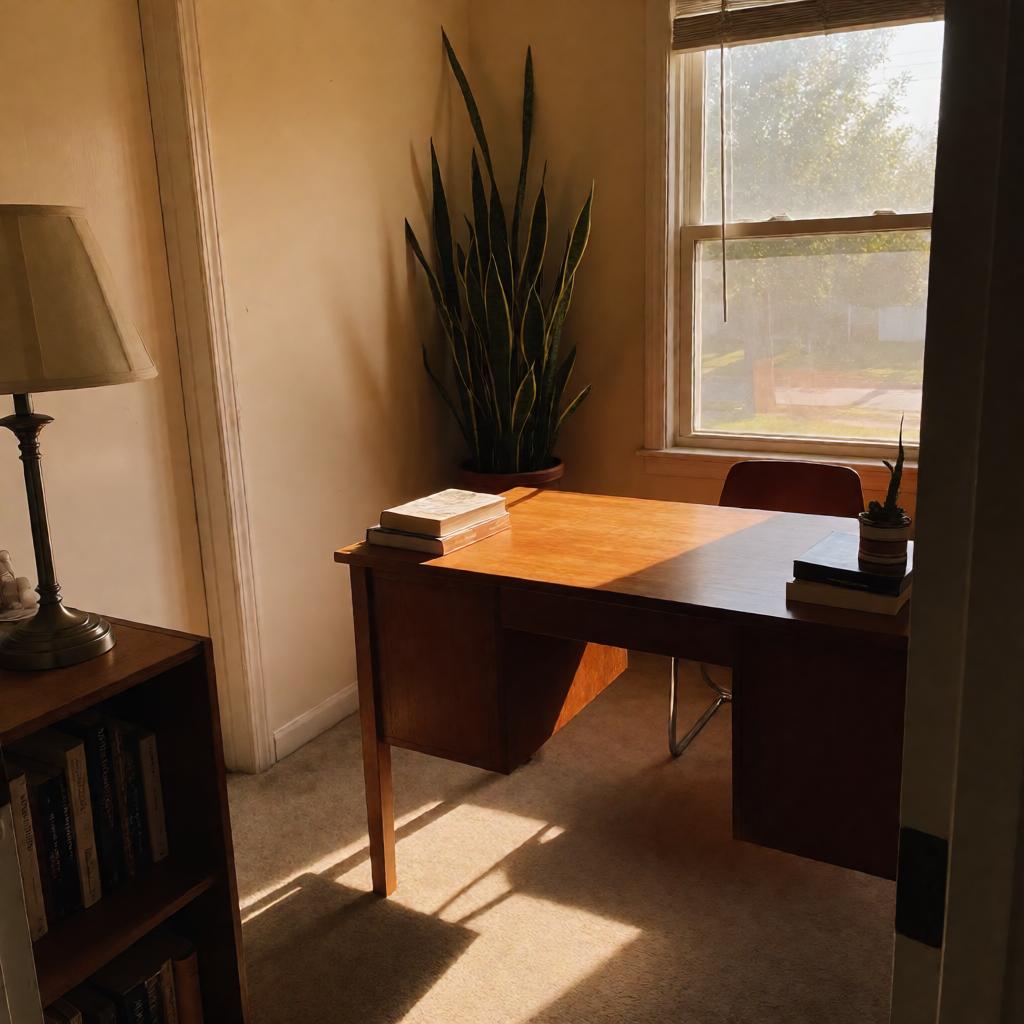
She moved her desk from the side wall to face the window directly, cleared the space behind her, and added a tall potted plant in the corner where the desk used to be. She also moved a floor lamp to her left side.
What Happened
She says she can suddenly finish two or three tasks in a row without getting up. She's not claiming magic — just that something clicked. I visited last week and honestly, the room did feel different. Calmer. More deliberate.
Spatial Orientation
| Bagua Sector | 震 ☳ · Zhen |
|---|---|
| Direction | East |
| Element | wood |
What works best here
Zhen (3) · Wood. East should be the tallest area of the room when possible.
Place: tall plants (especially bamboo or fiddle-leaf fig), wooden furniture, green accents.
Recommended crystal
Green Aventurine or Moss Agate — placed near a window or on a plant shelf in the east
This is the growth sector — plants thrive here and vertical elements feel natural
Source Analysis
1. The Original Principle
Original Chinese
贪狼一木势尖强,鬼星秀丽足文章。或然丫角牙丫起,明经魁选细推详。
English Translation
An old landform manual notes that a tall, pointed tree near a house suggests strong scholarly potential. If the surrounding hills have elegant, branching shapes, the household may produce people who excel in classical studies. The idea: the shape of the environment mirrors the shape of the mind.
2. About the Source
撼龙经 by Yang Yunsong · China · Tang Dynasty (618–907 CE)
The Dragon-Shaking Classic is a foundational text of the Form School of Chinese geomancy, compiled during the Tang Dynasty. It systematically describes how mountain formations, water flows, and land contours create spatial environments that influence human settlements. Its principles about terrain shapes and landscape energy continue to inform modern site analysis and spatial planning.
3. How This Principle Applies to This Case
The classical text observed that certain landscape forms — tall, pointed, elegant — seemed to correlate with scholarly achievement in nearby households. Modern environmental psychology offers a parallel: visual complexity and spatial orientation affect cognitive focus. Facing a window with a clear view may reduce mental fatigue, while a tall plant in the periphery adds a subtle sense of boundary. The 'study spell' Maya describes is likely a combination of better light, reduced visual clutter, and a sense of intentionality. The classical principle didn't cause the change — it described a pattern that modern design now explains differently.
Bring the Purest Energy Into Your Home
Sourced from altitudes above 4,000 meters in the Himalayan range — the highest place on Earth and the closest to the sun. These crystals formed over millions of years in some of the planet's most pristine conditions, untouched by industrial pollution. Each piece carries the raw, unfiltered energy of the mountains. Whether placed on a nightstand, a desk, or a meditation corner, they serve as a quiet anchor — a daily reminder to pause, breathe, and reconnect.
Explore the HIMA ALAÏA collection →Case source
Jef Blocker Coaching & Feng Shui
IFSG Red Ribbon professional. Combines life coaching, Reiki energy healing, and residential Feng Shui adjustments. Active across the American South.