My Friend Moved Her Stove Out of the South Corner and Her Whole Kitchen Stopped Feeling Cursed
A friend's kitchen always felt chaotic and hot—until she moved the stove away from the south wall. The change was small, but the difference was real.
Location
Austin, United States
Property Type
House
Room
Kitchen
Direction
South
The Problem
My friend Dana had been complaining about her kitchen for months. It was always too hot, she said, even in winter. She'd burn things without meaning to. She'd open the fridge and just stand there, overwhelmed. And she and her husband kept having the same stupid argument at dinner—about nothing, about everything. 'The whole room feels like it's yelling at me,' she told me. The stove sat against the south wall, directly under a high window, with a tall brick chimney column rising just outside. The morning sun hit that corner like a spotlight. She'd tried everything: new pans, a countertop fan, even a different brand of olive oil. Nothing helped.
What They Tried
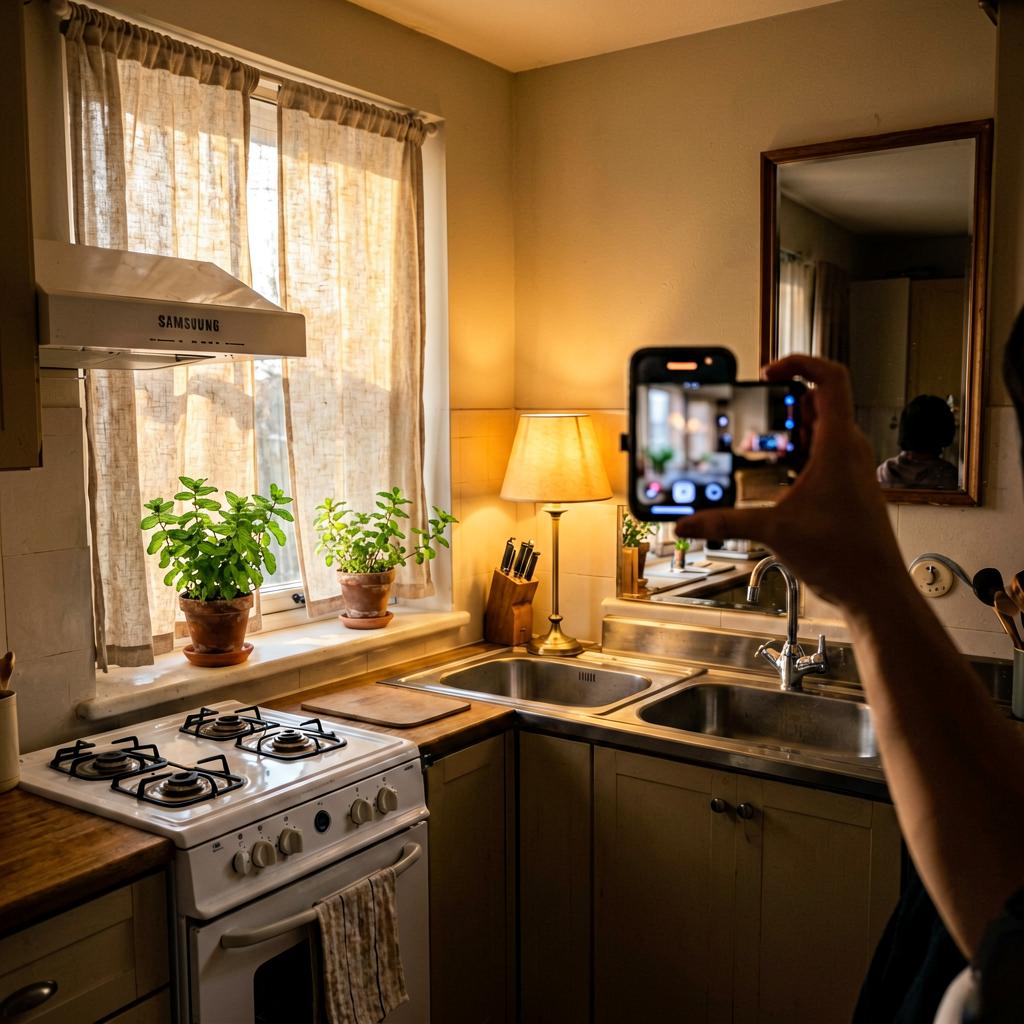
A contractor friend mentioned, almost offhand, that having the stove in that particular corner was a bad idea—too much heat stacked on heat, he said, with the sun and the chimney and the cooking all in one spot. So Dana swapped the stove and the sink. The sink went under the south window. The stove moved to the west wall, where there was more counter space and no direct sun. She also hung a light linen curtain over the south window to soften the glare, and put a small potted mint plant on the windowsill. Total cost: about forty dollars for the curtain and a new faucet hose.
What Happened
She didn't suddenly become a calm person. She still burns toast sometimes. But the kitchen stopped feeling like a fight. 'I can actually stand in there and think,' she said. The dinner arguments faded—not gone, but less frequent, and less about nothing. The room is cooler. The light is softer. She cooks more. Her husband now makes coffee in the morning without sighing. It's not magic. It's just a room that finally works.
Spatial Orientation
| Bagua Sector | 离 ☲ · Li |
|---|---|
| Direction | South |
| Element | fire |
What works best here
Li (9) · Fire. South should feel more open and lower than North for visual balance.
Place: low-profile furniture, mirrors, glass surfaces, warm lighting.
Recommended crystal
Clear Quartz or Sunstone — placed where it catches natural light, like a windowsill or console table
Mirrors work exceptionally well here — they reflect light and make the room feel larger
Source Analysis
1. The Original Principle
Original Chinese
九紫全体沙,下元是败家,绝二又绝长,四九配交叉,五官形不正,难比施公斜,壬子癸水照,断定是绝家,无论阴阳宅,切忌犯离沙,九灶与九路,切宜改换它。
English Translation
A classical Chinese text on landforms warns against piling up high, dry, or fire-prone features in the southern position of a home. The south is associated with bright, active, upward-moving qualities; adding heavy or heat-generating objects there creates an imbalance. The text advises relocating stoves and pathways away from this sector to restore harmony.
2. About the Source
金锁玉关 by Anonymous (private manuscript) · China · Pre-Song Dynasty (before 960 CE)
The Golden Lock and Jade Pass is an esoteric classical text on residential site analysis, passed down through private manuscripts. It provides a systematic method for evaluating how the surrounding landforms — heights, depressions, and water features in each compass direction — shape the experience of a living space. Its sand-and-water framework remains one of the most practical tools in the landscape assessment tradition.
3. How This Principle Applies to This Case
The classical principle warns against 'sand'—high, dry, fire-prone elements—in the southern sector, which is naturally associated with heat and brightness. In Dana's case, the stove, chimney, and direct sun stacked three heat sources in one spot. Modern environmental psychology confirms that excessive heat and glare raise cortisol and irritability, making minor conflicts feel larger. Moving the stove to a cooler wall reduced sensory overload. The change wasn't mystical; it was spatial. The text's advice to relocate a southern stove aligns with what we now know about thermal comfort and stress.
Bring the Purest Energy Into Your Home
Sourced from altitudes above 4,000 meters in the Himalayan range — the highest place on Earth and the closest to the sun. These crystals formed over millions of years in some of the planet's most pristine conditions, untouched by industrial pollution. Each piece carries the raw, unfiltered energy of the mountains. Whether placed on a nightstand, a desk, or a meditation corner, they serve as a quiet anchor — a daily reminder to pause, breathe, and reconnect.
Explore the HIMA ALAÏA collection →Case source
Zen Den Reiki & Feng Shui
Midwest energy wellness space. Combines Japanese Reiki healing with Chinese Feng Shui. Specializes in creating decompression spaces for spas, therapy clinics, yoga studios, and private homes.