My Friend Put a Row of Bamboo Along Her Patio Edge and Swears It Changed Everything
A friend's patio makeover using a simple bamboo screen turned her stressful outdoor space into a calm retreat — and she says it wasn't just about privacy.
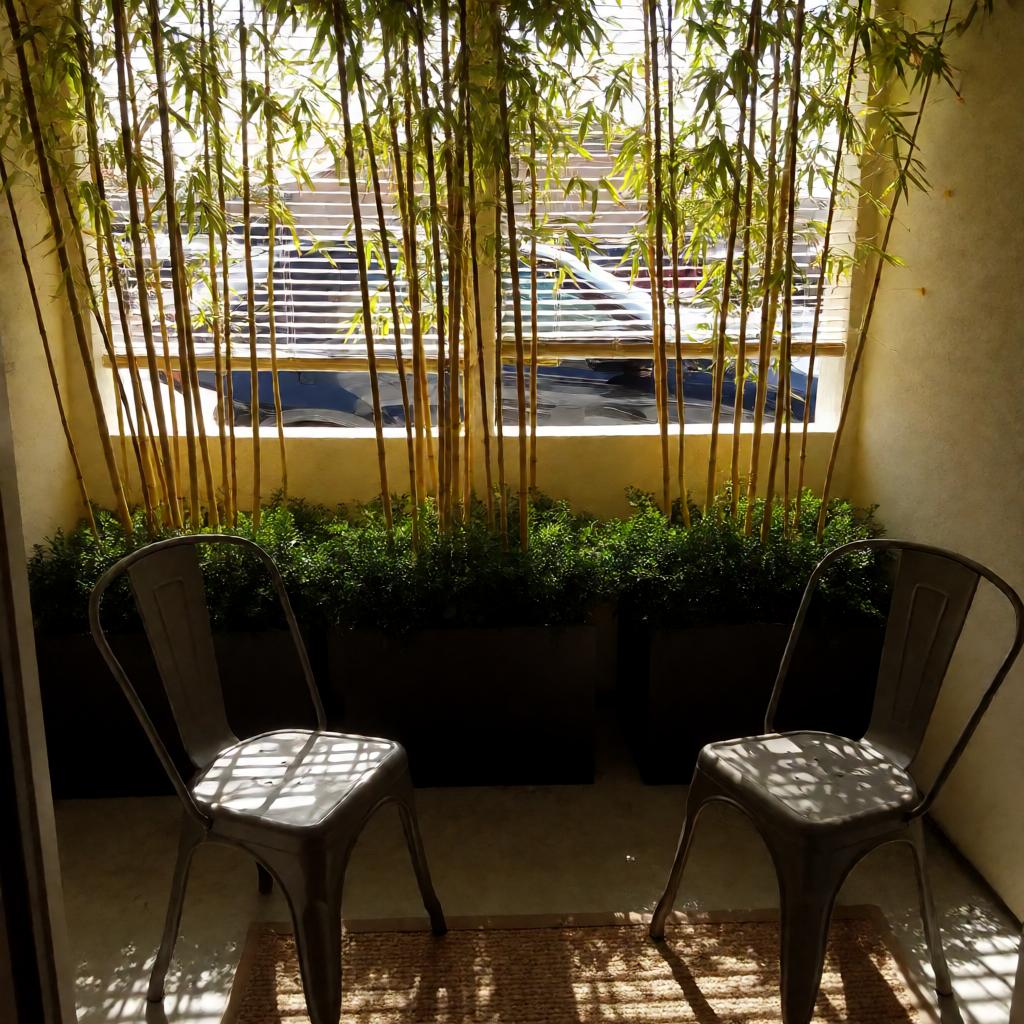
Location
Portland, United States
Property Type
Apartment
Room
Patio
Direction
East
The Problem
My friend Maya lives in a ground-floor apartment with a small patio that opens onto a busy parking lot. She was constantly anxious out there — she said it felt like sitting in a fishbowl, with car doors slamming, headlights sweeping across the walls, and strangers glancing in. She stopped using the patio entirely, even though it was the only outdoor space she had. 'I just want to sit outside without feeling exposed,' she told me. She'd tried a few things — a cheap folding screen that blew over in the wind, some potted plants that died because she forgot to water them — but nothing stuck.
What They Tried
I suggested she try a living screen instead of a hard one. She planted a row of bamboo in long, narrow planters along the open edge of her patio, about three feet back from the property line. She chose a clumping variety so it wouldn't spread, and added a few broad-leafed shrubs at the base to fill in the gaps. It took an afternoon to set up. She watered them every other day for the first month, then let the rain take over. Within six weeks the bamboo had grown tall enough to block the view of the parking lot from seated height.
What Happened
She started using the patio again — mornings with coffee, evenings with a book. She said the noise didn't disappear, but it faded into the background. 'It's like the parking lot isn't there anymore,' she told me. She didn't become a different person or anything. But she stopped avoiding her own outdoor space, and that seemed like a real shift.
Spatial Orientation
| Bagua Sector | 震 ☳ · Zhen |
|---|---|
| Direction | East |
| Element | wood |
What works best here
Zhen (3) · Wood. East should be the tallest area of the room when possible.
Place: tall plants (especially bamboo or fiddle-leaf fig), wooden furniture, green accents.
Recommended crystal
Green Aventurine or Moss Agate — placed near a window or on a plant shelf in the east
This is the growth sector — plants thrive here and vertical elements feel natural
Source Analysis
1. The Original Principle
Original Text
Son importantes también, los cercos ya que estos generan un perímetro del área del jardín, protegiéndolo de la contaminación exterior, estos pueden ser artificiales o naturales, los arbustos de hojas anchas y de color verde oscuro son recomendados como por ejemplo: Mano de León (Leontochir Ovallei), Hortensias (Hydrangea), Tuya (Thuja Orientalis), Bambú (Bambusa Arundinacea), entre otros.
English Translation
Garden enclosures — whether artificial or natural — create a perimeter that protects the garden from outside contamination. Broad-leafed, dark-green shrubs are recommended for this purpose, including varieties like lion's paw, hydrangea, arborvitae, and bamboo.
2. About the Source
Integración de espacios y ubicación universidad dr jose matias delgado by Universidad Dr. José Matías Delgado · El Salvador · 2010
Space Integration and Site Planning is an academic publication from Dr. José Matías Delgado University in El Salvador. It explores the relationship between spatial arrangement, architectural design, and occupant wellbeing from a Latin American perspective, combining principles of environmental psychology with practical site planning methodology.
3. How This Principle Applies to This Case
The classical garden principle holds that a boundary — living or built — shields a space from external interference and allows it to function as intended. In Maya's case, the boundary was literal: a bamboo screen that filtered sightlines and softened sound from a parking lot. Modern environmental psychology supports this. When a space feels exposed to unpredictable outside activity, the nervous system stays in a low-grade alert state, making rest and attention difficult. A visual and acoustic buffer reduces that vigilance. The principle isn't about decoration; it's about creating the conditions for a space to be used at all.
Bring the Purest Energy Into Your Home
Sourced from altitudes above 4,000 meters in the Himalayan range — the highest place on Earth and the closest to the sun. These crystals formed over millions of years in some of the planet's most pristine conditions, untouched by industrial pollution. Each piece carries the raw, unfiltered energy of the mountains. Whether placed on a nightstand, a desk, or a meditation corner, they serve as a quiet anchor — a daily reminder to pause, breathe, and reconnect.
Explore the HIMA ALAÏA collection →Case source
Domicile Design
30+ years of high-end interior design in Minneapolis. Certified Feng Shui master and Diamond Dowser, specializing in geopathic stress detection and spatial environmental science.