My Friend's Tiny Bedroom Felt Like a Cave—Then She Pointed a Lamp at the Ceiling
A friend's low-ceilinged bedroom made her feel claustrophobic until she tried one simple lighting trick.
Location
Chicago, United States
Property Type
Apartment
Room
Bedroom
Direction
North
The Problem
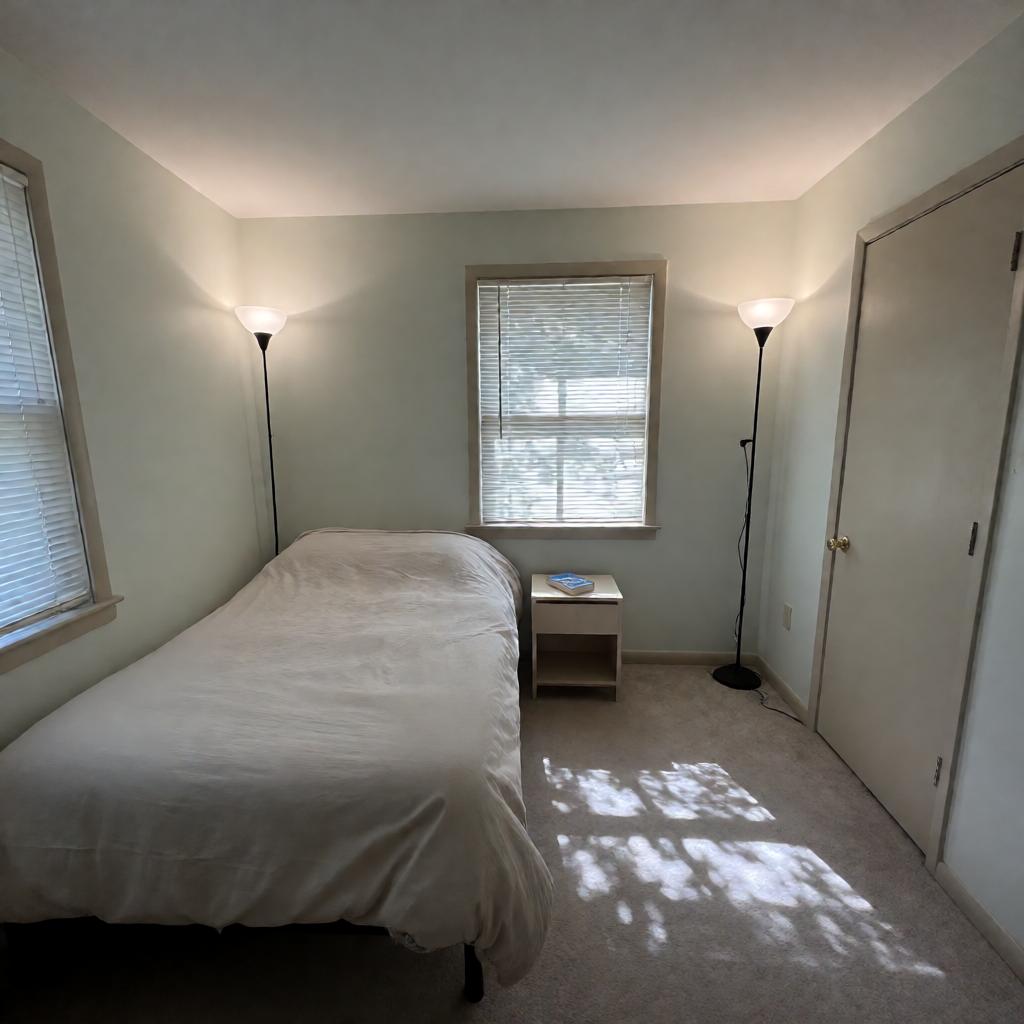
My friend Jenna was complaining about her bedroom again. She'd been living in this old apartment with ceilings so low she could almost touch them. Every time I visited, I felt it too—this heavy, oppressive weight pushing down on you. She said she dreaded going to bed because the room felt like a cave. She'd tried rearranging furniture, decluttering, even sleeping with the door open, but nothing helped. The room still felt cramped and dark.
What They Tried
One day she called me, all excited. She'd read something about using light to make low ceilings feel higher. She bought a couple of small uplights and placed them on the floor in the corners, pointing straight up at the ceiling. She also swapped her overhead bulb for a softer, warmer one and made sure no lamp was casting light downward. The idea was to draw the eye upward and create the illusion of height.
What Happened
The change was subtle but real. The ceiling didn't actually move, of course, but the room felt lighter, more open. Jenna said she stopped feeling like the walls were closing in. She started sleeping better—not perfect, but better. And she actually enjoys being in her bedroom now. It's not a cave anymore; it's just a small room with a clever trick.
Spatial Orientation
| Bagua Sector | 坎 ☵ · Kan |
|---|---|
| Direction | North |
| Element | water |
What works best here
Kan (1) · Water. North side can be slightly taller than South for a grounded feel.
Place: dark-colored ceramics, stone objects, heavy bookshelves.
Recommended crystal
Black Obsidian or Smoky Quartz — placed on a low table or shelf in the north corner
A solid, weighty presence here helps the room feel anchored and secure
Source Analysis
1. The Original Principle
Original Text
También se utiliza la luz para elevar simbólicamente un techo bajo; en este caso dirigir los focos hacia arriba.
English Translation
Light can be used to symbolically raise a low ceiling; in this case, direct spotlights upward.
2. About the Source
Feng shui para Occidente by Terah Kathryn Collins · United States · 1995
Feng Shui for the West is a practical guide that adapts classical Chinese spatial principles for modern Western homes and lifestyles. Written by one of the first American authors to bring Feng Shui to a mainstream English-speaking audience, the book translates ancient Bagua concepts into actionable room-by-room advice using familiar Western design language and contemporary case examples.
3. How This Principle Applies to This Case
This case illustrates the classical principle of using upward-directed light to symbolically elevate a low ceiling. The text observes that light direction influences spatial perception. Modern environmental psychology supports this: upward lighting draws the eye upward, creating a sense of expanded vertical space, which can reduce feelings of confinement and improve comfort. By redirecting light, Jenna altered her room's perceived proportions without structural changes.
Bring the Purest Energy Into Your Home
Sourced from altitudes above 4,000 meters in the Himalayan range — the highest place on Earth and the closest to the sun. These crystals formed over millions of years in some of the planet's most pristine conditions, untouched by industrial pollution. Each piece carries the raw, unfiltered energy of the mountains. Whether placed on a nightstand, a desk, or a meditation corner, they serve as a quiet anchor — a daily reminder to pause, breathe, and reconnect.
Explore the HIMA ALAÏA collection →Case source
Simple Shui
One of America's most influential modern Feng Shui platforms. De-mystifies and modernizes ancient Feng Shui for the American middle-class lifestyle — spatial energy aesthetics for real life.