My Friend Swapped Her Living Room and Studio — and It Fixed Her Creative Block
A friend of mine was drowning in clutter and creative frustration. She swapped two rooms entirely. Three weeks later, she finished a painting she'd been stuck on for months.
Location
Portland, United States
Property Type
House
Room
Living Room
Direction
South
The Problem
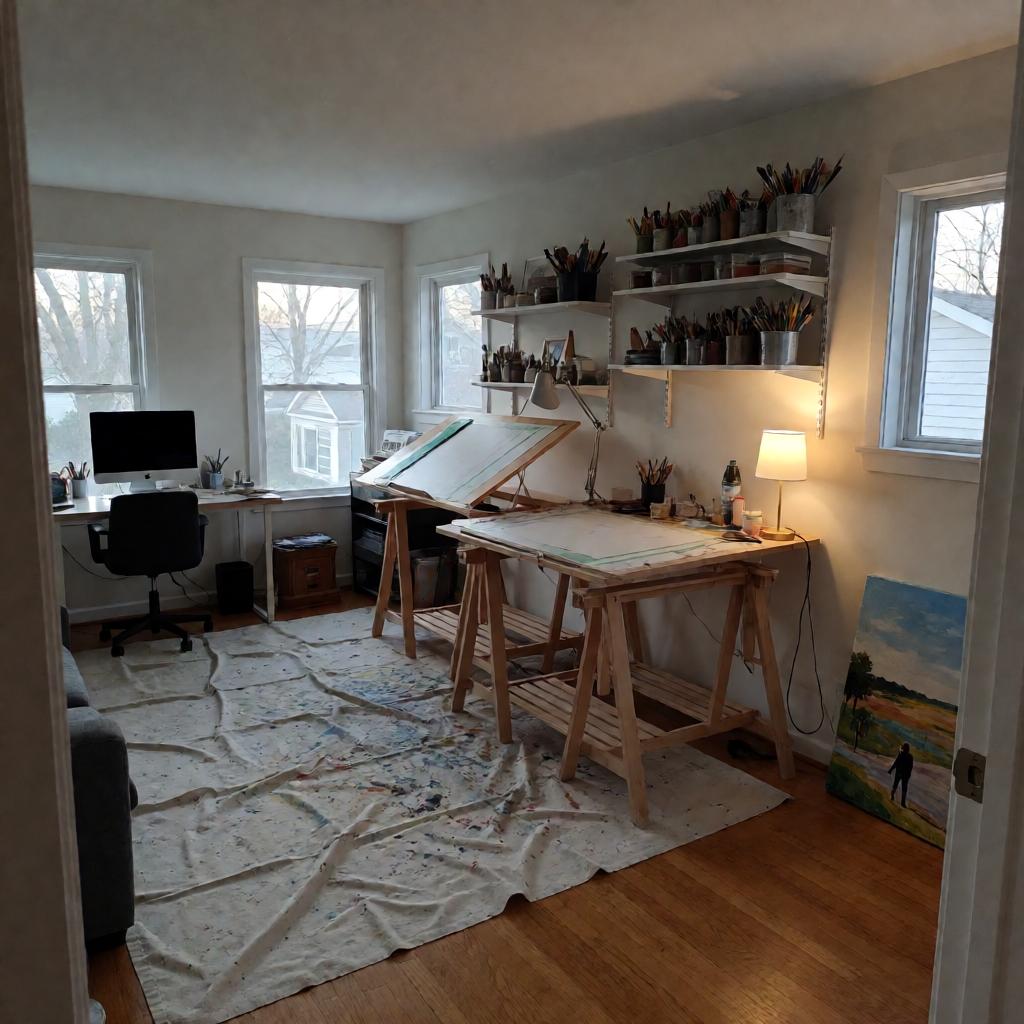
My friend Bonnie had been complaining for months about her apartment. She's an artist — paints, draws, makes these intricate collage pieces. But her setup was a disaster. She had her drafting table crammed into a tiny spare room she called a studio, and her actual living room was basically a storage unit for finished canvases and art supplies. She couldn't walk through either space without tripping over something. And the weird part? She said she hadn't finished a single new piece in almost five months. She'd sit down to work and just... stare at the wall. She kept saying the apartment felt like it was working against her.
What They Tried
I suggested something kind of radical: swap the rooms entirely. Move the drafting table and all her art supplies into the living room — the bigger space with the better light — and turn the small spare room into an actual living room. She thought I was joking at first. But she did it. She put both drafting tables right in the middle of the main room, with space to walk all the way around them. She lined the walls with shelving for her supplies. She moved her computer and files into a corner, separate from the creative zone. She hired a neighbor to help haul the heavy stuff so it got done in one weekend instead of dragging on for weeks.
What Happened
It wasn't magic, but it was pretty close. Within the first week she said the room felt 'lighter' — she could actually see her work area and move around it. By week three, she'd finished a painting she'd been stuck on since spring. She also stopped dreading going into her own living room. The small room became a cozy spot for reading and having people over. Her garage — which had been packed with art stuff — now fits her second car again. She told me last week she's sleeping better too, which she didn't even expect.
Spatial Orientation
| Bagua Sector | 离 ☲ · Li |
|---|---|
| Direction | South |
| Element | fire |
What works best here
Li (9) · Fire. South should feel more open and lower than North for visual balance.
Place: low-profile furniture, mirrors, glass surfaces, warm lighting.
Recommended crystal
Clear Quartz or Sunstone — placed where it catches natural light, like a windowsill or console table
Mirrors work exceptionally well here — they reflect light and make the room feel larger
Source Analysis
1. The Original Principle
Original Text
Cuanto más pensaba Bonnie en la posibilidad de darle la vuelta a la casa como a un guante, más emocionada se sentía. Le sugerí que colocara todas sus mesas de dibujo en medio de la estancia donde tendría espacio de sobras para moverse alrededor de ellas. Ahora también dispondría de amplios paños de pared para colocar estanterías en las que organizar sus útiles de trabajo. Eso supondría tener todo el material vinculado a su arte en un único espacio, además de recuperar en el garaje el espacio para el segundo coche. Por otra parte, le encantó la idea de separar el mobiliario de oficina, con su ordenador y archivos, de la zona dedicada exclusivamente a la creatividad artística.
English Translation
A case study describes a woman who felt increasingly excited about the idea of turning her house around 'like a glove.' She was advised to place all her drafting tables in the middle of the main room, where there was plenty of space to move around them. This also freed up wall space for shelving to organize her art materials — consolidating everything in one place and recovering garage space for a second car. She loved the idea of separating her office furniture (computer, files) from the area reserved purely for artistic creativity.
2. About the Source
Feng shui para Occidente by Terah Kathryn Collins · United States · 1995
Feng Shui for the West is a practical guide that adapts classical Chinese spatial principles for modern Western homes and lifestyles. Written by one of the first American authors to bring Feng Shui to a mainstream English-speaking audience, the book translates ancient Bagua concepts into actionable room-by-room advice using familiar Western design language and contemporary case examples.
3. How This Principle Applies to This Case
This case illustrates the classical principle of functional displacement and circulation restructuring — reassigning rooms to match actual use rather than inherited labels. The text observed that placing a large work surface at the center, with clear space around it, changed how the occupant moved and felt in the room. Modern environmental psychology explains this through 'behavioral affordance': when a space physically supports an activity — adequate light, room to move, materials at hand — the friction that blocks creative flow drops. Separating administrative work from creative work reduces task-switching costs. The result isn't mystical; it's a better fit between environment and behavior.
Bring the Purest Energy Into Your Home
Sourced from altitudes above 4,000 meters in the Himalayan range — the highest place on Earth and the closest to the sun. These crystals formed over millions of years in some of the planet's most pristine conditions, untouched by industrial pollution. Each piece carries the raw, unfiltered energy of the mountains. Whether placed on a nightstand, a desk, or a meditation corner, they serve as a quiet anchor — a daily reminder to pause, breathe, and reconnect.
Explore the HIMA ALAÏA collection →Case source
Anjie Cho
NYC architect and BTB Feng Shui master. Author and co-founder of Mindful Design Feng Shui School.