My Friend Swore Moving Her Bed to the North Wall Cured Her Insomnia — I Thought She'd Lost It
A skeptical friend recounts how her best friend's simple bed repositioning led to dramatically better sleep, and why she finally tried it herself.
Location
Portland, Oregon, United States
Property Type
Apartment
Room
Bedroom
Direction
North
The Problem
My friend Dana hadn't slept properly in almost a year. She'd tried melatonin, white noise machines, cutting caffeine after noon — nothing stuck. She was irritable, foggy at work, and honestly, kind of a mess. I thought she was just stressed.
What They Tried
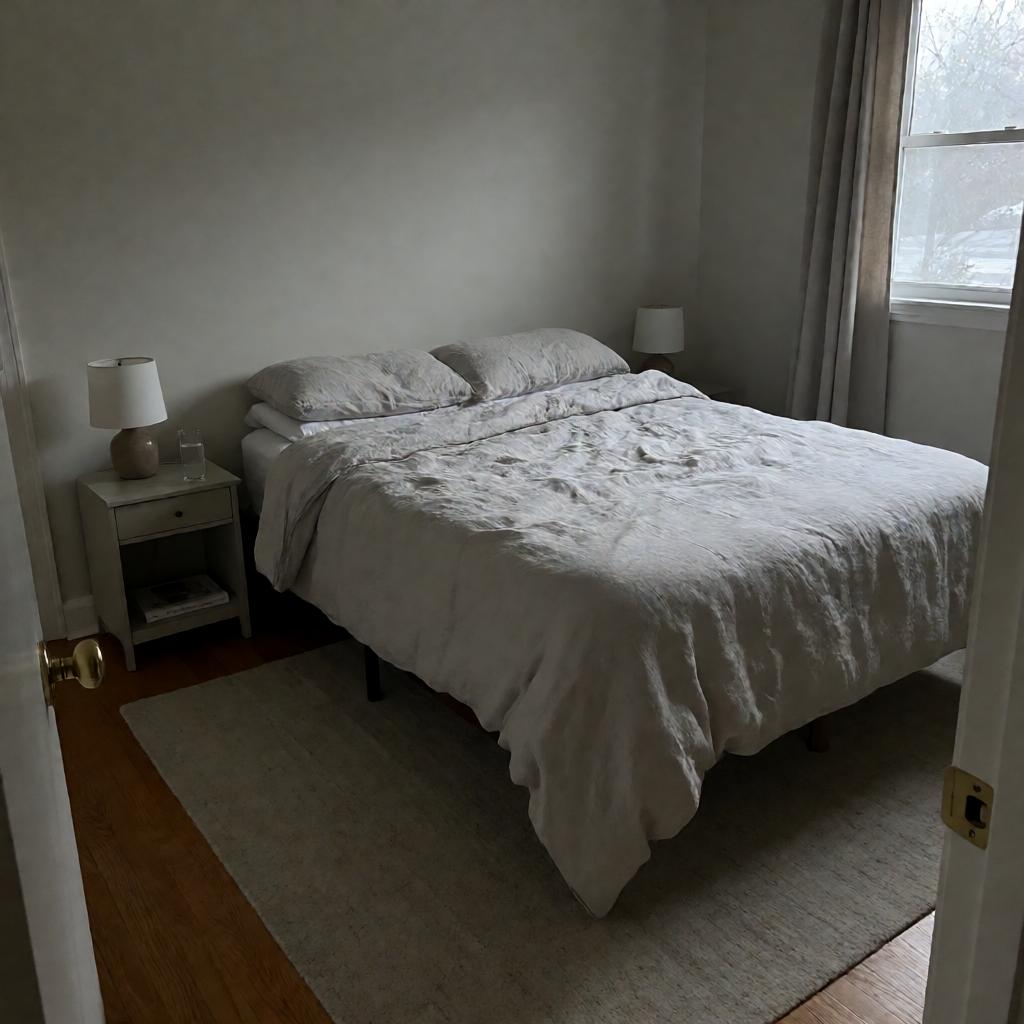
Then she moved her bed. That's it. She shifted it from under the window on the east wall to the north wall, and turned it so she could see the door. She also cleared out the clutter underneath — old boxes, a broken fan, stuff she'd shoved there for years. No new mattress, no blackout curtains. Just a different spot.
What Happened
Within a week she was sleeping through the night. I didn't believe her. But two months later she's still sleeping well, and she's noticeably calmer. I finally moved my own bed last month — same idea, away from the window, facing the door. I'm not going to say it's magic, but I've stopped waking up at 3 a.m.
Spatial Orientation
| Bagua Sector | 坎 ☵ · Kan |
|---|---|
| Direction | North |
| Element | water |
What works best here
Kan (1) · Water. North side can be slightly taller than South for a grounded feel.
Place: dark-colored ceramics, stone objects, heavy bookshelves.
Recommended crystal
Black Obsidian or Smoky Quartz — placed on a low table or shelf in the north corner
A solid, weighty presence here helps the room feel anchored and secure
Source Analysis
1. The Original Principle
Original Text
En esencia, se trata de aprovechar al máximo las energías positivas del Cielo y la Tierra y esquivar las negativas.
English Translation
A classic principle from traditional environmental design holds that a home should maximize the positive influences of the natural world and minimize the negative ones. In practice, this means arranging furniture and pathways so that the space supports rest and ease, rather than working against them.
2. About the Source
Feng shui para Occidente by Terah Kathryn Collins · United States · 1995
Feng Shui for the West is a practical guide that adapts classical Chinese spatial principles for modern Western homes and lifestyles. Written by one of the first American authors to bring Feng Shui to a mainstream English-speaking audience, the book translates ancient Bagua concepts into actionable room-by-room advice using familiar Western design language and contemporary case examples.
3. How This Principle Applies to This Case
The classical principle of maximizing beneficial influences and avoiding harmful ones is essentially about reducing friction between a person and their environment. In Dana's case, moving the bed away from the window eliminated drafts and light intrusion, while facing the door restored a sense of control — a known factor in sleep quality. Modern environmental psychology calls this 'restorative design': spaces that reduce vigilance and promote relaxation. The principle isn't mystical; it's about aligning the physical layout with the body's need for safety and calm.
Bring the Purest Energy Into Your Home
Sourced from altitudes above 4,000 meters in the Himalayan range — the highest place on Earth and the closest to the sun. These crystals formed over millions of years in some of the planet's most pristine conditions, untouched by industrial pollution. Each piece carries the raw, unfiltered energy of the mountains. Whether placed on a nightstand, a desk, or a meditation corner, they serve as a quiet anchor — a daily reminder to pause, breathe, and reconnect.
Explore the HIMA ALAÏA collection →Case source
Simple Shui
One of America's most influential modern Feng Shui platforms. De-mystifies and modernizes ancient Feng Shui for the American middle-class lifestyle — spatial energy aesthetics for real life.