My Friend Swore Moving Her Sofa Fixed Her Marriage — I Went Over to See for Myself
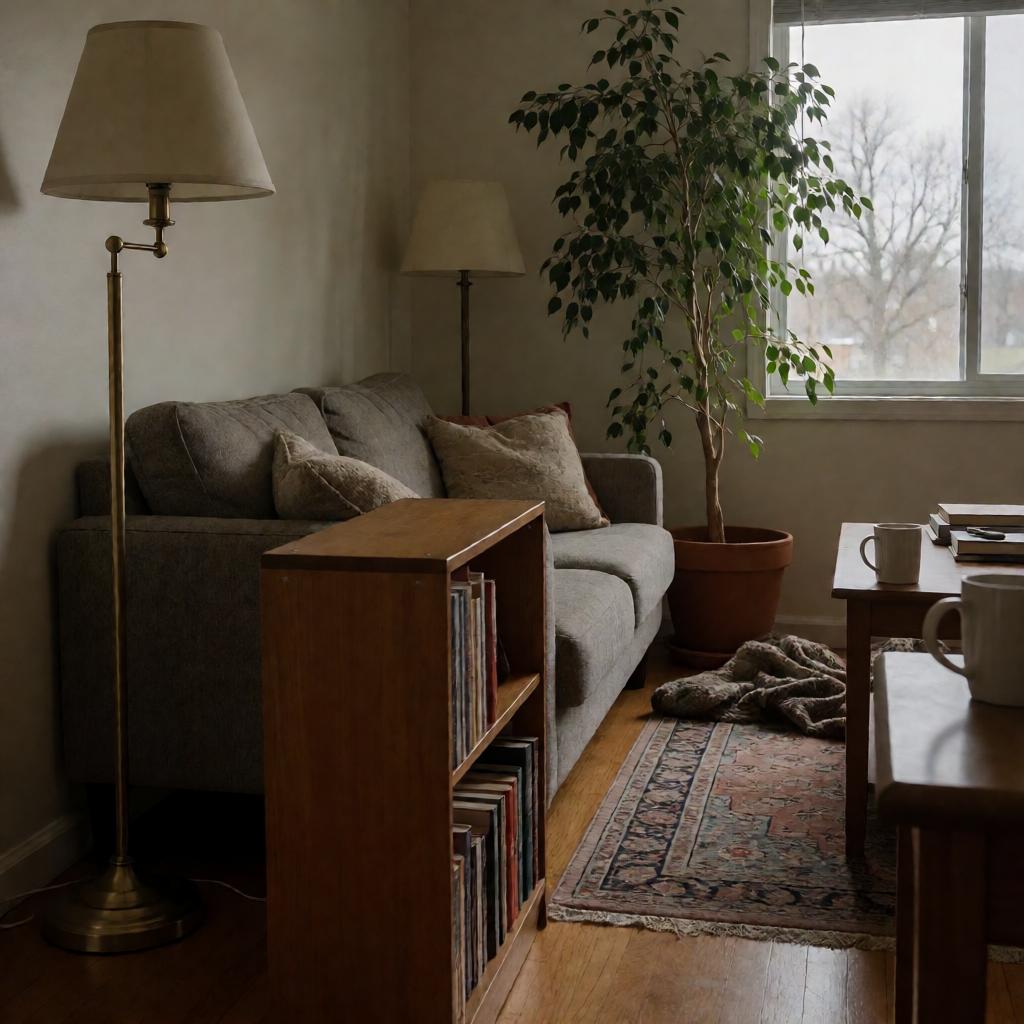
My friend Rachel was convinced the empty space beside her living room sofa was making her and her husband snap at each other. I thought she'd lost it. Then I saw the room.
Location
Portland, Oregon, United States
Property Type
House
Room
Living Room
Direction
East
The Problem
Rachel and her husband Dan had been arguing about nothing for months. Dishes. The dog. Whose turn to pick up dinner. She told me the living room felt like a hallway — you walked in the front door and just kept going, never landing anywhere. Their sofa sat against the right wall with a wide open gap on the left side, a straight shot from the entry to the back patio door. Nothing softened it. She said she'd started avoiding sitting in there at night, which meant Dan watched TV alone, which meant they barely talked.
What They Tried
She didn't move the sofa. She filled the gap. Her sister — who is into this stuff — told her the empty left side needed something 'heavy and alive' to close it off. So Rachel put a low bookshelf on the left side of the sofa, perpendicular to it, and stuck a big potted ficus next to it. She also moved a floor lamp from the corner to the left end of the sofa. Total cost: a shelf she already owned and a $40 plant from the nursery down the street.
What Happened
Honestly? The room felt different the second I walked in. It went from 'pass-through' to 'place.' Rachel said the first week was weird — Dan kept asking why the plant was there. But by week three they were both gravitating to that corner in the evening. She texted me: 'We had a 45-minute conversation last night. About nothing. It was great.' They still argue about dishes. But she says the house feels less like a corridor and more like a home. I'm not saying a plant saved their marriage. But I'm not saying it didn't help.
Spatial Orientation
| Bagua Sector | 震 ☳ · Zhen |
|---|---|
| Direction | East |
| Element | wood |
What works best here
Zhen (3) · Wood. East should be the tallest area of the room when possible.
Place: tall plants (especially bamboo or fiddle-leaf fig), wooden furniture, green accents.
Recommended crystal
Green Aventurine or Moss Agate — placed near a window or on a plant shelf in the east
This is the growth sector — plants thrive here and vertical elements feel natural
Source Analysis
1. The Original Principle
Original Chinese
或有龙无虎,或有虎无龙。无龙要水绕左边,无虎要水缠右畔。莫把水为定格,但求穴里藏风。
English Translation
A classical text on dwelling design notes that when one side of a space lacks natural enclosure, water or a comparable element should be placed on that side to restore balance. The key, it says, is not the water itself but the sense of shelter it creates — a protected spot where things can settle.
2. About the Source
雪心赋 论龙虎 by Bu Yingtian · China · Tang Dynasty (618–907 CE)
The Snow Heart Rhapsody is a poetic yet rigorously analytical classical text on landscape assessment. Written in rhymed prose, it covers mountain forms, water patterns, terrain energy, and site selection with remarkable literary elegance. Its observations about how land contours create sheltered, comfortable settings for human habitation remain relevant to modern site planning and environmental psychology.
3. How This Principle Applies to This Case
This case illustrates the principle that when a space lacks natural enclosure on one side, a compensatory element can restore a sense of shelter. Rachel's living room had an open left flank — no wall, no furniture, no anchor — creating a corridor effect that discouraged lingering. By adding a bookshelf, a plant, and a lamp to that side, she created what environmental psychologists call a 'prospect-refuge' balance: humans relax when they have both a clear view and a protected position. The change wasn't mystical. It changed how the room felt to occupy, which changed how often they occupied it together.
Bring the Purest Energy Into Your Home
Sourced from altitudes above 4,000 meters in the Himalayan range — the highest place on Earth and the closest to the sun. These crystals formed over millions of years in some of the planet's most pristine conditions, untouched by industrial pollution. Each piece carries the raw, unfiltered energy of the mountains. Whether placed on a nightstand, a desk, or a meditation corner, they serve as a quiet anchor — a daily reminder to pause, breathe, and reconnect.
Explore the HIMA ALAÏA collection →Case source
Nicolette Vajtay
Feng Shui consultant helping clients transform their homes through intentional spatial design.