My Home Office Desk Was In The Wrong Spot And I Couldn't Stop Arguing With My Partner — What Happened When I Moved It
A freelance graphic designer moved her desk from the southeast corner of her home office and noticed a dramatic drop in daily arguments with her husband.
Location
Portland, Oregon, United States
Property Type
House
Room
Home Office
Direction
Southeast
The Problem
For six months, I couldn't figure out why my husband and I were bickering over everything. Groceries, whose turn it was to walk the dog, the temperature of the thermostat — it was exhausting. I work from home as a graphic designer, and my desk was tucked into the southeast corner of our spare bedroom-turned-office. That spot felt cramped, and I always had my back to the door. I'd end each workday feeling tense and irritable, and that mood would spill right into the evening.
What They Tried
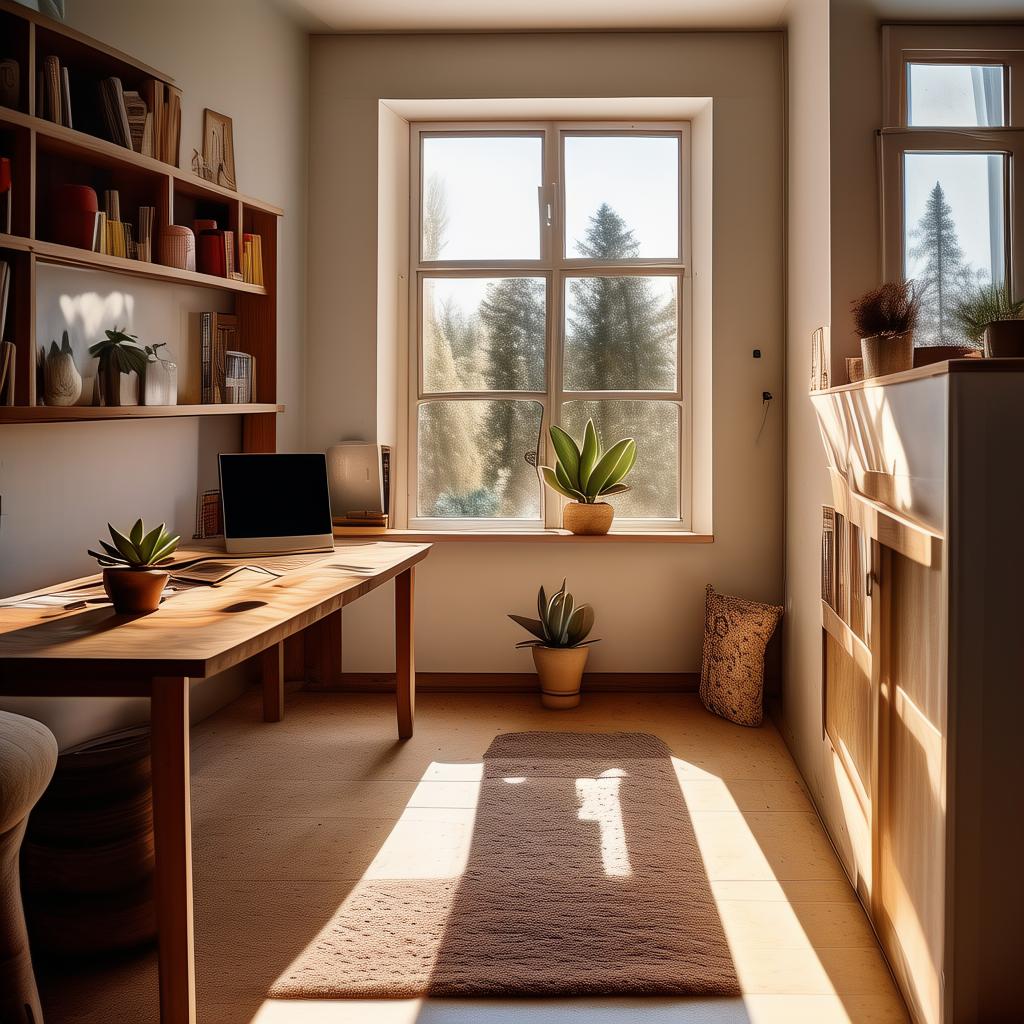
A friend who's a space consultant came over for coffee. She looked at my office, then at me, and said, 'You need to move your desk.' I laughed. But she explained that when you sit with your back to the door, your brain stays on high alert — it's a primal thing. She suggested I rotate the desk so I faced the doorway. I moved it to the north wall, centered it under the window, and shifted my bookshelf to create a clear sightline from the door.
What Happened
The change was subtle but real. After a week, I noticed I wasn't snapping at my husband as much. I felt less on edge during calls with clients. My focus improved — I finished projects faster. The arguments didn't vanish completely, but they dropped from daily to maybe once a week. My husband even commented that I seemed 'lighter.' The room itself felt bigger, calmer.
Spatial Orientation
| Bagua Sector | 巽 ☴ · Xun |
|---|---|
| Direction | Southeast |
| Element | wood |
What works best here
Xun (4) · Wood. Southeast loves moderate height with an airy, open feel.
Place: tall leafy plants, natural fiber rugs, light wood tones, cream and soft green.
Recommended crystal
Citrine or Green Jade — placed on a wooden side table in the southeast corner
Perfect for a creative workspace or journaling spot; natural light is your friend here
Source Analysis
1. The Original Principle
Original Chinese
乙腾蛇讼狱,客命座,犯之害命坐人、妖怪、死丧口舌。
English Translation
An ancient observation noted that a specific position in a room (the southeast area, called the 'Yi Teng Snake' spot) is associated with disputes and harm to the person sitting there. The recommended practice is to avoid placing a person's regular seat in that location.
2. About the Source
宅经 by Attributed to the Yellow Emperor · China · Tang Dynasty (618–907 CE), based on earlier traditions
The Classic of Dwellings is one of the earliest surviving Chinese texts dedicated entirely to residential architecture. It presents a holistic view of the home as a living organism — comparing the house to a body with its own anatomy of walls, doors, rooms, and courtyards. Its core teaching is that a well-arranged home supports the health and fortune of its inhabitants as naturally as good soil supports healthy plants.
3. How This Principle Applies to This Case
This case illustrates a core spatial principle: that the location of a person's primary seat or desk within a room can influence their psychological state and interpersonal dynamics. The classical observation about the southeast area likely stems from the fact that in many traditional room layouts, this corner is often a 'dead end' with limited visibility of entrances. Modern environmental psychology confirms that sitting with a clear view of the door reduces subconscious stress and hypervigilance, which in turn lowers irritability and conflict. The client's desk originally faced a wall, creating a sense of being trapped. By moving to a position with a view of the entry, her nervous system could relax, directly improving her mood and relationships. The principle is not mystical; it's about how sightlines and spatial orientation affect the human brain.
Bring the Purest Energy Into Your Home
Sourced from altitudes above 4,000 meters in the Himalayan range — the highest place on Earth and the closest to the sun. These crystals formed over millions of years in some of the planet's most pristine conditions, untouched by industrial pollution. Each piece carries the raw, unfiltered energy of the mountains. Whether placed on a nightstand, a desk, or a meditation corner, they serve as a quiet anchor — a daily reminder to pause, breathe, and reconnect.
Explore the HIMA ALAÏA collection →Case source
Amanda Gibby Peters
Founder of Simple Shui. De-mystifies Feng Shui for the modern American lifestyle with warmth and humor.