My Home Office Guest Chair Was Causing All Our Arguments — Here's What Happened When I Moved It
A couple's constant arguments over work-life balance stopped after moving a guest chair to a different corner of the home office.
Location
Portland, Oregon, United States
Property Type
Apartment
Room
Home Office
Direction
West
The Problem
My partner and I were fighting constantly. It started small—who left dishes in the sink, who forgot to take out the trash—but it escalated fast. We'd been together five years and never argued like this. Every conversation turned into a fight. I felt like I was walking on eggshells in my own home.
What They Tried
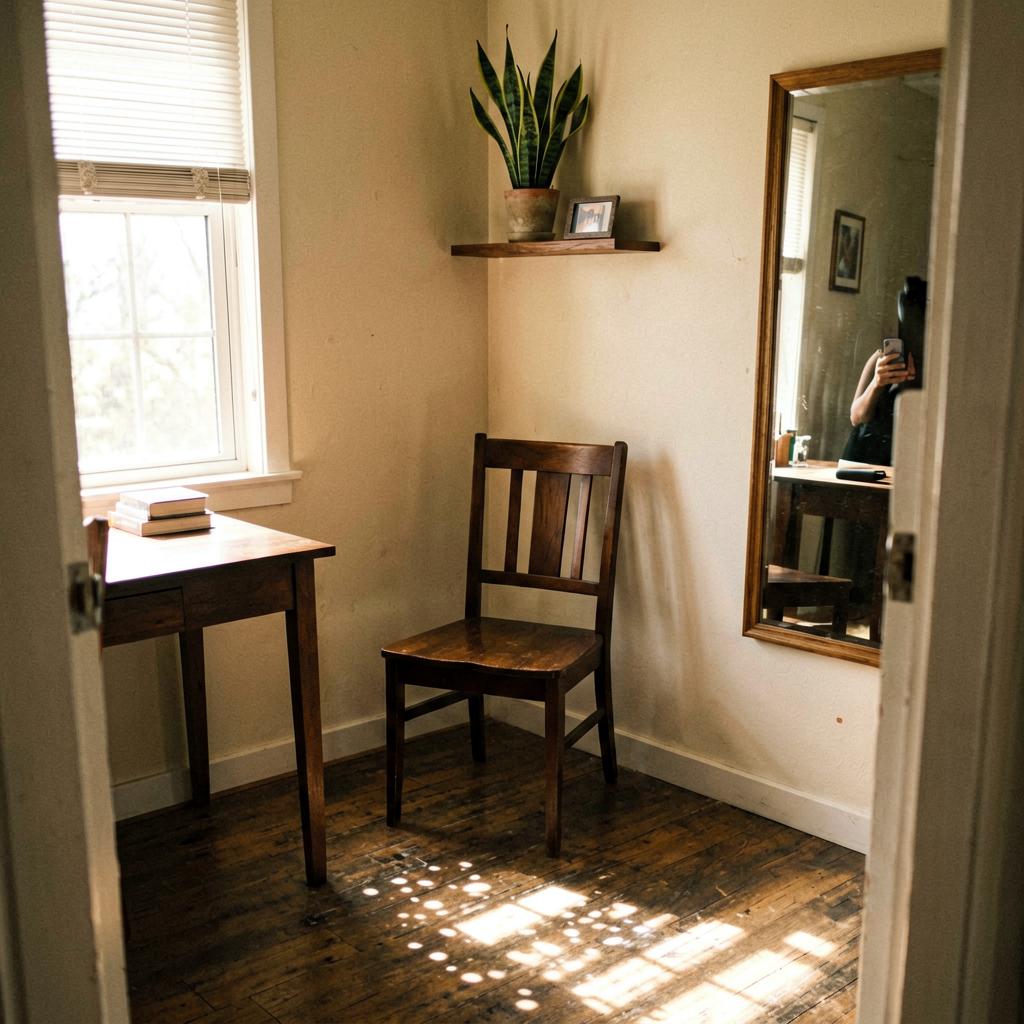
A friend who's a space consultant came over for coffee. She looked at our home office and said, 'That guest chair. It's in a weird spot—right where you sit to work, but facing the door. Move it to the other side of the desk, against the wall.' I was skeptical, but I did it. Moved the chair to the corner opposite the door, tucked it under a small shelf with a plant.
What Happened
Within a week, the arguments slowed down. Not completely, but noticeably. We still had disagreements, but they didn't spiral. My partner said the room felt 'less confrontational.' I think it was because the chair wasn't in my sightline anymore—I wasn't subconsciously bracing for a guest to walk in and interrupt me. The space felt calmer, and so did we.
Spatial Orientation
| Bagua Sector | 兑 ☱ · Dui |
|---|---|
| Direction | West |
| Element | metal |
What works best here
Dui (7) · Metal. West should be lower and more open than East for left-right equilibrium.
Place: low cabinets, metal decor (brass, copper, steel), round shapes, white and grey tones.
Recommended crystal
Clear Quartz or Selenite — placed on a low console or side table in the west
Round shapes and metallic finishes feel especially at home on this side of the room
Source Analysis
1. The Original Principle
Original Chinese
乙腾蛇讼狱,客命座,犯之害命坐人、妖怪、死丧口舌。
English Translation
The Yi Teng Snake position is associated with disputes and legal troubles. If a guest's seat or a resident's seat is placed here, it invites harm, illness, strange occurrences, and arguments. The solution involves moving the seat to a different position aligned with the Tiger direction.
2. About the Source
宅经 by Attributed to the Yellow Emperor · China · Tang Dynasty (618–907 CE), based on earlier traditions
The Classic of Dwellings is one of the earliest surviving Chinese texts dedicated entirely to residential architecture. It presents a holistic view of the home as a living organism — comparing the house to a body with its own anatomy of walls, doors, rooms, and courtyards. Its core teaching is that a well-arranged home supports the health and fortune of its inhabitants as naturally as good soil supports healthy plants.
3. How This Principle Applies to This Case
This case illustrates a spatial psychology principle: the position of a guest chair in a home office can influence perceived territorial boundaries and social dynamics. When the chair faced the door, it created an unconscious sense of vulnerability and readiness for interruption, which may have heightened stress and defensiveness during conversations. Moving it against the wall removed the direct sightline and reduced that subconscious tension. Modern environmental psychology supports this: seating arrangements that avoid direct confrontation (like face-to-face seating) tend to lower cortisol levels and improve communication. The classical principle about the 'Yi Teng Snake' position essentially describes this same observation—that certain seating placements can trigger conflict—but frames it in symbolic language. The practical takeaway is simple: in shared workspaces, position guest seating so it doesn't directly face the primary user's work area, especially not with a direct line to the door.
Bring the Purest Energy Into Your Home
Sourced from altitudes above 4,000 meters in the Himalayan range — the highest place on Earth and the closest to the sun. These crystals formed over millions of years in some of the planet's most pristine conditions, untouched by industrial pollution. Each piece carries the raw, unfiltered energy of the mountains. Whether placed on a nightstand, a desk, or a meditation corner, they serve as a quiet anchor — a daily reminder to pause, breathe, and reconnect.
Explore the HIMA ALAÏA collection →Related Elements
Case source
Maureen Calamia
Founder of Luminous Spaces. Blends Feng Shui with biophilic design and nature-inspired spatial psychology.