My Partner and I Stopped Fighting After I Changed One Thing in Our Living Room
After months of petty arguments, a desperate homeowner rearranged their living room and noticed a surprising shift in their relationship.
Location
Portland, Oregon, United States
Property Type
Apartment
Room
Living Room
Direction
Southwest
The Problem
My partner and I were fighting about everything. The dishes. The TV volume. Who left the mail on the counter. It wasn't big stuff, but it was constant. We'd been together five years, and suddenly we couldn't be in the same room without snapping at each other. I started dreading coming home. The living room, which used to be our favorite place to hang out, felt tense and cluttered. There were piles of magazines, a random exercise bike that no one used, and our two mismatched armchairs facing opposite directions. Every time I walked in, I felt this knot in my stomach.
What They Tried
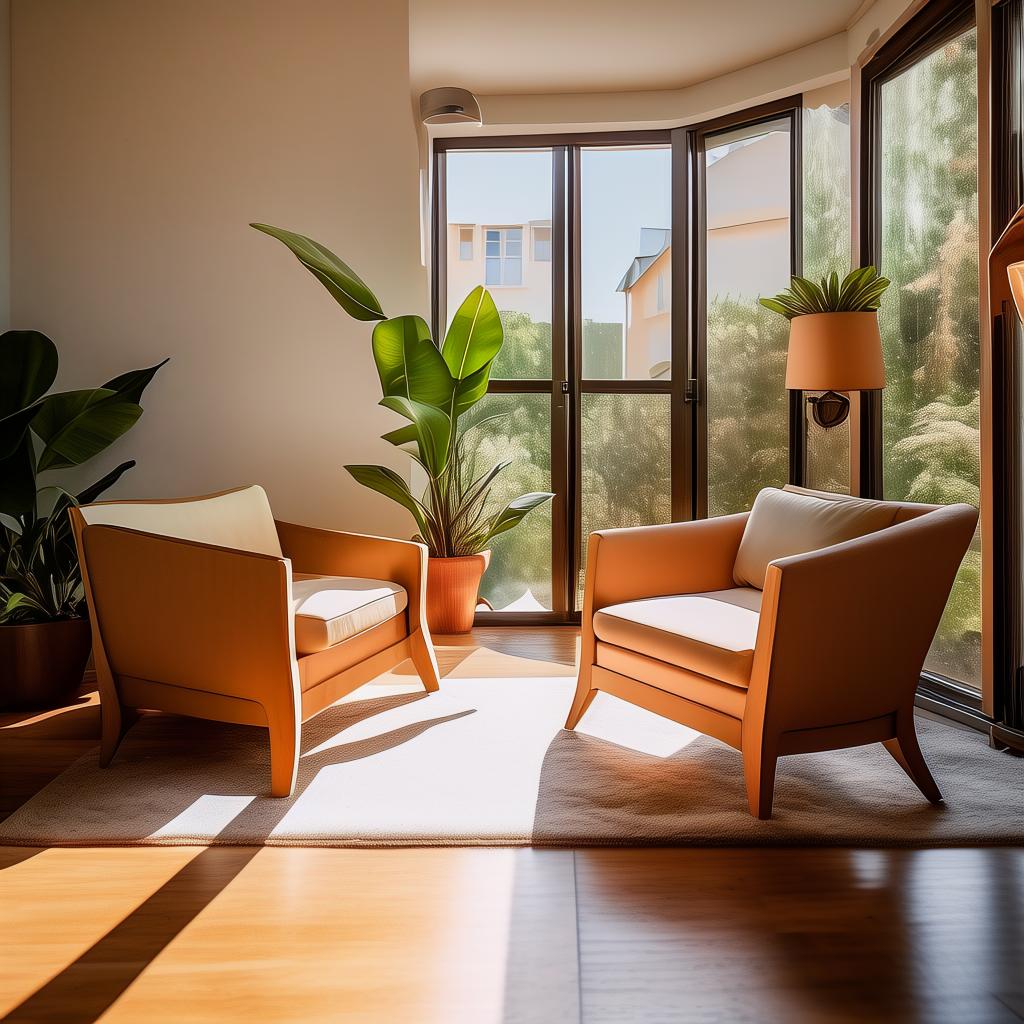
I was complaining to my friend Jenna one night, and she said, 'You know, I read this thing about arranging your space to focus on connection. Maybe try facing your chairs toward each other, and put something nice between them.' I thought she was crazy—like, a new throw pillow was going to fix our marriage? But I was desperate. So the next Saturday, I moved both armchairs so they faced each other, with a small round table in between. I cleared the clutter, put a low lamp on the table, and added a simple plant on the windowsill nearby. That was it. No new furniture, no paint.
What Happened
The first night, my partner came home and stopped in the doorway. 'Did you... move the chairs?' I nodded, bracing for a fight. But he just sat down in one, and I sat in the other. We ended up talking for an hour—about his day, about a weird dream I had, about nothing really. It wasn't like a movie montage where everything was perfect. But we started sitting there more often. The arguments didn't disappear, but they became less frequent. There was something about facing each other, with a lamp between us, that made it easier to listen. Three months later, we still bicker, but I don't dread coming home anymore.
Spatial Orientation
| Bagua Sector | 坤 ☷ · Kun |
|---|---|
| Direction | Southwest |
| Element | earth |
What works best here
Kun (2) · Earth. Southwest favors grounded, low-profile arrangements that feel intimate.
Place: low cozy seating, plush textiles, warm indirect lamps, soft pink and terracotta.
Recommended crystal
Rose Quartz or Pink Tourmaline — placed on a nightstand or low shelf in the southwest
This area supports comfort and connection — a perfect spot for a reading chair or small sofa
Source Analysis
1. The Original Principle
Original Text
El mapa bagua. AMOR Y MATRIMONIO 145
English Translation
In a modern Western adaptation of spatial analysis, the Bagua map divides a home into nine areas, each linked to a life aspect. The area for love and partnership is activated by placing pairs of objects and warm lighting in the corresponding zone, often the far right corner of the room.
2. About the Source
Feng shui para Occidente by Terah Kathryn Collins · United States · 1995
Feng Shui for the West is a practical guide that adapts classical Chinese spatial principles for modern Western homes and lifestyles. Written by one of the first American authors to bring Feng Shui to a mainstream English-speaking audience, the book translates ancient Bagua concepts into actionable room-by-room advice using familiar Western design language and contemporary case examples.
3. How This Principle Applies to This Case
This case illustrates a practical spatial principle: creating a face-to-face seating arrangement encourages conversation and reduces tension. The Bagua map, adapted from traditional Chinese spatial analysis, identifies zones of a home that correlate with different life areas. In this instance, the living room's relationship zone was activated by pairing two chairs and adding a warm light source, which subconsciously signals ‘connection’ rather than ‘conflict.’ Modern environmental psychology supports this: facing seating improves eye contact and reduces the feeling of confrontation, while a central focal point (the lamp) provides a shared visual anchor. The result wasn't magical—it was a simple environmental nudge toward better communication.
Bring the Purest Energy Into Your Home
Sourced from altitudes above 4,000 meters in the Himalayan range — the highest place on Earth and the closest to the sun. These crystals formed over millions of years in some of the planet's most pristine conditions, untouched by industrial pollution. Each piece carries the raw, unfiltered energy of the mountains. Whether placed on a nightstand, a desk, or a meditation corner, they serve as a quiet anchor — a daily reminder to pause, breathe, and reconnect.
Explore the HIMA ALAÏA collection →Related Elements
Case source
Feng Shui Manhattan
Second-generation NYC Feng Shui practitioner. Combines classical Feng Shui with quantum physics and geomancy. Serves Manhattan luxury apartments and fashion boutiques.