The Boy Who Wouldn't Sleep: Why We Moved Our Son's Bed to the Far Corner
A family of five discovers that moving their toddler's bed across the room solved months of bedtime battles.
Location
Portland, Oregon, United States
Property Type
House
Room
Bedroom
Direction
East
The Problem
Our son, Leo, was three and had never slept through the night. He'd wake up crying, sometimes three or four times, and would only settle if one of us lay down with him. My husband and I were running on fumes. We tried every trick — white noise machines, lavender oil, even a toddler alarm clock that changed color when it was okay to get up. Nothing worked. The pediatrician said it was a phase, but after eight months, we were desperate.
What They Tried
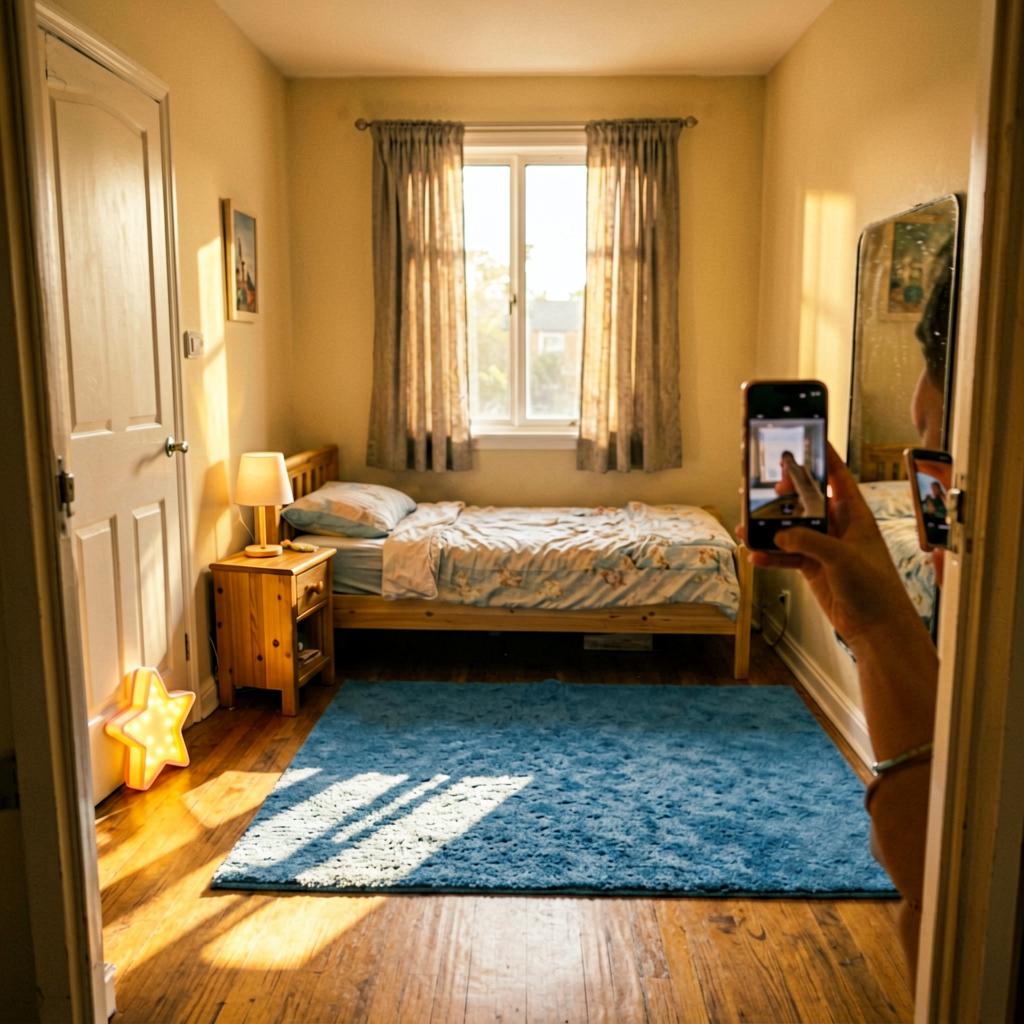
One evening, a friend — an interior designer — came over for dinner. She saw Leo's room and said, 'You know, his bed is right under the window, facing the door. That's a lot of stimulation for a little kid.' She suggested moving his bed to the far wall, away from the window, so his back would be to the wall and he'd have a clear view of the door. It sounded simple, almost too simple. But we were willing to try anything. The next day, we shifted his bed 90 degrees, placed it against the wall opposite the door, and added a small nightlight near the doorway.
What Happened
That night, Leo slept through — no crying, no shuffling into our room. It wasn't a fluke; he's been sleeping through for three weeks now. My husband and I joke that we've forgotten what sleep feels like. The change wasn't instant — the first night, he woke up once — but by the third night, he was out cold. Now he even asks to go to bed. He still wakes up early, but that's a different problem.
Spatial Orientation
| Bagua Sector | 震 ☳ · Zhen |
|---|---|
| Direction | East |
| Element | wood |
What works best here
Zhen (3) · Wood. East should be the tallest area of the room when possible.
Place: tall plants (especially bamboo or fiddle-leaf fig), wooden furniture, green accents.
Recommended crystal
Green Aventurine or Moss Agate — placed near a window or on a plant shelf in the east
This is the growth sector — plants thrive here and vertical elements feel natural
Source Analysis
1. The Original Principle
Original Chinese
按照八卦的定义分为分成老父、老母,长男、中男、少男,长女、中女、少女。说卦传曰,乾,天也,故称乎父,坤,地也,故称乎母,震一索而得男,故谓之长男,巽一索而得女,故谓之长女,坎再索而得男,故谓之中男,离再索而得女,故谓之中女,艮三索而得男,故谓之少男,兑三索而得女,故谓之少女。
English Translation
In classical Chinese thought, each family member corresponds to a trigram and a direction. The eldest son is associated with the east, the middle son with the north. Arranging a room so that a person's position aligns with their family role is said to bring harmony and stability.
2. About the Source
金锁玉关 by Anonymous (private manuscript) · China · Pre-Song Dynasty (before 960 CE)
The Golden Lock and Jade Pass is an esoteric classical text on residential site analysis, passed down through private manuscripts. It provides a systematic method for evaluating how the surrounding landforms — heights, depressions, and water features in each compass direction — shape the experience of a living space. Its sand-and-water framework remains one of the most practical tools in the landscape assessment tradition.
3. How This Principle Applies to This Case
The classic text suggests that each family member has an inherent 'direction' that supports them. While the modern mind may not accept trigram alignments, the underlying observation is about comfort and security. In Leo's case, moving his bed away from the window reduced visual stimuli and gave him a sense of safety — his back against a wall, facing the door. This matches principles of environmental psychology: people sleep better when they feel protected and have a clear sightline of entrances. The practical takeaway: position beds to minimize exposure and maximize a feeling of control. It's not magic; it's just good spatial reasoning.
Bring the Purest Energy Into Your Home
Sourced from altitudes above 4,000 meters in the Himalayan range — the highest place on Earth and the closest to the sun. These crystals formed over millions of years in some of the planet's most pristine conditions, untouched by industrial pollution. Each piece carries the raw, unfiltered energy of the mountains. Whether placed on a nightstand, a desk, or a meditation corner, they serve as a quiet anchor — a daily reminder to pause, breathe, and reconnect.
Explore the HIMA ALAÏA collection →Case source
Sacred Spaces Design
Independent sacred space design studio. Integrates psychology, herbal plant energy purification, decluttering, and Feng Shui orientation. Large young-entrepreneur following in NYC and online.