The Interview That Made Me Move My Desk to the Northeast Corner (And Why My Focus Finally Clicked)
A Q&A with a marketing manager who rearranged her home office based on a spatial consultant's advice—and noticed a real shift in her workday.
Location
Chicago, United States
Property Type
Apartment
Room
Home Office
Direction
Northeast
The Problem
I'd been working from my one-bedroom apartment for two years. My desk was shoved against the west wall, facing a blank stretch of drywall. I'd start the day with good intentions, then spend hours bouncing between tabs, snacks, and my phone. By 3 p.m. I felt like I'd done nothing. My partner started joking that I was 'allergic to my own office.' I wasn't laughing.
What They Tried
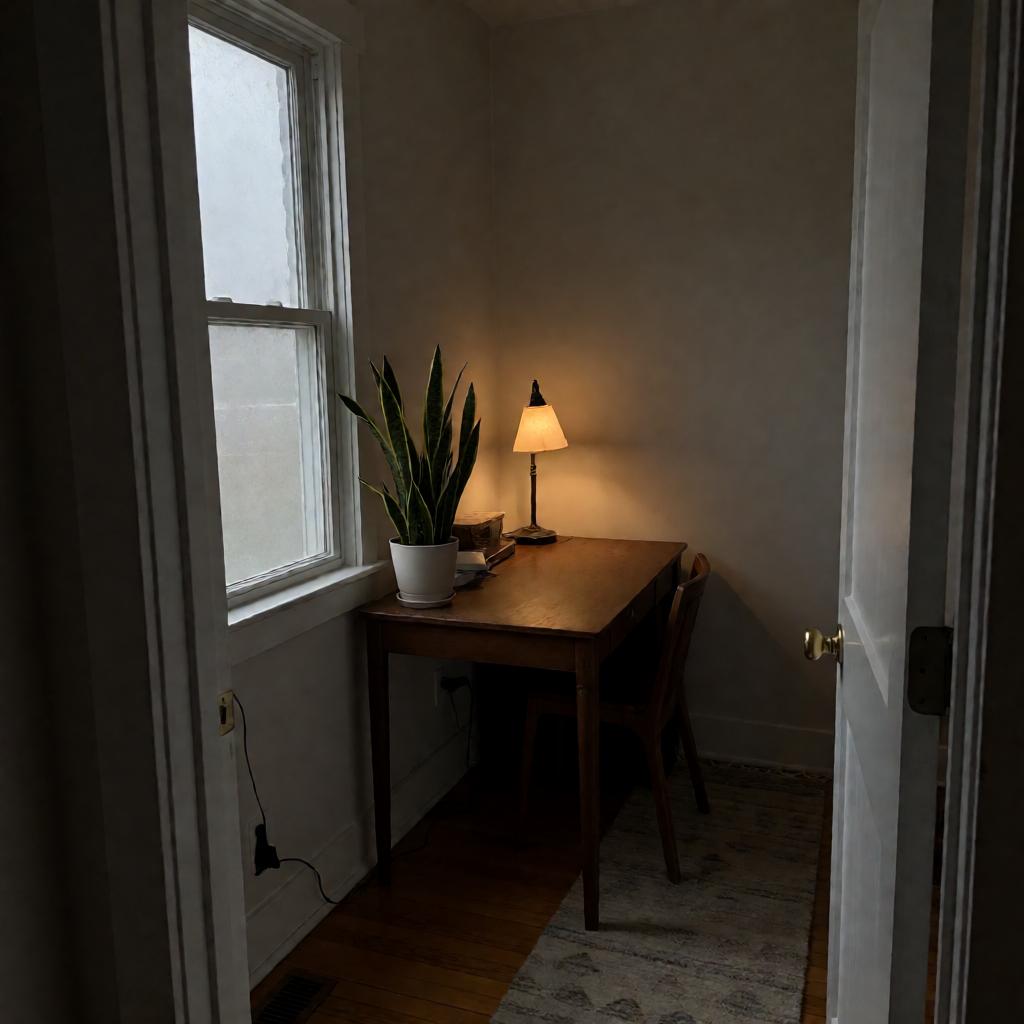
A friend who does space planning for offices offered to look at my setup. She didn't mention anything mystical—she just asked where I spent the most time and what I looked at. She pointed out that my desk faced a wall with no visual anchor, and that the chair back was to the open room, which made me twitchy. We moved the desk to the northeast corner, angled slightly so I could see the door but not sit directly in line with it. I added a small snake plant on the corner of the desk and swapped my overhead light for a warm desk lamp. That was it.
What Happened
It wasn't magic. The first week I still procrastinated. But by week three, I noticed I was sitting down and starting work without the usual ten-minute warm-up of dread. I stopped getting up every fifteen minutes. My partner said I seemed less scattered at dinner. I still have bad days, but they're fewer. The biggest difference is that I don't feel like I'm fighting my own room anymore.
Spatial Orientation
| Bagua Sector | 艮 ☶ · Gen |
|---|---|
| Direction | Northeast |
| Element | earth |
What works best here
Gen (8) · Earth. Northeast benefits from moderate height and warm, earthy materials.
Place: ceramic pots, clay sculptures, tall wooden shelves, earthen tones.
Recommended crystal
Citrine or Tiger's Eye — placed at eye level on a bookshelf in the northeast
An ideal spot for a study nook or reading corner — keep it well-lit and grounded
Source Analysis
1. The Original Principle
Original Chinese
武曲端严富贵牢,辅弼随龙厚薄取。真龙若行五六程,临落之时剥辅星。
English Translation
A strict, dignified layout in the main hall supports lasting prosperity. Supporting structures should vary in thickness according to the main path. When the true line extends five or six stages, it sheds outer layers and transforms into a protective pattern just before settling.
2. About the Source
撼龙经 by Yang Yunsong · China · Tang Dynasty (618–907 CE)
The Dragon-Shaking Classic is a foundational text of the Form School of Chinese geomancy, compiled during the Tang Dynasty. It systematically describes how mountain formations, water flows, and land contours create spatial environments that influence human settlements. Its principles about terrain shapes and landscape energy continue to inform modern site analysis and spatial planning.
3. How This Principle Applies to This Case
This case illustrates the classical principle of 武曲星—a stable, well-proportioned arrangement that supports long-term success. The text describes how the main 'dragon line' (the primary flow through a space) should be supported by layered, proportionate structures. In modern terms, this is about sightlines and cognitive load: when a workspace lacks a clear focal point and leaves the occupant's back exposed, the brain stays in low-grade vigilance, draining attention. Moving the desk to a corner with a view of the door and a plant as a visual anchor reduced that background stress. The result—better focus—is not mystical but environmental.
Bring the Purest Energy Into Your Home
Sourced from altitudes above 4,000 meters in the Himalayan range — the highest place on Earth and the closest to the sun. These crystals formed over millions of years in some of the planet's most pristine conditions, untouched by industrial pollution. Each piece carries the raw, unfiltered energy of the mountains. Whether placed on a nightstand, a desk, or a meditation corner, they serve as a quiet anchor — a daily reminder to pause, breathe, and reconnect.
Explore the HIMA ALAÏA collection →Related Elements
Case source
RD Chin, Feng Shui Architect
NYC licensed architect, Feng Shui master, and published author. Worked under legendary architect Paul Rudolph. Specializes in complex residential and commercial blueprint Feng Shui assessment and spatial flow micro-adjustments. Conducts Feng Shui public courses across the US.