We Bought a House on a Slab of Rock and Our Arguments Stopped
A couple moves into a house built on a solid rock foundation. After landscaping to soften the harsh terrain, they find their constant arguments fade away.
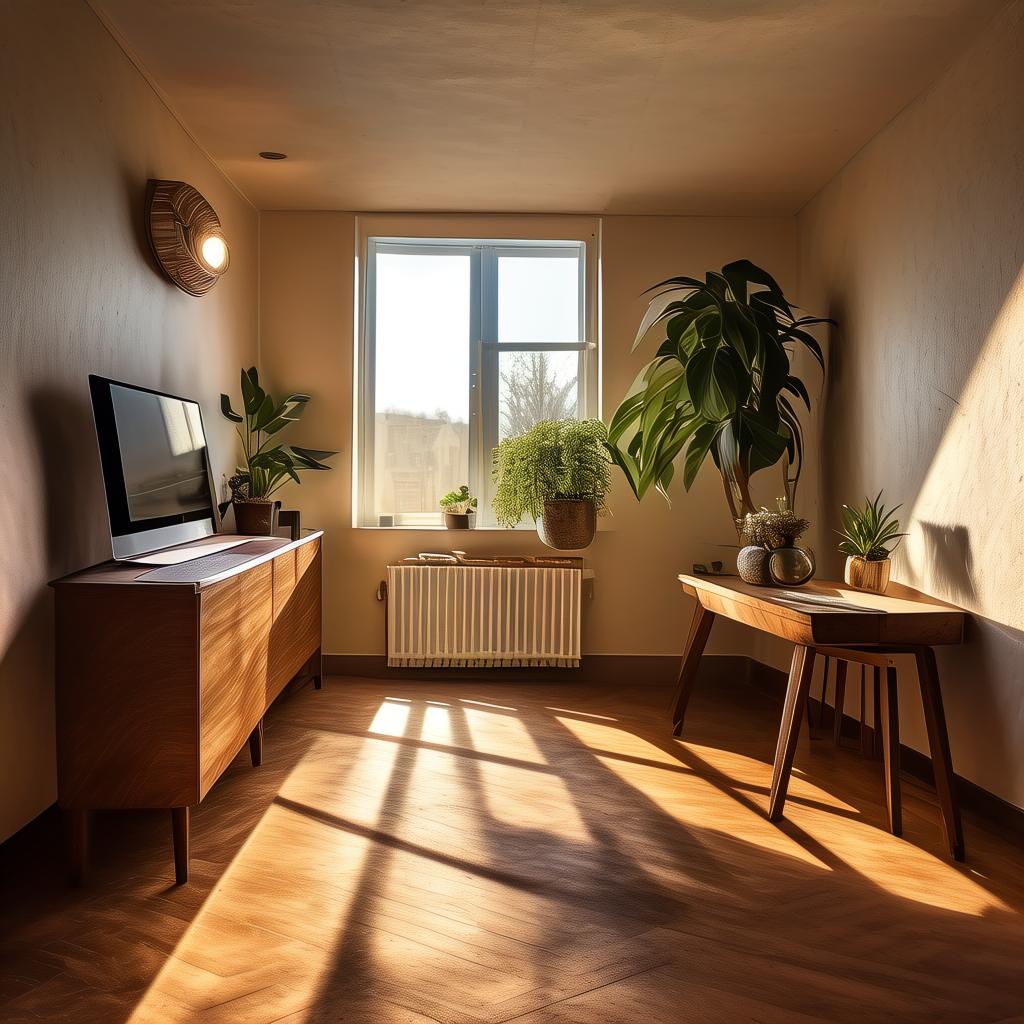
Location
Boulder, Colorado, United States
Property Type
House
Room
Backyard and living room
Direction
West
The Problem
My husband and I fought constantly after moving into our new home. It was a modern house on a steep, rocky lot—the previous owners had cleared all vegetation. The backyard was just exposed bedrock and gravel. Inside, the rooms felt harsh, the air dry, and the light too bright. We couldn't relax. Every conversation turned into an argument. We thought it was the stress of the move, but six months later, nothing improved.
What They Tried
A friend who's a landscape designer came over and said, 'Your lot is like a skeleton with no skin.' She recommended we add layers: soil, grass, shrubs, and trees. We planted a row of evergreens along the property line, added a small lawn, and put in raised garden beds with flowers. Inside, we added big area rugs, heavier curtains, and a few large potted plants—a fiddle-leaf fig and a monstera. It cost about $3,000 total and took two weekends.
What Happened
The change was gradual but real. Within a month, the house felt softer. The air didn't feel so dry. We started sitting outside in the evenings for the first time. Our arguments didn't stop completely, but they became less frequent and less intense. We both felt calmer. It wasn't a miracle—we still had to work on communication—but the environment no longer worked against us.
Spatial Orientation
| Bagua Sector | 兑 ☱ · Dui |
|---|---|
| Direction | West |
| Element | metal |
What works best here
Dui (7) · Metal. West should be lower and more open than East for left-right equilibrium.
Place: low cabinets, metal decor (brass, copper, steel), round shapes, white and grey tones.
Recommended crystal
Clear Quartz or Selenite — placed on a low console or side table in the west
Round shapes and metallic finishes feel especially at home on this side of the room
Source Analysis
1. The Original Principle
Original Chinese
人贵身材魁伟,山贵开屏列帐;人贵祖宗高贵,山贵来龙尊严;人贵体质强健,山贵起伏有力;人贵五官端正,山贵星峰成形;人贵貌俊神朗,地贵山清水秀;人贵鼻直口方,山贵脉明堂正;面贵五岳朝拱,穴贵山环水抱。
English Translation
The terrain of a dwelling should mirror the human body: mountains as bones, rivers as blood, vegetation as skin. A complete, harmonious landscape supports health and harmony, just as a strong skeleton and clear features support a person's vitality.
2. About the Source
雪心赋 地理之宗 by Bu Yingtian · China · Tang Dynasty (618–907 CE)
The Snow Heart Rhapsody is a poetic yet rigorously analytical classical text on landscape assessment. Written in rhymed prose, it covers mountain forms, water patterns, terrain energy, and site selection with remarkable literary elegance. Its observations about how land contours create sheltered, comfortable settings for human habitation remain relevant to modern site planning and environmental psychology.
3. How This Principle Applies to This Case
This case illustrates a spatial principle that links the external landscape to internal experience. The classical observation—that a dwelling's terrain should feel complete and layered, like a healthy body—translates into modern environmental psychology. Research shows that 'soft' landscapes (vegetation, curves, varied textures) reduce cortisol and promote parasympathetic nervous system activity, while 'hard' landscapes (bare rock, straight lines, glare) can trigger stress responses. The couple's addition of plants, fabric, and organic shapes softened the visual and tactile environment, which likely lowered their baseline tension and reduced conflict frequency. The mechanism is sensory: our brains interpret barren, angular spaces as less safe, keeping us in a low-level fight-or-flight state that makes patience and collaboration harder.
Bring the Purest Energy Into Your Home
Sourced from altitudes above 4,000 meters in the Himalayan range — the highest place on Earth and the closest to the sun. These crystals formed over millions of years in some of the planet's most pristine conditions, untouched by industrial pollution. Each piece carries the raw, unfiltered energy of the mountains. Whether placed on a nightstand, a desk, or a meditation corner, they serve as a quiet anchor — a daily reminder to pause, breathe, and reconnect.
Explore the HIMA ALAÏA collection →Case source
Balanced Environments
Founded by Francoise Courty-Danota, a French-born Feng Shui master now based in the US. Combines European Geobiology (detecting underground water veins and electromagnetic radiation) with classical Chinese Feng Shui for premium healthy home planning.