We Bought a House With a View of a Curved Ridge — And Then the Arguments Started
A couple moves into a house facing a ridge shaped like a bow, and their relationship starts to fray. A simple landscaping trick changes everything.
Location
Bend, Oregon, United States
Property Type
House
Room
Living Room
Direction
West
The Problem
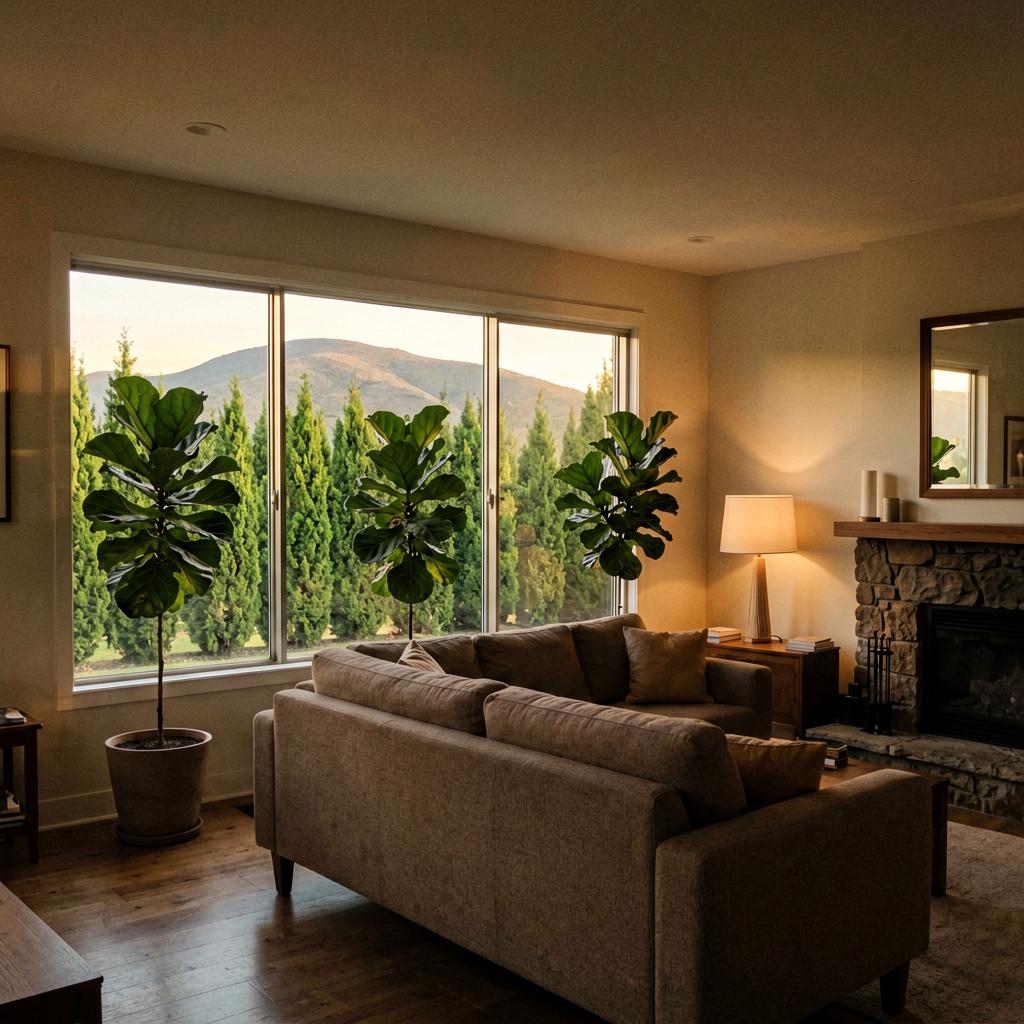
My husband Mark and I bought our dream home six months ago. It's a mid-century ranch in a valley, with a picture window in the living room that frames this stunning ridge. We loved it at first — the way the mountain curved like a gentle arm around the house. But within a month, we were snapping at each other over everything. The dishwasher loading, whose turn it was to walk the dog, the volume of the TV. I started getting headaches. Mark couldn't focus on his work from home. Our daughter, who's usually easygoing, started having meltdowns at bedtime. We honestly thought we'd made a terrible mistake buying the place.
What They Tried
A friend who's a space consultant came over for coffee. She walked around the living room, looked out the window, and said, 'You see how that ridge curves toward you like a drawn bow? It's creating a sense of pressure in the room. You need to break the sightline.' We were skeptical, but desperate. She suggested planting a row of tall, bushy shrubs — arborvitae — along the base of the window to soften the view. She also had us move our main seating arrangement so we weren't staring directly at the ridge. We spent a weekend digging and positioning three large potted plants inside near the window, and planted a line of arborvitae outside.
What Happened
It's been about two months. The arguments didn't stop overnight, but they faded. Within a week, I noticed I wasn't clenching my jaw during dinner anymore. Mark said his home office felt less 'watchful.' Our daughter started sleeping through the night again. The ridge is still there, but it doesn't feel like it's leaning into the room. It's just a mountain now — beautiful, distant, neutral. We're not selling the house anymore.
Spatial Orientation
| Bagua Sector | 兑 ☱ · Dui |
|---|---|
| Direction | West |
| Element | metal |
What works best here
Dui (7) · Metal. West should be lower and more open than East for left-right equilibrium.
Place: low cabinets, metal decor (brass, copper, steel), round shapes, white and grey tones.
Recommended crystal
Clear Quartz or Selenite — placed on a low console or side table in the west
Round shapes and metallic finishes feel especially at home on this side of the room
Source Analysis
1. The Original Principle
Original Chinese
不欲山曲如反弓,不欲山直如伸颈。
English Translation
A classical text on landforms advises against building a house facing a mountain shaped like a drawn bow or a long neck. Both shapes are said to create a sense of pressure or unease in the space.
2. About the Source
撼龙经 by Yang Yunsong · China · Tang Dynasty (618–907 CE)
The Dragon-Shaking Classic is a foundational text of the Form School of Chinese geomancy, compiled during the Tang Dynasty. It systematically describes how mountain formations, water flows, and land contours create spatial environments that influence human settlements. Its principles about terrain shapes and landscape energy continue to inform modern site analysis and spatial planning.
3. How This Principle Applies to This Case
This case illustrates a principle from classical landform analysis: the shape of a prominent natural feature facing a home can influence the occupants' sense of comfort. In this case, the curved ridge created a visual 'bow' shape that may have triggered a subconscious vigilance response. Modern environmental psychology supports this: sharp or enclosing shapes in our peripheral vision can increase cortisol levels and arousal, leading to irritability and sleep disruption. By softening the sightline with plants and repositioning furniture, the couple reduced the visual stressor, allowing their nervous systems to relax. The result was a measurable improvement in family dynamics and personal well-being, without any mystical explanation.
Bring the Purest Energy Into Your Home
Sourced from altitudes above 4,000 meters in the Himalayan range — the highest place on Earth and the closest to the sun. These crystals formed over millions of years in some of the planet's most pristine conditions, untouched by industrial pollution. Each piece carries the raw, unfiltered energy of the mountains. Whether placed on a nightstand, a desk, or a meditation corner, they serve as a quiet anchor — a daily reminder to pause, breathe, and reconnect.
Explore the HIMA ALAÏA collection →Case source
Feng Shui Joan's Way
Connecticut-based Feng Shui consultant. Specializes in Western Bagua system for small and medium business Feng Shui layouts to enhance wealth and team cohesion.