We Interviewed a Homeowner Who Moved Her Front Door 4 Feet — Here's What Actually Changed
A Q&A with a homeowner who relocated her entry door after a contractor suggested the original placement was fighting the house's natural layout. She talks about the skeptical phase, the mess, and the unexpected quiet that followed.
Location
Portland, Oregon, United States
Property Type
House
Room
Entryway
Direction
East
The Problem
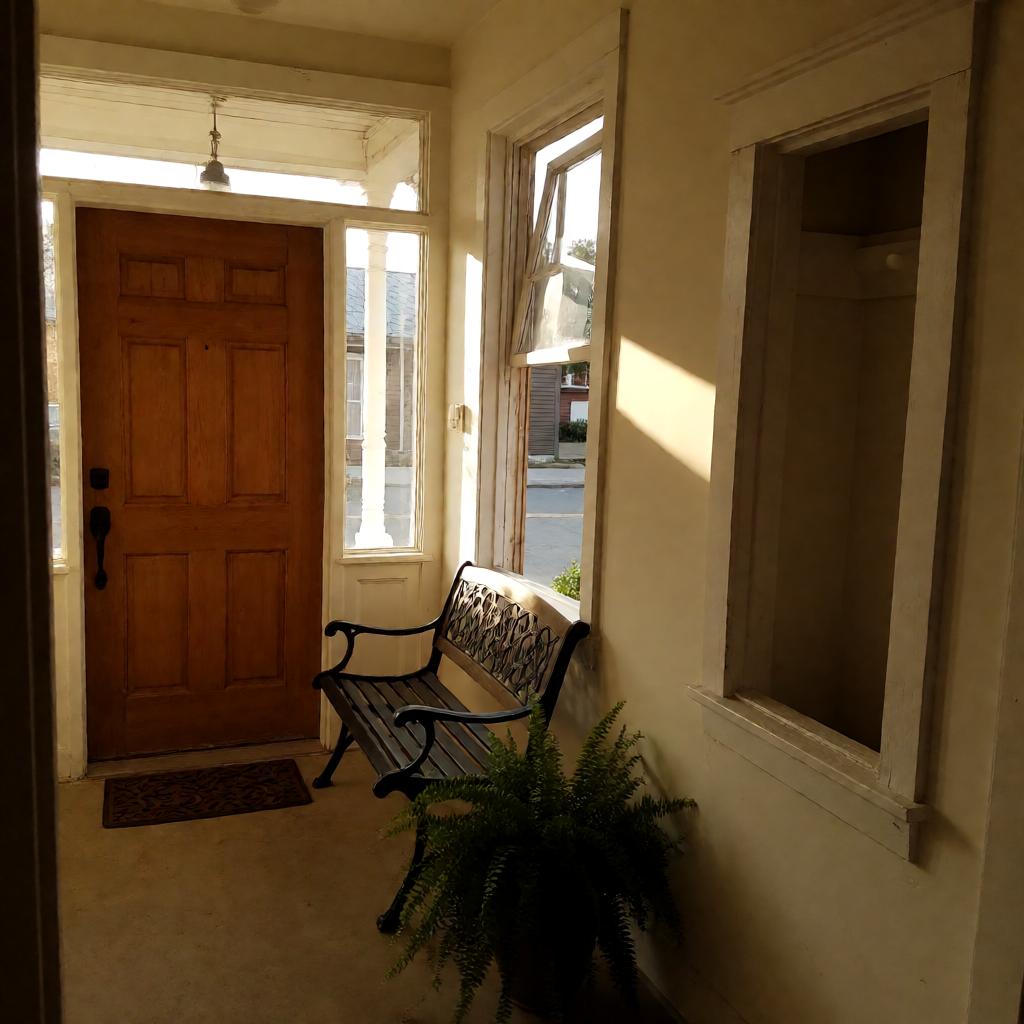
The front door opened directly into the side of the living room, creating a wind tunnel that slammed interior doors and made the entry feel like a hallway. Guests consistently walked past the actual entry point, and the family argued about clutter that piled up in the dead zone behind the door.
What They Tried
After a contractor pointed out that the door alignment ignored the house's orientation and local wind patterns, she had the entry moved four feet to face the street more directly. The old opening became a wall with a coat niche. A small covered porch was added to break the wind before it reached the threshold.
What Happened
The door-slamming stopped. The entryway stopped collecting junk. She says the house feels calmer, though she admits part of that might be the new coat niche giving everything a place. The project cost more than expected and took three weeks longer than quoted.
Spatial Orientation
| Bagua Sector | 震 ☳ · Zhen |
|---|---|
| Direction | East |
| Element | wood |
What works best here
Zhen (3) · Wood. East should be the tallest area of the room when possible.
Place: tall plants (especially bamboo or fiddle-leaf fig), wooden furniture, green accents.
Recommended crystal
Green Aventurine or Moss Agate — placed near a window or on a plant shelf in the east
This is the growth sector — plants thrive here and vertical elements feel natural
Source Analysis
1. The Original Principle
Original Chinese
凡开门放水大小不同,乡俗国度不一定,有以五音论者,有以八卦论者,有以生气吉星贪狼论者,有以山向风水入龙论者。有以来路爻象年命吉星属土八白九星论者,用法不同,取用不一。
English Translation
A classical manual on dwelling layout notes that door and water placement rules vary by region, custom, and method. Some practitioners use musical notes, others trigrams, auspicious stars, or birth-year calculations. The text emphasizes that no single approach applies everywhere.
2. About the Source
八宅明镜下篇 by Yang Yunsong (attributed) · China · Qing Dynasty (1644–1912 CE)
The Eight Mansions Bright Mirror is one of the most influential classical Chinese texts on residential architecture. For over three centuries, it has served as a foundational reference for understanding how the layout and orientation of living spaces affect the wellbeing of their inhabitants, focusing on how living spaces can be arranged to support health, relationships, and prosperity.
3. How This Principle Applies to This Case
The classical principle here is flexibility: door placement rules were never meant to be universal. This case shows why. The original entry fought the house's actual orientation and local wind patterns, creating daily friction. Moving it four feet didn't invoke any mystical force — it simply stopped the wind tunnel and restored a natural flow path. Modern environmental psychology calls this 'affordance': spaces that guide movement intuitively reduce stress. The homeowner's calm likely comes from removing a constant irritant, not from cosmic alignment. The text's warning against one-size-fits-all rules applies directly: what worked here wouldn't work in a different climate or street layout.
Bring the Purest Energy Into Your Home
Sourced from altitudes above 4,000 meters in the Himalayan range — the highest place on Earth and the closest to the sun. These crystals formed over millions of years in some of the planet's most pristine conditions, untouched by industrial pollution. Each piece carries the raw, unfiltered energy of the mountains. Whether placed on a nightstand, a desk, or a meditation corner, they serve as a quiet anchor — a daily reminder to pause, breathe, and reconnect.
Explore the HIMA ALAÏA collection →Case source
Feng Shui for Real Life
Nationally renowned Feng Shui consultant and bestselling author. Longtime advisor to Fortune 500 companies, real estate developers, and Hollywood celebrities. Transforms traditional Feng Shui into practical modern business tools.