We Moved Our Home Office Out of the Basement and Everything Changed
A couple struggling with focus and mood in their basement office tried moving their workspace to a ground-floor room with a window, and the difference was immediate.
Location
Portland, Oregon, United States
Property Type
House
Room
Home Office
Direction
East
The Problem
My partner and I work from home three days a week. We set up our office in the basement because it was quiet and out of the way. But after six months, we both felt constantly tired, irritable, and unmotivated. I'd sit down at my desk at 9 AM and by 10 AM I was already scrolling my phone. We argued about stupid things — whose turn it was to get coffee, why the printer jammed again. The basement had no windows, just a single overhead light that hummed. The walls were concrete. It felt like a cave.
What They Tried
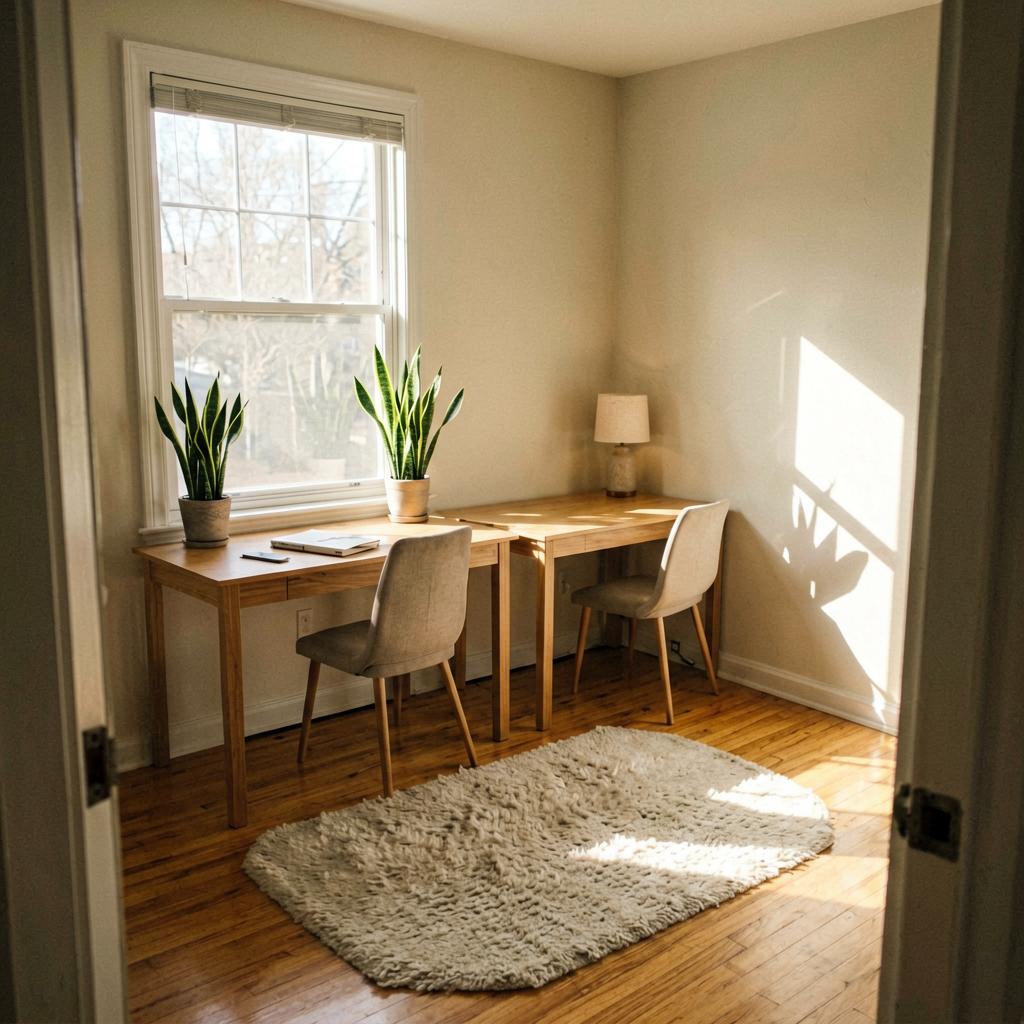
A friend who's a space consultant came over for dinner and mentioned that the layout felt 'heavy.' She didn't use any mystical terms — just said the room lacked natural light and airflow. She suggested we try moving the desks to the spare bedroom on the ground floor, which faces east. It took us a weekend to move the furniture, but we did it: two desks under the window, a rug for warmth, and a plant on the corner. We also added a small lamp for evening work. No concrete walls, no humming light.
What Happened
The change was noticeable within a week. I stopped dreading my workday. The natural light from the east window made the room feel fresh, and I could see the sky change throughout the morning. We stopped snapping at each other. Our productivity went up — I finished a project two days early. It's not like we were suddenly perfect, but the basement had been dragging us down in ways we didn't realize. We even started eating lunch at the desk instead of in front of the TV, because the room felt like a place we wanted to be.
Spatial Orientation
| Bagua Sector | 震 ☳ · Zhen |
|---|---|
| Direction | East |
| Element | wood |
What works best here
Zhen (3) · Wood. East should be the tallest area of the room when possible.
Place: tall plants (especially bamboo or fiddle-leaf fig), wooden furniture, green accents.
Recommended crystal
Green Aventurine or Moss Agate — placed near a window or on a plant shelf in the east
This is the growth sector — plants thrive here and vertical elements feel natural
Source Analysis
1. The Original Principle
Original Chinese
上古穴居而野处,后世圣人易之以宫室上栋下宇,以待风雨,盖取大壮。大壮是易经卦象之一,它由上震下乾组成。震为雷,乾为园,房屋从侧面观是圆形的,是上有雷雨,下有园屋之象,它是房屋由地下穴居上升为地上木构房屋的符号象征。现代建筑有的设在地下或半地下,为砖瓦结构或钢筋混凝土框架结构,是一个样子的。
English Translation
The ancient Book of Changes describes how early humans moved from living in caves to building above-ground houses with round roofs supported by beams, to shelter from wind and rain. This shift from underground to above-ground represented a major advance in comfort and safety.
2. About the Source
金锁玉关 by Anonymous (private manuscript) · China · Pre-Song Dynasty (before 960 CE)
The Golden Lock and Jade Pass is an esoteric classical text on residential site analysis, passed down through private manuscripts. It provides a systematic method for evaluating how the surrounding landforms — heights, depressions, and water features in each compass direction — shape the experience of a living space. Its sand-and-water framework remains one of the most practical tools in the landscape assessment tradition.
3. How This Principle Applies to This Case
This case illustrates a principle from the Book of Changes about the shift from underground dwellings to above-ground structures. The basement office in this story mirrors the 'cave' phase — enclosed, lacking natural light, and disconnected from the outside environment. Moving the workspace to a ground-floor room with windows and natural light aligns with the principle of rising above ground level for improved well-being. Modern environmental psychology supports this: exposure to natural light regulates circadian rhythms, reduces stress, and enhances mood and cognitive performance. The concrete walls and humming light of the basement likely contributed to sensory deprivation and fatigue, which the above-ground room resolved by providing visual connection to the outdoors and better air circulation.
Bring the Purest Energy Into Your Home
Sourced from altitudes above 4,000 meters in the Himalayan range — the highest place on Earth and the closest to the sun. These crystals formed over millions of years in some of the planet's most pristine conditions, untouched by industrial pollution. Each piece carries the raw, unfiltered energy of the mountains. Whether placed on a nightstand, a desk, or a meditation corner, they serve as a quiet anchor — a daily reminder to pause, breathe, and reconnect.
Explore the HIMA ALAÏA collection →Case source
Marie Burgos Design
High-profile luxury interior design firm with offices in NYC and LA. Founder Marie Burgos holds IFSG Red Ribbon Master certification. Deeply integrates modern French luxury design with Eastern Five Elements Feng Shui. Regularly featured in top design media.