We Moved the Couch to the Sunny Corner and Stopped Arguing Every Evening
An interior designer shares how shifting the living room sofa by just a few feet changed a couple's daily friction into calm evenings.
Location
Portland, Oregon, United States
Property Type
House
Room
Living Room
Direction
East
The Problem
A couple in their late 30s, both working from home, had been snapping at each other every night. The living room felt cramped even though it wasn't small. The main seating area faced a blank wall, and the coffee table was always in the way.
What They Tried
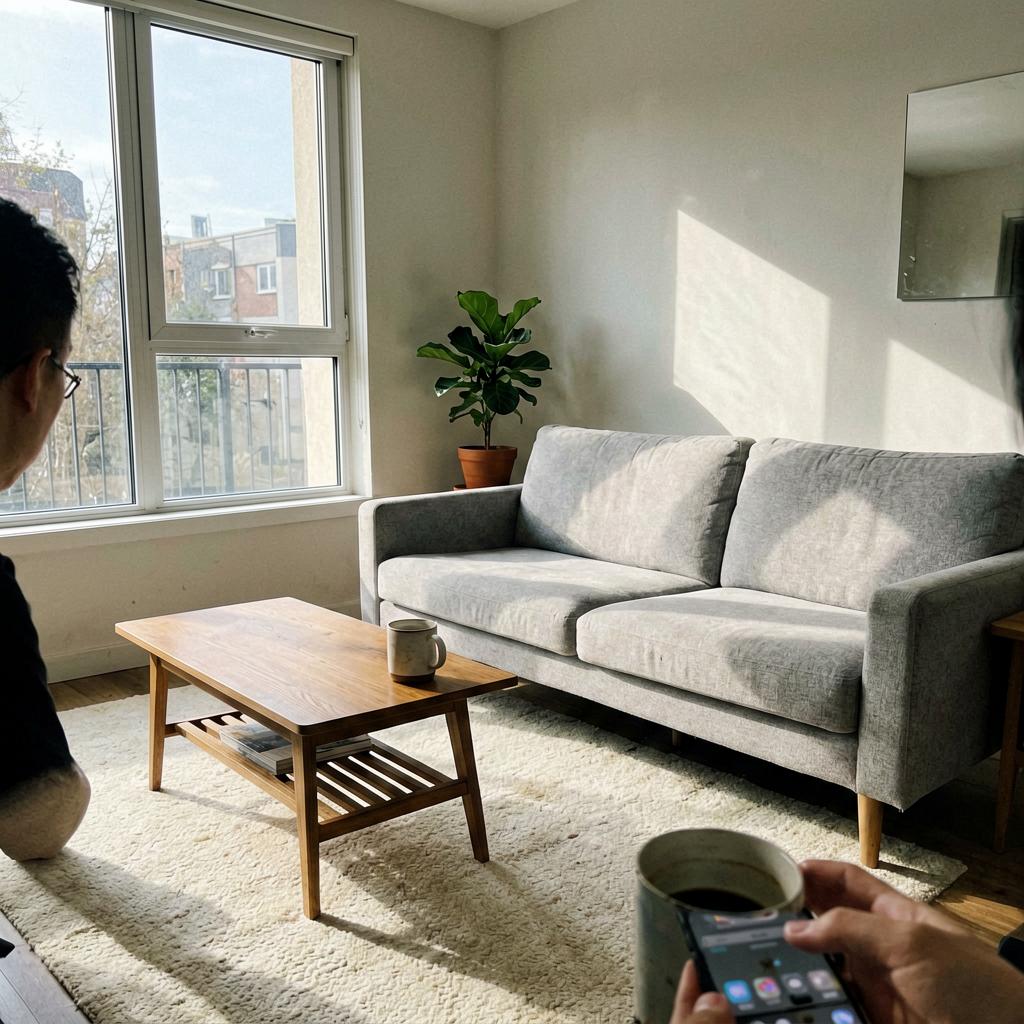
I measured the room and saw the issue: the couch faced a dead zone. I moved it 4 feet to the right, so it now sits at a slight angle toward the window with the coffee table tucked beside it, not in front. The armchair went opposite, creating a conversation circle.
What Happened
Within a week, they reported fewer arguments. The wife said she actually wanted to sit down after work instead of going straight to the bedroom. The husband said the room felt 'lighter.' Nothing miraculous—just less friction in a space that used to push them apart.
Spatial Orientation
| Bagua Sector | 震 ☳ · Zhen |
|---|---|
| Direction | East |
| Element | wood |
What works best here
Zhen (3) · Wood. East should be the tallest area of the room when possible.
Place: tall plants (especially bamboo or fiddle-leaf fig), wooden furniture, green accents.
Recommended crystal
Green Aventurine or Moss Agate — placed near a window or on a plant shelf in the east
This is the growth sector — plants thrive here and vertical elements feel natural
Source Analysis
1. The Original Principle
Original Chinese
故福德之方,勤依天道貌岸然天德月德,生气到其位,即修,令清洁阔厚,即一家获安,荣华富贵。
English Translation
A classical text advises keeping the fortunate area of a home clean, spacious, and solid. When beneficial energies align with a location, build or arrange there for peace and prosperity.
2. About the Source
宅经 by Attributed to the Yellow Emperor · China · Tang Dynasty (618–907 CE), based on earlier traditions
The Classic of Dwellings is one of the earliest surviving Chinese texts dedicated entirely to residential architecture. It presents a holistic view of the home as a living organism — comparing the house to a body with its own anatomy of walls, doors, rooms, and courtyards. Its core teaching is that a well-arranged home supports the health and fortune of its inhabitants as naturally as good soil supports healthy plants.
3. How This Principle Applies to This Case
This case illustrates a principle from an ancient text that emphasizes aligning the home's layout with natural patterns for household harmony. The 'fortunate area' here is the window side of the room, which gets afternoon light. Psychologically, a seating arrangement that maximizes natural light and creates a clear conversational focus reduces stress and promotes relaxation. The couple's friction wasn't about furniture—it was about a space that forced them into awkward proximity. By realigning the seating, they created a flow that felt more open and intentional, which lowered defensive body language and made evening downtime actually restful.
Bring the Purest Energy Into Your Home
Sourced from altitudes above 4,000 meters in the Himalayan range — the highest place on Earth and the closest to the sun. These crystals formed over millions of years in some of the planet's most pristine conditions, untouched by industrial pollution. Each piece carries the raw, unfiltered energy of the mountains. Whether placed on a nightstand, a desk, or a meditation corner, they serve as a quiet anchor — a daily reminder to pause, breathe, and reconnect.
Explore the HIMA ALAÏA collection →Case source
Erin Ruby Design, LLC
24+ years of commercial and residential interior design. Registered architectural interior designer and Feng Shui consultant. Specializes in blueprint Feng Shui assessments for architects and developers.