We Moved the Stove to the Southeast Corner and Our Kitchen Finally Stopped Feeling Like a War Zone
A couple's constant bickering over cooking vanished after a simple stove repositioning—here's what happened when we changed the kitchen's focal point.
Location
Austin, Texas, United States
Property Type
House
Room
Kitchen
Direction
Southeast
The Problem
My clients, the Hendersons, called me about selling their three-bedroom ranch. But during the walkthrough, it wasn't the dated countertops or the squeaky floorboards that stood out—it was the tension. Every time they mentioned the kitchen, their voices tightened. "We can't even cook together anymore," Sarah admitted. "It's like the room itself makes us snap at each other." The stove sat awkwardly in the corner, shoved against a wall, with the sink on the opposite side. Every meal felt like a relay race, dodging each other in a space that should have been the heart of the home.
What They Tried
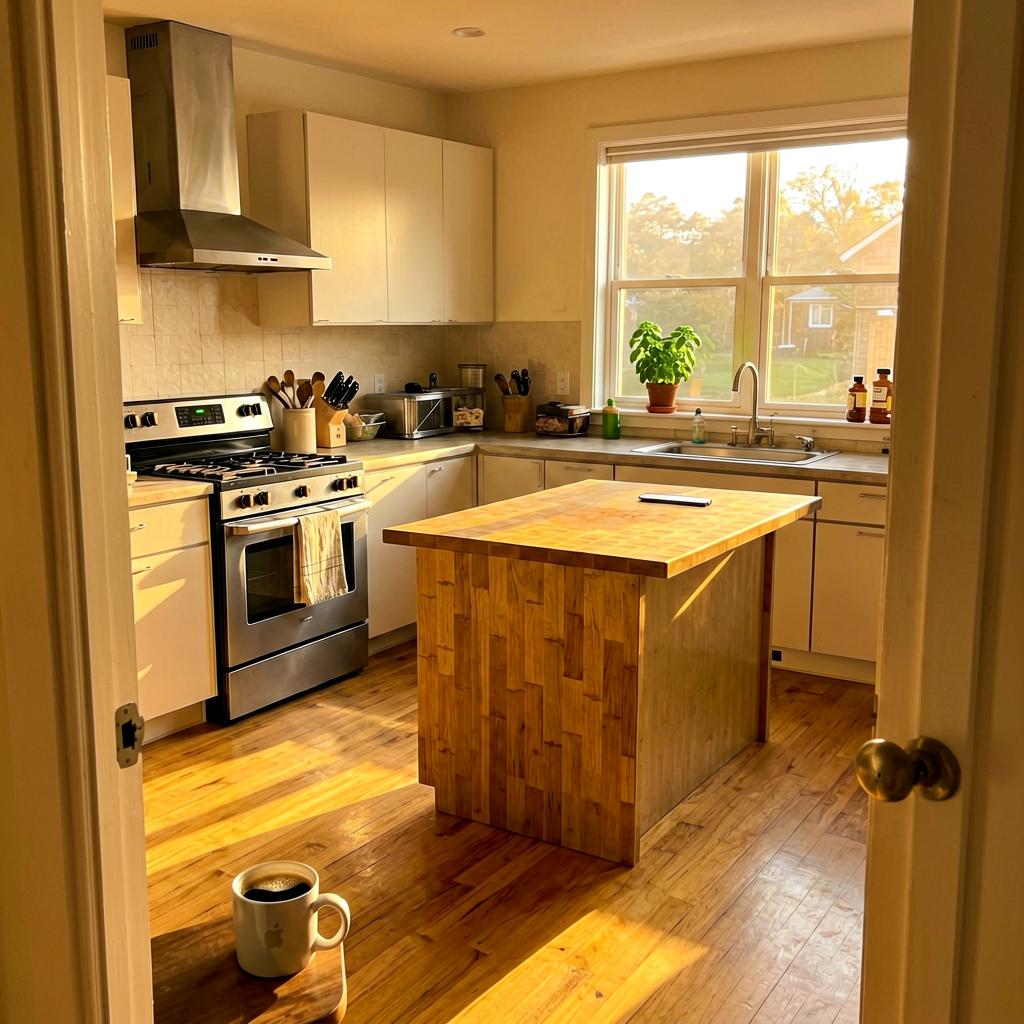
Instead of listing the house, I suggested they try something unconventional: move the stove. Not just a few inches—we repositioned it to the southeast wall, near the window, where it would become the room's natural focal point. The contractor rerouted the gas line, and we added a small butcher-block island opposite for prep space. It took a weekend and cost about $1,200, but the change was immediate. The kitchen suddenly had a clear sightline from the doorway, and the stove no longer felt like it was hiding in a corner. Sarah and Mark started cooking side by side, with the island giving each of them their own zone.
What Happened
Three weeks later, Sarah called me, laughing. "We've made dinner together every night since," she said. "I don't know what it was, but that corner just felt... wrong. Now the room feels open, like we're actually in it together." They're not selling anymore—they decided to renovate the rest of the house instead. Even the real estate photos I took afterward showed a kitchen that felt welcoming, not cramped. It wasn't a miracle, but it was a shift. The space finally matched how they wanted to live.
Spatial Orientation
| Bagua Sector | 巽 ☴ · Xun |
|---|---|
| Direction | Southeast |
| Element | wood |
What works best here
Xun (4) · Wood. Southeast loves moderate height with an airy, open feel.
Place: tall leafy plants, natural fiber rugs, light wood tones, cream and soft green.
Recommended crystal
Citrine or Green Jade — placed on a wooden side table in the southeast corner
Perfect for a creative workspace or journaling spot; natural light is your friend here
Source Analysis
1. The Original Principle
Original Chinese
变上一爻为生气,生比自然,吉中最贵。...生炁吉应在亥卯未年月,求财子宜作生炁灶。
English Translation
A classical text on home arrangements advises that when the stove is placed to align with 'life energy,' it becomes the most auspicious element, bringing wealth and harmony. This energy is said to flourish when the stove faces the southeast, one of the four cardinal directions of good fortune, and avoids positions that create conflict.
2. About the Source
八宅明镜下篇 by Yang Yunsong (attributed) · China · Qing Dynasty (1644–1912 CE)
The Eight Mansions Bright Mirror is one of the most influential classical Chinese texts on residential architecture. For over three centuries, it has served as a foundational reference for understanding how the layout and orientation of living spaces affect the wellbeing of their inhabitants, focusing on how living spaces can be arranged to support health, relationships, and prosperity.
3. How This Principle Applies to This Case
The classical principle emphasizes the stove's position as a source of 'life energy'—essentially, the heart of the home's daily activity. Modern environmental psychology supports this: when a room's primary functional element (like a stove) is shoved into a cramped corner, it creates physical friction and visual discomfort, which can translate into interpersonal tension. By relocating the stove to the southeast wall, the Hendersons gave the kitchen a clear focal point and improved traffic flow, reducing the sense of crowding that had been fueling their arguments. The change wasn't mystical—it was spatial. A well-anchored stove makes the room feel purposeful, and that shared purpose spilled over into their cooking routine. The principle's insight about 'auspicious' placement aligns with what designers know about proportion and sightlines: a room that feels balanced invites calmer behavior.
Bring the Purest Energy Into Your Home
Sourced from altitudes above 4,000 meters in the Himalayan range — the highest place on Earth and the closest to the sun. These crystals formed over millions of years in some of the planet's most pristine conditions, untouched by industrial pollution. Each piece carries the raw, unfiltered energy of the mountains. Whether placed on a nightstand, a desk, or a meditation corner, they serve as a quiet anchor — a daily reminder to pause, breathe, and reconnect.
Explore the HIMA ALAÏA collection →Case source
International Feng Shui School
One of America's most prominent Feng Shui training and consulting organizations, headquartered in California. Offers full-spectrum solutions from commercial Feng Shui surveying to residential energy layout.