We Turned Our Unused Fireplace Into A Tiny Desert Garden And Stopped Arguing About The Heat
A couple in Phoenix transforms their brick fireplace into a small indoor garden during summer, reducing arguments about the room temperature and creating a calming focal point.
Location
Phoenix, United States
Property Type
House
Room
Living room
Direction
South
The Problem
My partner and I live in Phoenix, where summer is basically nine months of hell. Our living room has this big brick fireplace that the previous owners clearly loved—it takes up an entire wall. But from May to October, it's just a gaping black hole that seems to radiate heat even when it's off. We'd argue constantly: I'd want the AC at 72, she'd say 78 was fine. The room felt heavy, oppressive. We'd sit in there and just feel... stuck. The fireplace was like a monument to discomfort.
What They Tried
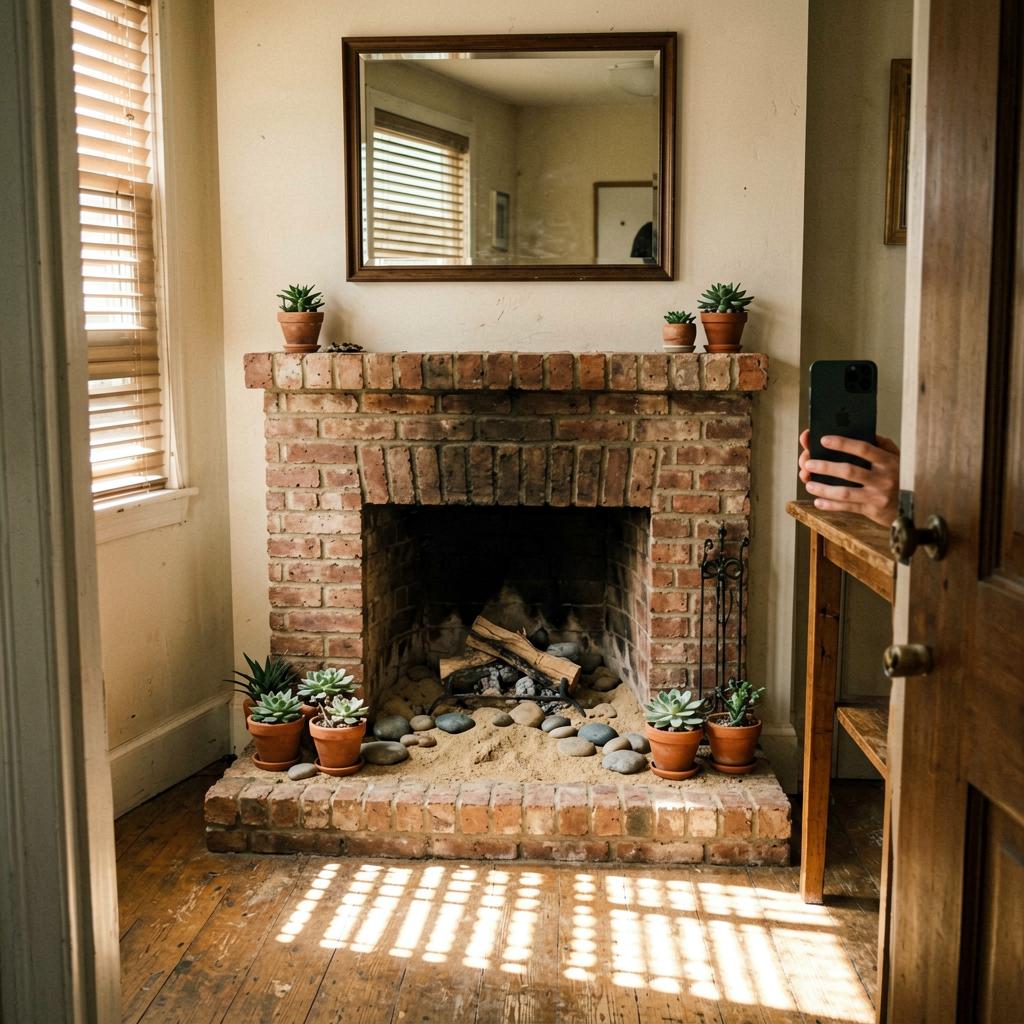
I saw this idea online—someone turned their unused fireplace into a little indoor garden for the summer. So we dumped about 15 pounds of play sand into the firebox, arranged a bunch of light-colored river stones (smooth, off-white, grey) around the edges. Then we added a few small succulents in terracotta pots, and a tiny piece of driftwood. It looked like a miniature desert landscape. Above the fireplace, we hung a large rectangular mirror—nothing fancy, just a simple frame from IKEA. That was it. We didn't tell anyone, just did it one Saturday afternoon.
What Happened
The first thing we noticed: the room felt cooler. Not like, literally colder—the AC was still running—but the visual weight just disappeared. The black hole was gone. Instead, there was this calm, sandy, open feeling. We stopped arguing about the thermostat. I think because the room no longer felt like a heat trap. The mirror bounced light around, making the space feel bigger. My partner started sitting on the floor near the fireplace to read. We'd have coffee over there. It became a spot, not a void. We still live here, and every summer now, we do the same thing. Takes an hour. Costs maybe forty bucks. Best change we ever made.
Spatial Orientation
| Bagua Sector | 离 ☲ · Li |
|---|---|
| Direction | South |
| Element | fire |
What works best here
Li (9) · Fire. South should feel more open and lower than North for visual balance.
Place: low-profile furniture, mirrors, glass surfaces, warm lighting.
Recommended crystal
Clear Quartz or Sunstone — placed where it catches natural light, like a windowsill or console table
Mirrors work exceptionally well here — they reflect light and make the room feel larger
Source Analysis
1. The Original Principle
Original Text
La chimenea de ladrillo representa a la vez el fuego y la tierra. Durante los meses de verano, cuando no se utiliza, la convierto en un pequeño jardín de interior, para lo que empleo arena (tierra) y cantos rodados de colores claros (metal).
English Translation
A brick fireplace represents both fire and earth. In summer, when unused, transform it into an indoor garden using sand (earth) and light-colored river stones (metal) to keep the elements balanced and avoid an excess of fire or wood energy.
2. About the Source
Feng shui para Occidente by Terah Kathryn Collins · United States · 1995
Feng Shui for the West is a practical guide that adapts classical Chinese spatial principles for modern Western homes and lifestyles. Written by one of the first American authors to bring Feng Shui to a mainstream English-speaking audience, the book translates ancient Bagua concepts into actionable room-by-room advice using familiar Western design language and contemporary case examples.
3. How This Principle Applies to This Case
This case illustrates a simple spatial principle: unused functional objects can create visual and psychological weight. The fireplace, designed to hold fire, continued to 'read' as hot even when empty. By transforming it into a dry, sandy landscape with reflective elements, the couple changed its sensory association. The mirror added perceived depth and light, which psychologically reduced the sense of enclosure. This isn't about mystical energy—it's about how our brains assign meaning to objects based on their intended function. Changing the function changes how the room feels.
Bring the Purest Energy Into Your Home
Sourced from altitudes above 4,000 meters in the Himalayan range — the highest place on Earth and the closest to the sun. These crystals formed over millions of years in some of the planet's most pristine conditions, untouched by industrial pollution. Each piece carries the raw, unfiltered energy of the mountains. Whether placed on a nightstand, a desk, or a meditation corner, they serve as a quiet anchor — a daily reminder to pause, breathe, and reconnect.
Explore the HIMA ALAÏA collection →Case source
Anjie Cho Architect & Holistic Spaces
NYC-based architect and BTB Feng Shui master. Co-founder of Mindful Design Feng Shui School. Blends modern interior design with classical BTB Feng Shui. Author of multiple Feng Shui books.