What Happened When I Rotated the Sofa 90 Degrees in Our Living Room
A small change in seating orientation transformed how we use our living room—and how we talk to each other.
Location
Portland, Oregon, United States
Property Type
Apartment
Room
Living Room
Direction
South
The Problem
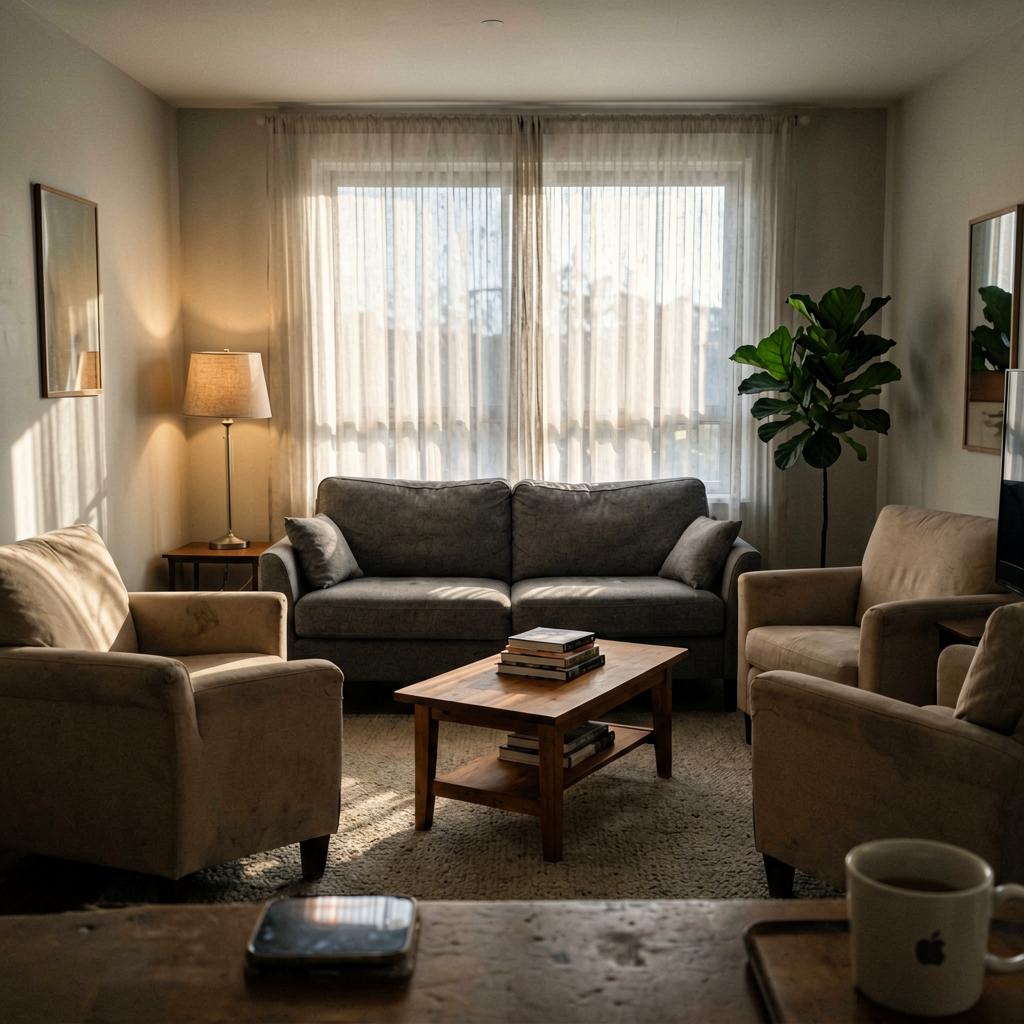
Our living room felt dead. We'd sit there at night, each lost in our own screens, not really talking. The layout had the sofa against the longest wall, facing the TV, with two armchairs flanking it. It was a classic 'theater' setup, but it created this weird, awkward vibe—like we were waiting for a show that never started.
What They Tried
In a burst of frustration, I moved the sofa to face the window, turning it 90 degrees. The armchairs I pulled in from the sides, creating a loose L-shape around a low coffee table. The TV I shoved into a corner—unplugged, but still there if we ever want it back.
What Happened
The first evening, we sat down and actually talked. The window became the focal point—sounds of the street, changing light, birds. We started playing music instead of streaming. The room felt bigger, too, because the eye travels diagonally now. It's not a miracle, but it's a room we want to be in.
Spatial Orientation
| Bagua Sector | 离 ☲ · Li |
|---|---|
| Direction | South |
| Element | fire |
What works best here
Li (9) · Fire. South should feel more open and lower than North for visual balance.
Place: low-profile furniture, mirrors, glass surfaces, warm lighting.
Recommended crystal
Clear Quartz or Sunstone — placed where it catches natural light, like a windowsill or console table
Mirrors work exceptionally well here — they reflect light and make the room feel larger
Source Analysis
1. The Original Principle
Original Chinese
上爻一动为生气,中下二爻出天医,三爻全换可延年,本卦原来是伏位,中爻走出绝命来,上下其手出六煞,中上二爻五鬼居,下爻一生祸害至。
English Translation
An old Chinese text on dwellings describes how changing the lines of a trigram shifts the quality of a space. The original arrangement is 'resting'; a change in the top line brings 'vital energy'; changes in the other lines bring varying degrees of fortune or harm. The principle: small shifts in orientation can alter the character of a place.
2. About the Source
八宅明镜上卷 by Yang Yunsong (attributed) · China · Qing Dynasty (1644–1912 CE)
The Eight Mansions Bright Mirror is one of the most influential classical Chinese texts on residential architecture. For over three centuries, it has served as a foundational reference for understanding how the layout and orientation of living spaces affect the wellbeing of their inhabitants, focusing on how living spaces can be arranged to support health, relationships, and prosperity.
3. How This Principle Applies to This Case
This case illustrates a classical principle about how altering the fundamental lines of a spatial arrangement changes its energetic character. In modern terms, the 90-degree rotation shifted the room's sightline and focal point, engaging the brain's spatial awareness and encouraging different social behavior. The window's natural light and moving elements (traffic, trees) provided dynamic visual interest, reducing the pull of the television. Psychologically, this is a classic 'prospect and refuge' shift—the new seating offers a view outward while maintaining a sense of enclosure, which increases comfort and promotes interaction.
Bring the Purest Energy Into Your Home
Sourced from altitudes above 4,000 meters in the Himalayan range — the highest place on Earth and the closest to the sun. These crystals formed over millions of years in some of the planet's most pristine conditions, untouched by industrial pollution. Each piece carries the raw, unfiltered energy of the mountains. Whether placed on a nightstand, a desk, or a meditation corner, they serve as a quiet anchor — a daily reminder to pause, breathe, and reconnect.
Explore the HIMA ALAÏA collection →Case source
Anjie Cho Architect & Holistic Spaces
NYC-based architect and BTB Feng Shui master. Co-founder of Mindful Design Feng Shui School. Blends modern interior design with classical BTB Feng Shui. Author of multiple Feng Shui books.