Why I Delayed My Kitchen Renovation by Three Weeks (And It Saved the Project)
A designer explains how postponing a kitchen remodel by three weeks avoided a cascade of problems—and why timing matters as much as layout.
Location
Portland, Oregon, United States
Property Type
House
Room
Kitchen
Direction
South
The Problem
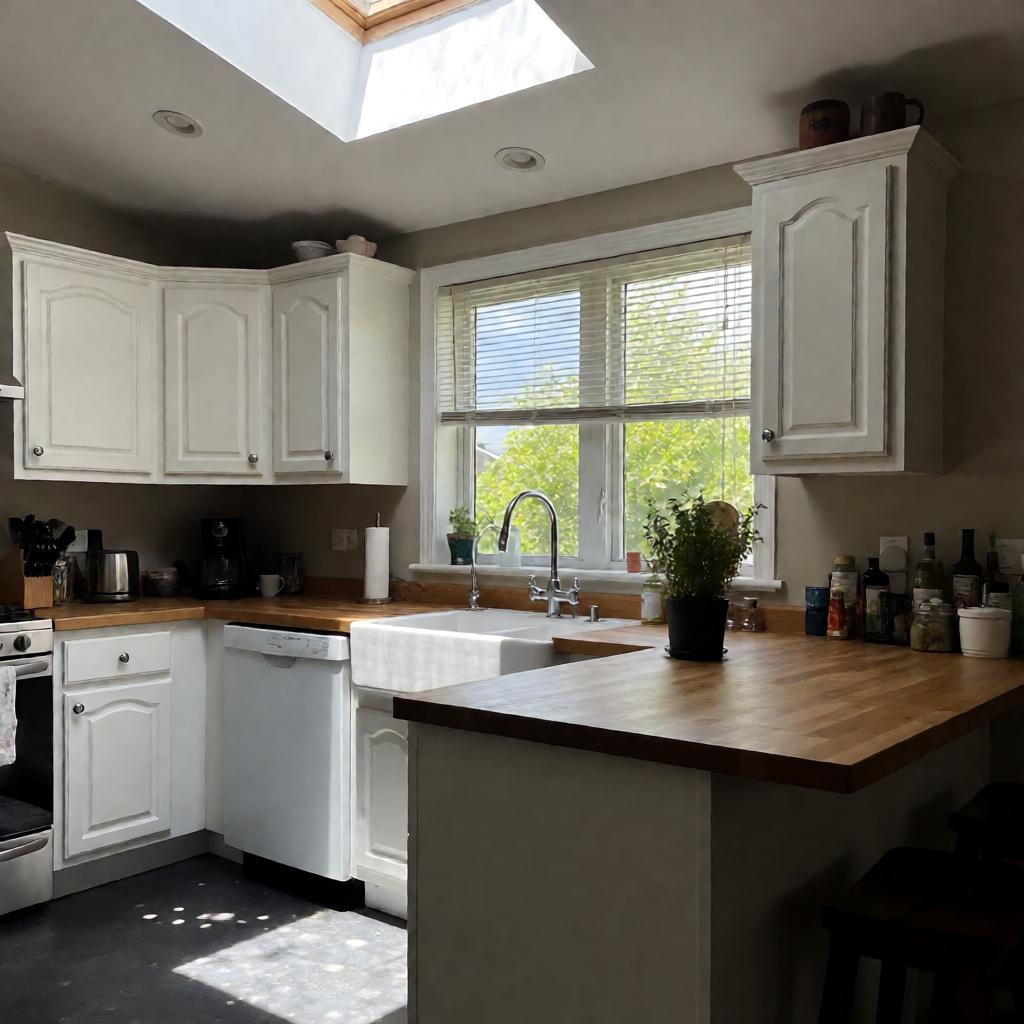
My clients, a couple in their early 40s, were eager to gut their cramped 1980s kitchen. They'd picked out cabinets, countertops, and a farmhouse sink. The contractor was ready. But something felt off: the husband had just started a new job, their kids were in the middle of exams, and the wife was traveling for work. I suggested we wait three weeks. They were frustrated—they'd been planning this for months. But I've seen too many projects go sideways when life is chaotic. The kitchen itself had good bones: south-facing window, decent workflow, no structural issues. The problem wasn't the space. It was the moment.
What They Tried
We pushed the start date by three weeks. During that time, the family decluttered, packed the old kitchen properly, and set up a temporary cooking station in the dining room. When demolition finally began, the husband's job had settled, the kids were on break, and the wife was home. The project ran smoothly: no missed deliveries, no rushed decisions, no arguments over tile samples. The new kitchen—with a peninsula facing east, a skylight, and soft-close drawers—was finished in five weeks, two days ahead of schedule.
What Happened
The couple told me it was the least stressful renovation they'd ever done. They credited the extra planning time, but I knew it was also about timing. A good layout can't fix a bad week. The kitchen now feels like the heart of the home—and the process didn't wreck their lives.
Spatial Orientation
| Bagua Sector | 离 ☲ · Li |
|---|---|
| Direction | South |
| Element | fire |
What works best here
Li (9) · Fire. South should feel more open and lower than North for visual balance.
Place: low-profile furniture, mirrors, glass surfaces, warm lighting.
Recommended crystal
Clear Quartz or Sunstone — placed where it catches natural light, like a windowsill or console table
Mirrors work exceptionally well here — they reflect light and make the room feel larger
Source Analysis
1. The Original Principle
Original Chinese
不然山吉水吉而穴吉,何以多灾?岂知年凶月凶而日凶,犯之罔觉。注解:不然山吉水吉而穴吉,何以多灾?岂知年凶月凶而日凶,犯之不觉。
English Translation
Even when the landscape and site are auspicious, disaster can still strike if the timing of construction is inauspicious. The text warns that people often violate timing without realizing it, bringing misfortune despite good conditions. The remedy is to check the timing and, if necessary, choose a new, favorable time to proceed.
2. About the Source
雪心赋 论克择 by Bu Yingtian · China · Tang Dynasty (618–907 CE)
The Snow Heart Rhapsody is a poetic yet rigorously analytical classical text on landscape assessment. Written in rhymed prose, it covers mountain forms, water patterns, terrain energy, and site selection with remarkable literary elegance. Its observations about how land contours create sheltered, comfortable settings for human habitation remain relevant to modern site planning and environmental psychology.
3. How This Principle Applies to This Case
This case illustrates a classical principle: favorable conditions alone are insufficient if the timing is wrong. The text observes that even a perfect site can bring trouble when the moment is inauspicious. Modern psychology supports this—research on stress and decision-making shows that cognitive load during major life changes leads to poorer choices and higher conflict. By delaying the renovation until the family's schedule stabilized, the designer aligned the project with a period of lower stress, reducing friction and errors. The mechanism is not mystical but practical: timing affects attention, patience, and coordination. When timing is ignored, even good plans fail.
Bring the Purest Energy Into Your Home
Sourced from altitudes above 4,000 meters in the Himalayan range — the highest place on Earth and the closest to the sun. These crystals formed over millions of years in some of the planet's most pristine conditions, untouched by industrial pollution. Each piece carries the raw, unfiltered energy of the mountains. Whether placed on a nightstand, a desk, or a meditation corner, they serve as a quiet anchor — a daily reminder to pause, breathe, and reconnect.
Explore the HIMA ALAÏA collection →Case source
Anjie Cho
NYC architect and BTB Feng Shui master. Author and co-founder of Mindful Design Feng Shui School.