Why I Flipped My Stove 90 Degrees And Started Actually Enjoying Cooking
A designer helps a client who hated her kitchen realize the stove placement was the problem — not her cooking skills.
Location
Portland, United States
Property Type
House
Room
Kitchen
Direction
South
The Problem
My client Rachel called me frustrated. She’d just renovated her kitchen — new cabinets, quartz counters, the works — but she still dreaded cooking. She said she felt 'off' every time she stood at the stove, like she was fighting the room. She’d tried everything: new pans, meal kits, even a podcast about mindful cooking. Nothing worked.
What They Tried
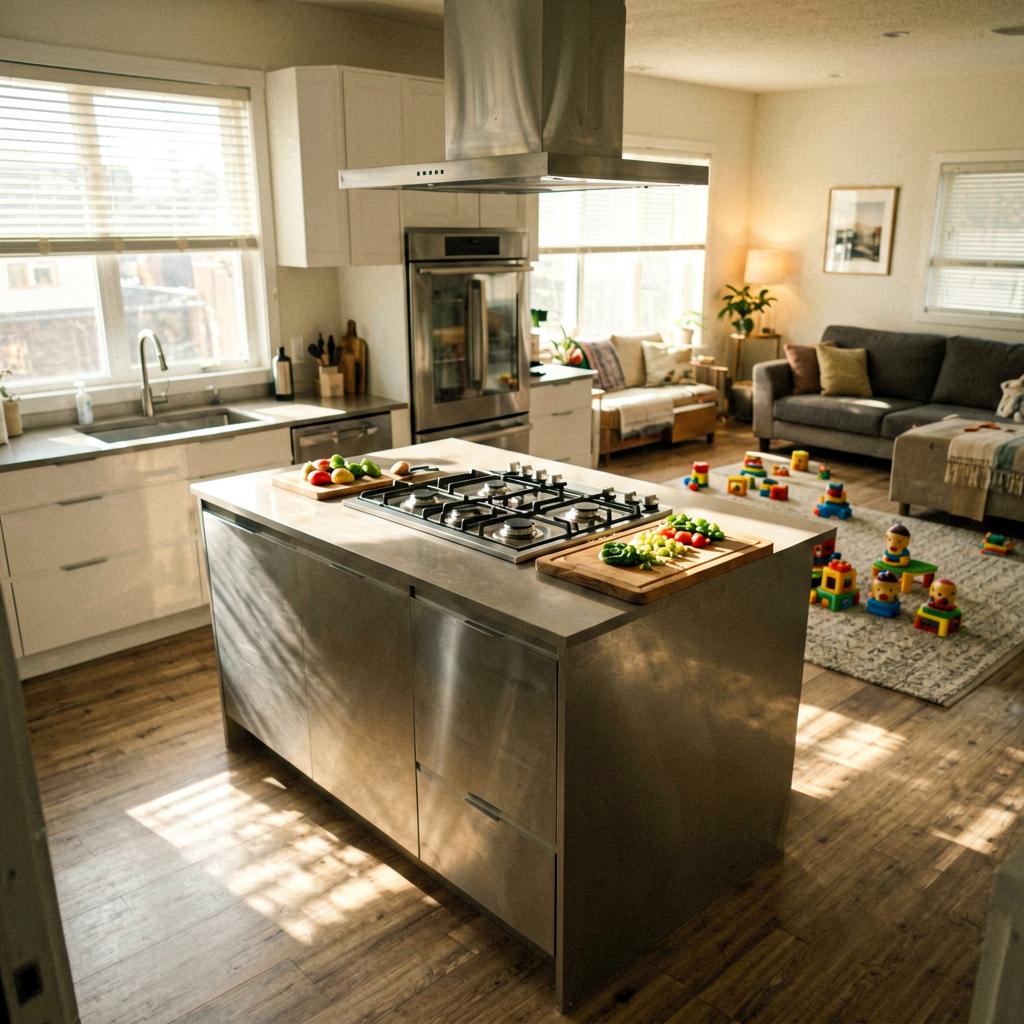
I walked into her kitchen and immediately saw the issue. The stove was jammed into a corner, with the burners facing the wall. She had to twist sideways to stir a pot. I asked if we could shift the whole cooktop 90 degrees — move it to the center island and face the burners toward the living room, where her family usually hung out. She was skeptical but said yes.
What Happened
Within a week, Rachel texted me a photo of a full roast chicken dinner. She said cooking felt 'natural' now — she could see the room, talk to her kids, and actually move around the stove without bumping into cabinets. She’s been cooking three times a week instead of ordering takeout. Nothing mystical: just her body not fighting the layout anymore.
Spatial Orientation
| Bagua Sector | 离 ☲ · Li |
|---|---|
| Direction | South |
| Element | fire |
What works best here
Li (9) · Fire. South should feel more open and lower than North for visual balance.
Place: low-profile furniture, mirrors, glass surfaces, warm lighting.
Recommended crystal
Clear Quartz or Sunstone — placed where it catches natural light, like a windowsill or console table
Mirrors work exceptionally well here — they reflect light and make the room feel larger
Source Analysis
1. The Original Principle
Original Chinese
作灶座压本命之凶方,灶口向本命之吉方……
English Translation
An 18th-century text on home arrangement notes that the stove base should be placed in an unlucky sector of the home, but the cooktop opening should face toward a lucky one. This balances the room's energies, transforming a potentially disruptive area into a productive one.
2. About the Source
八宅明镜下篇 by Yang Yunsong (attributed) · China · Qing Dynasty (1644–1912 CE)
The Eight Mansions Bright Mirror is one of the most influential classical Chinese texts on residential architecture. For over three centuries, it has served as a foundational reference for understanding how the layout and orientation of living spaces affect the wellbeing of their inhabitants, focusing on how living spaces can be arranged to support health, relationships, and prosperity.
3. How This Principle Applies to This Case
This isn't about luck — it's about sightlines and body mechanics. Rachel's original stove faced a wall, forcing her into a closed-off, cramped position. By rotating the cooktop toward the open room, she gained visual connection to her family and a natural flow of movement. Environmental psychology confirms that open sightlines reduce stress and encourage social interaction, which is exactly what happened here. The old rule simply observed that a stove facing a wall feels isolating — and moved it to where life happens.
Bring the Purest Energy Into Your Home
Sourced from altitudes above 4,000 meters in the Himalayan range — the highest place on Earth and the closest to the sun. These crystals formed over millions of years in some of the planet's most pristine conditions, untouched by industrial pollution. Each piece carries the raw, unfiltered energy of the mountains. Whether placed on a nightstand, a desk, or a meditation corner, they serve as a quiet anchor — a daily reminder to pause, breathe, and reconnect.
Explore the HIMA ALAÏA collection →Case source
Jef Blocker Coaching & Feng Shui
IFSG Red Ribbon professional. Combines life coaching, Reiki energy healing, and residential Feng Shui adjustments. Active across the American South.