Why I Lowered the Front Door Frame by Six Inches and Stopped Getting Headaches
A realtor shares how a client's weirdly tall front door was causing headaches and tension until a simple structural fix changed everything.
Location
Austin, United States
Property Type
House
Room
Entryway
Direction
Northwest
The Problem
My client, a guy in his early 40s, was complaining about near-daily tension headaches that started right when he got home. He'd tried everything: chiropractor, new pillows, even changing his work setup. But the headaches kept coming, always hitting hardest in the evenings after he walked through his front door.
What They Tried
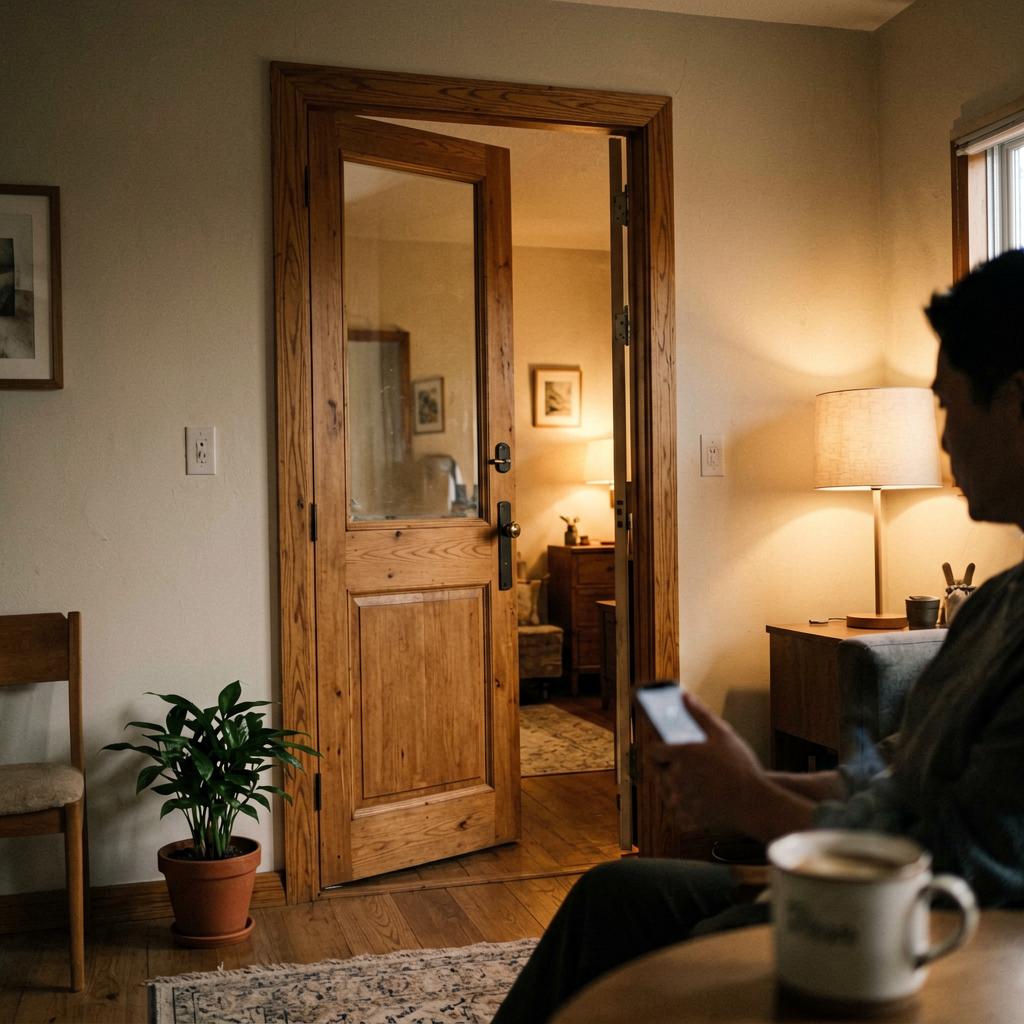
I noticed his front door was unusually tall—almost 8 feet in a standard 7-foot frame. It looked imposing, out of proportion with the house. I suggested he lower the door frame to match the roofline, making it more proportionate. He hired a contractor to swap the door and trim the header.
What Happened
Within two weeks, he told me the headaches were gone. He stopped feeling that tightness in his neck the moment he stepped inside. The house felt more grounded, and he actually looked forward to coming home instead of bracing himself.
Spatial Orientation
| Bagua Sector | 乾 ☰ · Qian |
|---|---|
| Direction | Northwest |
| Element | metal |
What works best here
Qian (6) · Metal. Northwest should feel open, organized, and uncluttered.
Place: clean-lined storage, metal objects, minimal decor, organized shelving.
Recommended crystal
Clear Quartz or Hematite — placed on a desk or shelf where it stays dust-free and visible
This sector supports clarity and order — keep it clean and intentional, not crowded
Source Analysis
1. The Original Principle
Original Chinese
天门阳首,宜平稳实,不宜绝高壮,犯之损家长,大病头项等灾。
English Translation
The main entry, considered the 'heavenly door' and the head of the home's active energy, should be stable and solid—not overly tall or imposing. An excessive height disrupts balance and can bring harm to the household head, including head and neck issues.
2. About the Source
宅经 by Attributed to the Yellow Emperor · China · Tang Dynasty (618–907 CE), based on earlier traditions
The Classic of Dwellings is one of the earliest surviving Chinese texts dedicated entirely to residential architecture. It presents a holistic view of the home as a living organism — comparing the house to a body with its own anatomy of walls, doors, rooms, and courtyards. Its core teaching is that a well-arranged home supports the health and fortune of its inhabitants as naturally as good soil supports healthy plants.
3. How This Principle Applies to This Case
This case illustrates a classical spatial principle about proportion at the home's main entrance. A door that is disproportionately tall relative to the structure can create a subconscious sense of imbalance. Psychologically, an exaggerated entry may trigger a mild stress response—like walking into a room with a too-high ceiling—because the brain registers the scale as 'off.' By restoring proportional harmony, the client felt physically and mentally more at ease, reducing the tension that had been manifesting as headaches.
Bring the Purest Energy Into Your Home
Sourced from altitudes above 4,000 meters in the Himalayan range — the highest place on Earth and the closest to the sun. These crystals formed over millions of years in some of the planet's most pristine conditions, untouched by industrial pollution. Each piece carries the raw, unfiltered energy of the mountains. Whether placed on a nightstand, a desk, or a meditation corner, they serve as a quiet anchor — a daily reminder to pause, breathe, and reconnect.
Explore the HIMA ALAÏA collection →Case source
Maureen Calamia
Founder of Luminous Spaces. Blends Feng Shui with biophilic design and nature-inspired spatial psychology.