Why I Moved My Desk Away from the Window — And Stopped Feeling Drained by 2 PM
A home office worker realized her desk position was making her exhausted and unfocused. Moving it against a solid wall changed everything.
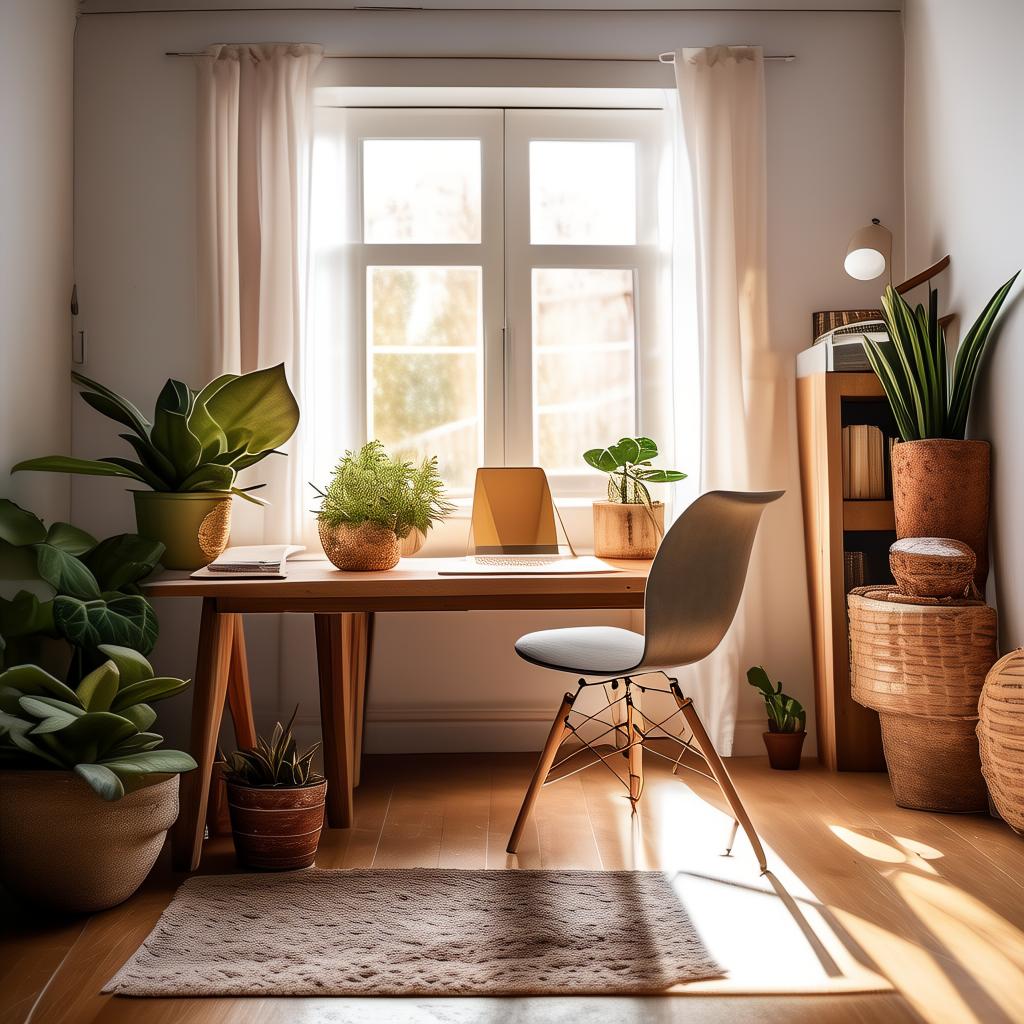
Location
Portland, Oregon, United States
Property Type
Apartment
Room
Home Office
Direction
Southeast
The Problem
I work from home three days a week, and for months, I had this low-grade exhaustion that hit every afternoon. It wasn't just tired — it was a heavy, foggy feeling, like my brain was wading through syrup. I'd stare at my screen, reread the same sentence three times, and still not absorb it. Caffeine didn't help. Naps made it worse. I blamed my diet, my sleep schedule, even the humidity. But nothing changed.
What They Tried
My friend who's a real estate agent came over one weekend. She looked at my setup — desk right in front of the window, back to the room — and said, 'You're sitting with your back to the whole space. No wonder you're on edge.' She suggested I turn the desk 180 degrees so it faced the solid interior wall, with my back protected by the wall behind me. I thought it was weird, but I tried it. I also moved a tall bookshelf to my left side, kind of like an armrest, so I felt enclosed but not cramped.
What Happened
The first day, it felt strange — I kept wanting to look out the window. But by day three, I noticed I wasn't hitting that 2 PM wall. My focus lasted longer, and the fog was gone. I still take breaks, but they're intentional, not because I can't function. It's not a miracle — I still have stressful days — but the baseline is different. I'm calmer, more grounded, and I actually get through my to-do list.
Spatial Orientation
| Bagua Sector | 巽 ☴ · Xun |
|---|---|
| Direction | Southeast |
| Element | wood |
What works best here
Xun (4) · Wood. Southeast loves moderate height with an airy, open feel.
Place: tall leafy plants, natural fiber rugs, light wood tones, cream and soft green.
Recommended crystal
Citrine or Green Jade — placed on a wooden side table in the southeast corner
Perfect for a creative workspace or journaling spot; natural light is your friend here
Source Analysis
1. The Original Principle
Original Text
En un principio, se utilizó básicamente para localizar lugares adecuados en los que edificar casas o poblados. ... eran los responsables de la ubicación estratégica de las viviendas en lugares relativamente elevados, por encima de los llanos susceptibles de sufrir inundaciones, o todo lo contrario, por debajo de altitudes que hubieran estado expuestas a fuertes vientos, para situarlos, en suma, a salvo y al abrigo de la tierra bendecida por un chi armonioso. ... el tipo de parcela predilecto para la construcción de una vivienda era un lugar llano, nivelado, arropado y protegido por detrás y a ambos lados por montañas, colinas o bosques, de forma similar a la disposición del respaldo y los brazos de una butaca. La tierra descendía entonces desde la parte de delante hasta un nivel más bajo, donde un río, un arroyo, un estanque o un lago completaban la imagen de la ubicación ideal.
English Translation
The ideal site for a home is flat, level ground, sheltered from behind and on both sides by hills, forests, or trees — like the back and arms of an armchair. The land slopes down in front to a lower area with a stream, pond, or lake. This protects from wind and flooding, creating a secure, harmonious setting.
2. About the Source
Feng shui para Occidente by Terah Kathryn Collins · United States · 1995
Feng Shui for the West is a practical guide that adapts classical Chinese spatial principles for modern Western homes and lifestyles. Written by one of the first American authors to bring Feng Shui to a mainstream English-speaking audience, the book translates ancient Bagua concepts into actionable room-by-room advice using familiar Western design language and contemporary case examples.
3. How This Principle Applies to This Case
The principle here is about the psychology of spatial security. Humans have an innate preference for positions where our backs are protected — it's a survival instinct. In this case, the desk facing the window left the user exposed to the entire room, triggering a low-level vigilance that drained cognitive resources over time. By turning the desk to face a solid wall and adding a bookshelf to one side, she created a 'protected' zone similar to the sheltered site described in the classical text. Modern research supports this: studies on 'prospect and refuge' theory show that people work better when they have both a view (prospect) and a protected back (refuge). The user's improvement in focus and reduced fatigue aligns with this principle — her environment stopped signaling 'danger' to her subconscious.
Bring the Purest Energy Into Your Home
Sourced from altitudes above 4,000 meters in the Himalayan range — the highest place on Earth and the closest to the sun. These crystals formed over millions of years in some of the planet's most pristine conditions, untouched by industrial pollution. Each piece carries the raw, unfiltered energy of the mountains. Whether placed on a nightstand, a desk, or a meditation corner, they serve as a quiet anchor — a daily reminder to pause, breathe, and reconnect.
Explore the HIMA ALAÏA collection →Case source
Clear Space For You
California-based Chinese-American Feng Shui and energy organization expert. Proficient in both Eastern and Western Feng Shui schools. Specializes in resolving family tension, sleep issues, and wealth stagnation through spatial dynamics.