Why I Moved My Desk Away From the Window (And Stopped Feeling Like a Zombie at 3 PM)
My friend Jen was convinced her home office had a bad vibe. I thought she was being dramatic—until I saw the difference after a single change.
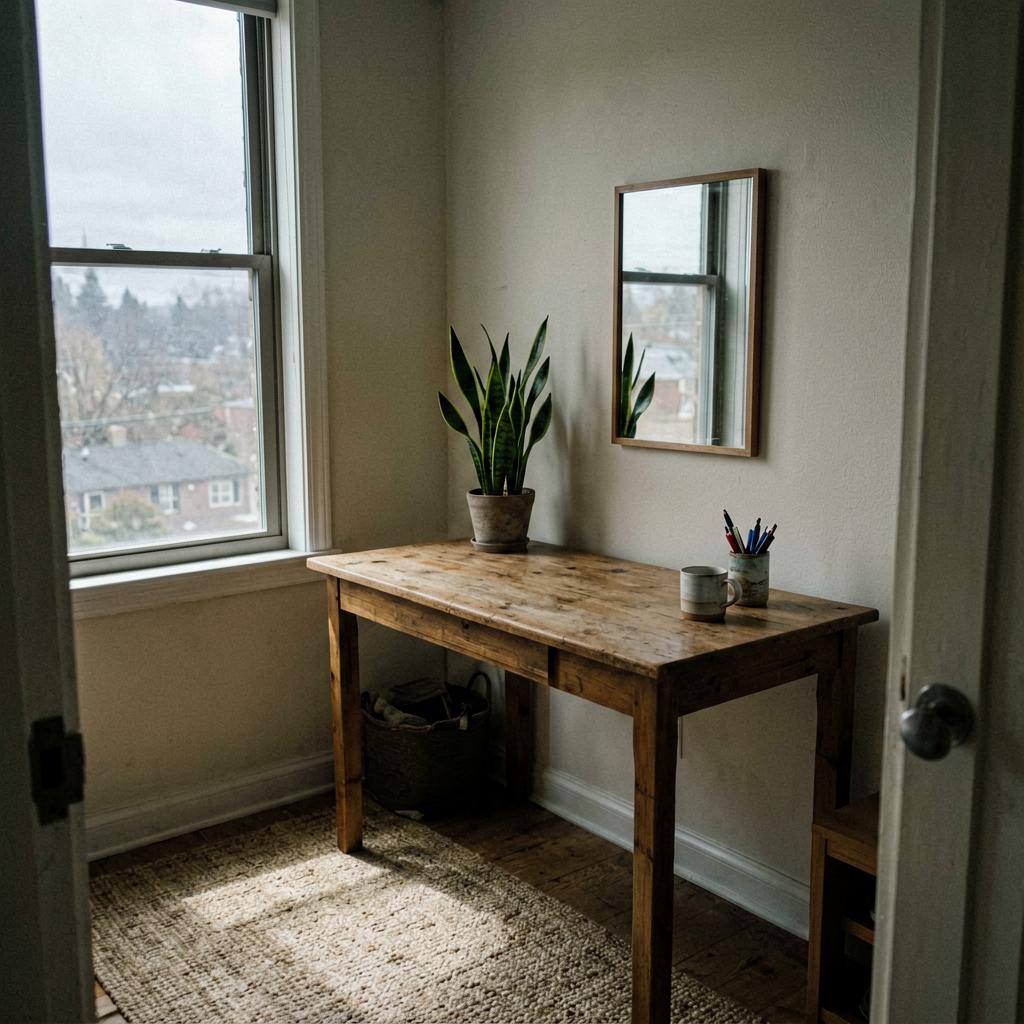
Location
Portland, Oregon, United States
Property Type
Apartment
Room
Home Office
Direction
East
The Problem
Jen worked from home as a freelance graphic designer. Every afternoon around 3 PM, she'd hit a wall—brain fog, irritability, zero focus. She tried coffee, standing breaks, even a salt lamp. Nothing worked. She texted me: 'I think my desk is cursed.'
What They Tried
I was skeptical, but I went over to check it out. Her desk was pushed right up against a big window that faced a busy street. The sightline was a straight shot to the traffic. I suggested moving it to the opposite wall, away from the window, so she'd face the room instead. She laughed, but she tried it.
What Happened
The next week, she called me. 'I don't know what it is, but I actually got through a whole afternoon without wanting to throw my laptop.' She said the room felt quieter, like the noise of the street had physically retreated. She's been working at the new spot for a month now—no more 3 PM zombie mode.
Spatial Orientation
| Bagua Sector | 震 ☳ · Zhen |
|---|---|
| Direction | East |
| Element | wood |
What works best here
Zhen (3) · Wood. East should be the tallest area of the room when possible.
Place: tall plants (especially bamboo or fiddle-leaf fig), wooden furniture, green accents.
Recommended crystal
Green Aventurine or Moss Agate — placed near a window or on a plant shelf in the east
This is the growth sector — plants thrive here and vertical elements feel natural
Source Analysis
1. The Original Principle
Original Chinese
水不乱湾,湾则气全;
English Translation
A text on landscape observation notes that water energy is best preserved when it flows in gentle curves rather than straight lines. Sharp, direct paths dissipate force; curves retain it.
2. About the Source
雪心赋 论山水 by Bu Yingtian · China · Tang Dynasty (618–907 CE)
The Snow Heart Rhapsody is a poetic yet rigorously analytical classical text on landscape assessment. Written in rhymed prose, it covers mountain forms, water patterns, terrain energy, and site selection with remarkable literary elegance. Its observations about how land contours create sheltered, comfortable settings for human habitation remain relevant to modern site planning and environmental psychology.
3. How This Principle Applies to This Case
This case illustrates a spatial principle about how direct lines—whether of water or visual sightlines—can create a sense of exposure and drain focus. Placing a desk directly facing a busy window introduces constant visual distraction, which fragments attention. Modern psychology confirms that open sightlines to movement can increase cognitive load. By moving the desk to a wall that faces the room, Jen created a more enclosed, stable visual field, reducing the brain's need to process peripheral motion. The result was improved concentration and reduced fatigue.
Bring the Purest Energy Into Your Home
Sourced from altitudes above 4,000 meters in the Himalayan range — the highest place on Earth and the closest to the sun. These crystals formed over millions of years in some of the planet's most pristine conditions, untouched by industrial pollution. Each piece carries the raw, unfiltered energy of the mountains. Whether placed on a nightstand, a desk, or a meditation corner, they serve as a quiet anchor — a daily reminder to pause, breathe, and reconnect.
Explore the HIMA ALAÏA collection →Case source
Feng Shui Manhattan
Second-generation NYC Feng Shui practitioner. Combines classical Feng Shui with quantum physics and geomancy. Serves Manhattan luxury apartments and fashion boutiques.